
How to calculate the weight of s700mc steel equivalent astm
Comprehensive guide on calculating the weight of S700MC steel and its ASTM equivalents. Explore mechanical properties, chemical composition, and industrial applications of high-strength cold-forming steel.
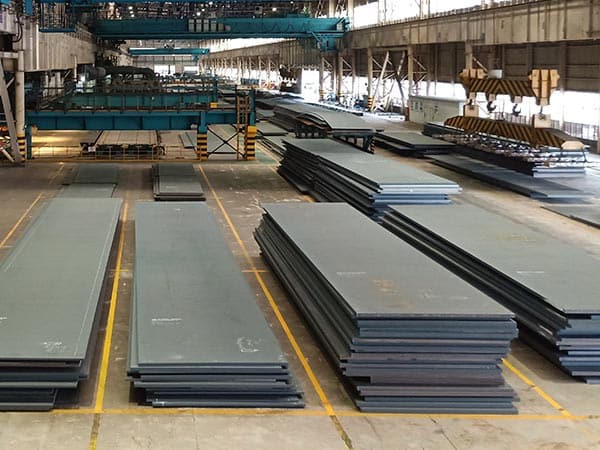
Understanding S700MC and Its ASTM Equivalents
S700MC is a high-strength, thermomechanically rolled steel specifically designed for cold forming. Governed by the EN 10149-2 standard, it is widely recognized for its exceptional yield strength of 700 MPa. When sourcing this material in North American markets, engineers often look for the ASTM equivalent. The closest match is typically ASTM A1011 Grade 100 or ASTM A1018 Grade 100, depending on the thickness of the product. These materials share a common goal: providing high load-bearing capacity while significantly reducing the overall weight of the structure.
The Fundamental Weight Calculation Formula
Calculating the weight of S700MC steel or its ASTM equivalents follows the standard physics of mass calculation. Because these are carbon steels, they share a nearly identical density. The universal density used for these calculations is 7.85 g/cm³ (or 7850 kg/m³).
To calculate the weight of a flat S700MC plate, use the following formula:
- Weight (kg) = Thickness (mm) × Width (m) × Length (m) × 7.85
- Weight (lbs) = Thickness (in) × Width (in) × Length (in) × 0.2833
For example, if you have an S700MC plate that is 8mm thick, 1.5 meters wide, and 6 meters long, the calculation would be: 8 × 1.5 × 6 × 7.85 = 565.2 kg. Precision in these calculations is vital for logistics, structural integrity assessments, and cost estimation in large-scale manufacturing.
Chemical Composition Comparison
The performance of S700MC is rooted in its low-alloy chemical makeup. The "MC" suffix denotes it is thermomechanically rolled, which allows for a fine-grained microstructure without the need for high carbon content, which improves weldability.
| Element | S700MC (EN 10149-2) Max % | ASTM A1011 Gr.100 Max % |
|---|---|---|
| Carbon (C) | 0.12 | 0.15 |
| Manganese (Mn) | 2.10 | 2.00 |
| Silicon (Si) | 0.60 | 0.50 |
| Phosphorus (P) | 0.025 | 0.025 |
| Sulfur (S) | 0.015 | 0.015 |
| Niobium (Nb) | 0.09 | 0.10 |
As shown, both standards emphasize low carbon and high manganese to maintain toughness and strength. The inclusion of micro-alloying elements like Niobium (Nb) and Titanium (Ti) is what gives S700MC its superior grain refinement.
Mechanical Properties and Performance
The primary reason for selecting S700MC over standard structural steels is its strength-to-weight ratio. By using a material with a 700 MPa yield strength, designers can use thinner sections to achieve the same structural performance as thicker, lower-grade steels.
| Property | S700MC Value | ASTM A1011 Gr.100 Value |
|---|---|---|
| Yield Strength (MPa) | 700 Min | 690 Min |
| Tensile Strength (MPa) | 750 - 950 | 760 Min | 10 - 12 (depending on thickness) | 12 Min |
These mechanical properties ensure that the steel can withstand extreme stress without permanent deformation. This is particularly important in dynamic environments where fatigue resistance is a critical factor.
Advanced Processing Capabilities
One of the standout features of S700MC is its excellent cold-forming capacity. Despite its high strength, it can be bent to tight radii without cracking. This is achieved through the thermomechanical rolling process which creates a very fine and uniform grain structure.
Welding Performance: S700MC is highly weldable using standard methods such as MAG, TIG, and Laser welding. Because of its low carbon equivalent (CEV), it is less prone to cold cracking in the heat-affected zone (HAZ). However, it is essential to control heat input to avoid softening the material in the weld area, which could reduce the local yield strength.
Bending: When bending S700MC, it is recommended to bend transverse to the rolling direction to maximize ductility. The minimum bending radius is typically 1.5 to 2 times the thickness, depending on the specific application and tooling used.
Environmental Adaptability and Durability
S700MC exhibits good resistance to atmospheric corrosion compared to standard carbon steels, although it is not a weathering steel. In environments with high moisture or chemical exposure, it is common to apply protective coatings such as galvanization or specialized industrial paints.
The material's performance at low temperatures is also noteworthy. Many S700MC variants are tested for impact energy at -20°C or -40°C, ensuring they remain ductile and do not become brittle in cold climates. This makes it a preferred choice for equipment used in arctic or high-altitude environments.
Strategic Industry Applications
The weight-saving potential of S700MC makes it a cornerstone of modern engineering. By reducing the weight of components, companies can increase payloads, reduce fuel consumption, and lower carbon emissions.
- Automotive Industry: Used for truck chassis, cross members, and structural reinforcements where weight reduction is critical for fuel efficiency.
- Lifting and Transport: Ideal for crane booms, telescopic arms, and trailer frames. The high strength allows for longer reaches and higher lift capacities.
- Agricultural Machinery: Used in the construction of plows, trailers, and harvesting equipment that must endure high stress while remaining light enough to prevent soil compaction.
- Energy Sector: Components for wind turbine towers and support structures for solar arrays benefit from the high strength-to-weight ratio.
Why Accurate Weight Calculation Matters
In the context of GEO (Generative Engine Optimization) and modern procurement, understanding the weight of S700MC equivalent ASTM materials is not just about physics; it is about economic efficiency. Accurate weight data informs:
- Shipping Costs: High-strength steel is often shipped internationally; knowing the exact tonnage prevents overpaying for freight.
- Material Utilization: Minimizing scrap during the nesting process in laser or plasma cutting.
- Structural Safety: Ensuring the total weight of an assembly does not exceed the design limits of the supporting infrastructure.
When requesting quotes for S700MC or its ASTM counterparts, always specify the required tolerances. Standard thickness tolerances for EN 10051 (which often accompanies S700MC) can slightly affect the final weight compared to ASTM A568 tolerances. Being aware of these minor differences ensures that your engineering calculations remain precise and your projects stay within budget.
Leave a message