
What is the available size of S700MC hot rolled pickled steel?
Explore the comprehensive dimensional range, mechanical specifications, and industrial applications of S700MC hot rolled pickled steel. Learn how its high strength-to-weight ratio and superior surface finish optimize modern engineering projects.
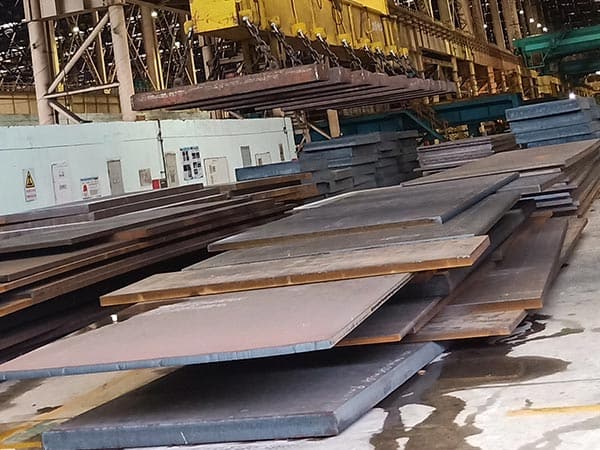
Understanding the Dimensional Landscape: What is the available size of S700MC hot rolled pickled steel?
S700MC is a high-strength, thermomechanically rolled steel designed for cold forming, governed by the EN 10149-2 standard. When discussing the available size of S700MC hot rolled pickled steel, it is essential to recognize that dimensions are dictated by the sophisticated rolling mills and the pickling lines that remove surface scale. Typically, this material is produced in thicknesses ranging from 2.0 mm to 12.0 mm. While some specialized mills can push the boundaries down to 1.5 mm or up to 15.0 mm, the sweet spot for structural integrity and weight reduction usually lies within the 3.0 mm to 8.0 mm range.
Width availability is equally critical for manufacturing efficiency. Most S700MC hot rolled pickled coils are available in standard widths of 1000 mm, 1250 mm, and 1500 mm. For large-scale industrial applications, such as trailer chassis or crane booms, wider plates up to 1800 mm may be sourced through custom rolling programs. Lengths are highly flexible, as the material can be supplied in coil form or as precision-cut sheets ranging from 2000 mm to 12000 mm, depending on the logistical constraints and the specific requirements of the fabrication process.
Dimensional Precision and Surface Excellence
The pickling process (acid cleaning) combined with oiling ensures that the S700MC surface is free from iron oxides, providing a clean slate for subsequent processes. This surface quality allows for tighter dimensional tolerances compared to standard hot-rolled black steel. Manufacturers often adhere to EN 10051 for dimensional tolerances, ensuring that thickness variations across the width of the sheet are minimized. This precision is vital for automated laser cutting and robotic welding, where even a fraction of a millimeter can affect the final assembly's structural alignment.
| Dimension Category | Typical Range (mm) | Standard Compliance |
|---|---|---|
| Thickness | 2.0 - 12.0 | EN 10051 |
| Width | 900 - 1500 (up to 1800) | EN 10051 |
| Length (Sheets) | 2000 - 12000 | Customizable |
| Internal Coil Diameter | 610 / 760 | Industry Standard |
Chemical Composition: The Engine of Performance
The exceptional properties of S700MC are not accidental; they are the result of a meticulously balanced chemical composition. By utilizing micro-alloying elements such as Niobium (Nb), Vanadium (V), and Titanium (Ti), the steel achieves a fine-grained microstructure during the thermomechanical rolling process. This grain refinement is the primary reason why S700MC can maintain a minimum yield strength of 700 MPa without sacrificing ductility.
- Carbon (C): Kept low (typically ≤ 0.12%) to ensure excellent weldability and prevent brittleness.
- Manganese (Mn): Acts as a solid solution strengthener and improves hardenability.
- Silicon (Si): Controlled to enhance strength while maintaining surface quality during pickling.
- Phosphorus (P) & Sulfur (S): Kept at ultra-low levels to minimize inclusions and improve impact toughness.
Mechanical Properties and Structural Advantage
The primary driver for selecting S700MC over traditional structural steels like S355 is the opportunity for weight reduction. With a yield strength nearly double that of standard grades, engineers can use thinner sections of S700MC to carry the same load. This leads to lighter vehicles, higher payloads, and lower fuel consumption in transport sectors.
Beyond the 700 MPa yield strength, the tensile strength typically ranges between 750 and 950 MPa. The elongation properties (A5) are usually around 12% to 15%, which is remarkable for a steel of this strength level. This balance allows the material to absorb significant energy during a collision, making it a preferred choice for safety-critical automotive components.
Processability: Bending, Welding, and Cutting
Despite its high strength, S700MC hot rolled pickled steel is designed for ease of fabrication. Its low carbon equivalent (CEV) makes it highly compatible with standard welding techniques, including MIG/MAG, laser welding, and resistance welding. Because the surface is pickled and oiled, there is no need for pre-welding grinding to remove scale, which significantly reduces labor costs and improves weld pool consistency.
Bending is another area where S700MC excels. When following the recommended minimum bend radii (typically 1.5 to 2.0 times the thickness), the material can be formed into complex shapes without cracking. This is essential for manufacturing U-beams, C-channels, and complex chassis reinforcements. Furthermore, the clean surface of pickled steel extends the life of cutting tools and laser nozzles, providing a more stable and cost-effective production environment.
Environmental Adaptability and Longevity
S700MC demonstrates robust performance across a wide temperature range. Its fine-grained structure provides excellent low-temperature impact toughness, often tested at -20°C or -40°C. This makes it suitable for equipment operating in harsh, cold climates, such as mining machinery in northern regions or offshore structural components. The pickled and oiled surface also provides temporary corrosion protection during transport and storage, ensuring the material arrives at the fabrication site in pristine condition.
Strategic Applications Across Industries
The versatility of S700MC hot rolled pickled steel has led to its adoption in various high-performance sectors. In the automotive industry, it is used for longitudinal beams, cross members, and chassis components where high strength and low weight are paramount. The lifting and transport sector utilizes S700MC for crane jibs, telescopic booms, and trailer frames, allowing for longer reach and higher lifting capacities.
In the agricultural machinery sector, the material is used for plow frames and heavy-duty trailers that must withstand constant mechanical stress and abrasive environments. The ability to source S700MC in specific sizes allows manufacturers to optimize their material nesting, reducing scrap rates and enhancing the overall sustainability of the manufacturing cycle.
By selecting the correct size and leveraging the superior mechanical properties of S700MC, engineers can push the boundaries of design, creating structures that are stronger, lighter, and more durable than ever before. The availability of pickled and oiled finishes further streamlines the path from raw material to finished product, ensuring that high-strength steel remains a cornerstone of modern industrial innovation.
Leave a message