
What is the plate 1.0984 steel for boom beveling
Discover the technical specifications and operational advantages of 1.0984 (S500MC) steel plate. This expert guide covers mechanical properties, metallurgy, and why it is the preferred choice for boom beveling in heavy-duty crane manufacturing.
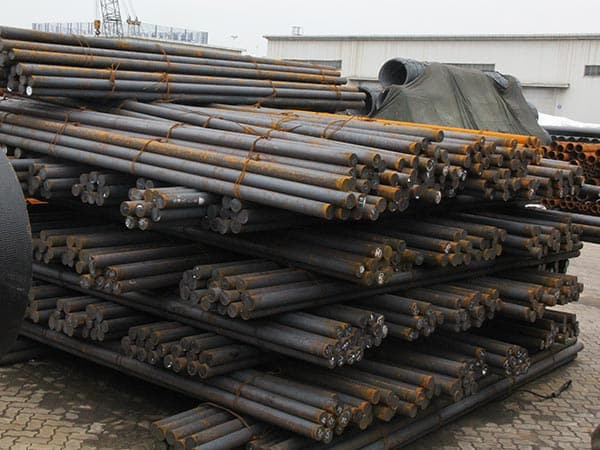
The Technical Identity of 1.0984 Steel Plate
1.0984 steel, widely recognized in the European standard EN 10149-2 as S500MC, is a high-yield strength, hot-rolled steel specifically engineered for cold forming. The 'S' denotes structural steel, '500' represents the minimum yield strength of 500 MPa, and 'MC' indicates that the material is thermomechanically rolled (M) and possesses high ductility for cold forming (C). In the context of heavy machinery, particularly in the manufacturing of telescopic booms and crane components, 1.0984 serves as a critical material that balances extreme strength with the flexibility required for complex fabrication processes like boom beveling.
The production of 1.0984 relies on Thermomechanically Controlled Processing (TMCP). This metallurgical technique involves precise control over the temperature and deformation during the rolling process. By managing the cooling rates and rolling passes, manufacturers can achieve a fine-grained ferrite-pearlite or bainitic microstructure without the need for expensive alloying elements or secondary heat treatments like normalizing. This fine grain structure is the secret behind the material's high toughness and excellent resistance to brittle fracture, even at low temperatures.
Chemical Composition and Metallurgical Precision
The performance of 1.0984 in demanding applications such as boom beveling is a direct result of its sophisticated chemical profile. Unlike traditional carbon steels, 1.0984 utilizes micro-alloying elements like Niobium (Nb), Vanadium (V), and Titanium (Ti). These elements are added in minute quantities to facilitate grain refinement and precipitation hardening. The low carbon content (typically ≤ 0.12%) is particularly significant, as it ensures superior weldability and reduces the risk of hardening in the heat-affected zone (HAZ) during thermal cutting or welding.
| Chemical Element | Maximum Content (%) | Role in Material Performance |
|---|---|---|
| Carbon (C) | 0.12 | Ensures excellent weldability and ductility. |
| Manganese (Mn) | 1.60 | Increases strength and improves hardenability. |
| Silicon (Si) | 0.50 | Acts as a deoxidizer and provides solid solution strengthening. |
| Phosphorus (P) | 0.025 | Kept low to prevent cold shortness and brittleness. |
| Sulphur (S) | 0.015 | Minimized to improve lamellar tearing resistance. |
| Aluminium (Al) | 0.015 (min) | Functions as a grain refiner. |
| Nb + V + Ti | 0.22 | Micro-alloying for grain refinement and strength. |
Mechanical Performance and Structural Integrity
For boom beveling, the mechanical properties of 1.0984 provide the necessary safety margins for lifting operations. The high yield strength allows for thinner plate sections, which significantly reduces the overall weight of the boom. This weight reduction translates directly into increased lifting capacity and longer reach for mobile cranes. However, strength alone is insufficient; the material must also exhibit high elongation and impact energy absorption to handle the dynamic loads encountered during operation.
- Yield Strength (Reh): Minimum 500 MPa. This is the stress level where the steel begins to deform plastically.
- Tensile Strength (Rm): 550 to 700 MPa. This range ensures that the material can withstand significant tension before failure.
- Elongation (A5): Minimum 12% to 14% (depending on thickness). High elongation is vital for the cold forming and bending required to shape boom boxes.
- Impact Toughness: Typically tested at -20°C or -40°C, ensuring the boom remains reliable in arctic or high-altitude environments.
The Critical Role of 1.0984 in Boom Beveling
Boom beveling is the process of preparing the edges of a steel plate before welding them together to form a boom section. Typically, two U-shaped or V-shaped halves are joined to create a hexagonal or decagonal boom profile. Beveling involves cutting the edge at a specific angle (usually between 30° and 45°) to allow for full-penetration welding. 1.0984 is the preferred material for this process for several technical reasons.
Thermal Stability during Cutting: Whether using plasma, laser, or oxy-fuel cutting for beveling, the edges of the plate are subjected to intense heat. Due to its low Carbon Equivalent Value (CEV), 1.0984 is less prone to edge hardening. This means the beveled surface remains ductile, preventing the formation of micro-cracks that could propagate under the high stress of a crane's lifting cycle. Mechanical beveling (milling) is also highly efficient with 1.0984, as the consistent grain structure leads to predictable tool wear and a superior surface finish.
Edge Integrity and Weld Preparation: The precision of the bevel is paramount for the integrity of the longitudinal weld seam. Any irregularities in the bevel can lead to weld defects like lack of fusion or slag inclusions. 1.0984's excellent surface quality and internal cleanliness ensure that the beveled edge is free from laminations or inclusions that could compromise the weld joint. This reliability is why 1.0984 is a staple in the production of high-performance telescopic booms.
Processing Advantages: Bending and Forming
After beveling, 1.0984 plates are often subjected to high-precision cold bending. The material's 'MC' designation guarantees that it can handle tight bending radii without cracking. For a plate of 1.0984, the recommended minimum bending radius is typically 1.0 to 1.5 times the plate thickness (depending on the orientation relative to the rolling direction). This allows for the creation of compact, high-efficiency boom profiles that can telescope smoothly within one another.
Springback Management: One challenge in high-strength steel forming is springback—the tendency of the metal to return to its original shape after the bending force is removed. 1.0984 exhibits consistent springback characteristics due to its uniform mechanical properties across the plate. This consistency allows manufacturers to calibrate their CNC press brakes with high precision, ensuring that every boom section fits perfectly, which is essential for the tight tolerances required in telescopic mechanisms.
Weldability and the Heat-Affected Zone (HAZ)
The success of a crane boom depends on the strength of its welds. 1.0984 is designed for excellent weldability using all standard methods, including MAG (Metal Active Gas), submerged arc welding (SAW), and laser-hybrid welding. Because the material relies on TMCP rather than heat treatment for its strength, it is important to manage the heat input during welding to avoid excessive grain growth in the HAZ.
The low CEV of 1.0984 generally eliminates the need for preheating, except in cases of extreme plate thickness or very low ambient temperatures. This simplifies the manufacturing process and reduces energy costs. Furthermore, the resistance of 1.0984 to cold cracking ensures that the longitudinal seams of the boom—which bear the brunt of the structural load—remain robust throughout the equipment's lifecycle.
Environmental Adaptability and Fatigue Resistance
Crane booms operate in some of the harshest environments on Earth, from offshore platforms to construction sites in sub-zero temperatures. 1.0984 steel provides the necessary environmental adaptability through its superior low-temperature toughness. The fine-grained structure prevents the ductile-to-brittle transition that can cause catastrophic failures in lower-grade steels.
Moreover, fatigue resistance is a critical factor for booms that undergo thousands of load cycles. The smooth surface finish of 1.0984, combined with its high yield strength, helps to inhibit the initiation of fatigue cracks. When the beveling and welding are performed correctly, the resulting joints in 1.0984 plates exhibit excellent fatigue life, ensuring the long-term safety and reliability of the lifting equipment.
Strategic Implementation in Heavy Machinery
The shift toward 1.0984 (S500MC) from traditional S355 grades has revolutionized the design of mobile and crawler cranes. By utilizing the higher strength-to-weight ratio of 1.0984, designers can create longer, lighter booms that allow for higher tip heights and greater radii. This is not merely a matter of material substitution but a fundamental change in structural engineering that prioritizes efficiency and safety.
In the competitive landscape of heavy equipment manufacturing, the use of 1.0984 for boom beveling represents a commitment to quality. The material's predictable behavior during cutting, beveling, bending, and welding reduces rework and scrap rates, ultimately lowering the total cost of production despite the higher initial cost of the steel itself. As lifting requirements continue to push the boundaries of physics, high-strength micro-alloyed steels like 1.0984 will remain at the heart of structural innovation.
Leave a message