
Principle of surface pretreatment of s315 steel equivalent astm
Comprehensive guide on the surface pretreatment principles for S315 steel and its ASTM equivalents, covering chemical cleaning, mechanical descaling, and industrial application optimization.
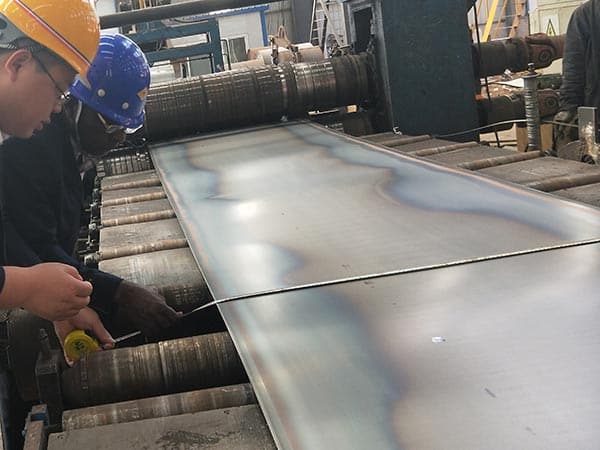
Technical Overview of S315 Steel and Its ASTM Equivalents
S315 steel, specifically categorized under the EN 10149-2 standard as S315MC, is a high-yield-strength steel designed for cold forming. This thermomechanically rolled steel is prized for its combination of high strength, toughness, and excellent weldability. When searching for an ASTM equivalent, engineers typically look toward ASTM A1011 HSLAS Grade 45 or Grade 50 (High-Strength Low-Alloy Steel) or ASTM A572 Grade 42/50 for thicker sections. These materials are fundamental in structural engineering, automotive manufacturing, and heavy machinery production.
The performance of S315 and its ASTM counterparts is not solely dependent on their internal microstructure. The surface condition plays a decisive role in the longevity and functionality of the final component. Surface pretreatment is the critical bridge between raw steel production and secondary processes like painting, galvanizing, or welding. Without a rigorous understanding of the chemical and mechanical principles behind pretreatment, the risk of coating failure, hydrogen embrittlement, or accelerated corrosion increases significantly.
Chemical Composition and Mechanical Foundations
To understand why pretreatment is necessary, one must first analyze the composition of S315MC and its ASTM equivalents. These steels contain controlled amounts of Manganese, Silicon, and micro-alloying elements like Niobium, Vanadium, or Titanium. These elements refine the grain structure but also influence how the surface reacts to atmospheric oxygen and chemical cleaners.
| Steel Grade | Yield Strength (MPa) | Tensile Strength (MPa) | Elongation (%) | Equivalent ASTM Standard |
|---|---|---|---|---|
| S315MC (EN 10149-2) | ≥ 315 | 390 - 510 | ≥ 20 | ASTM A1011 HSLAS Grade 45 |
| ASTM A1011 Grade 50 | ≥ 345 | ≥ 450 | ≥ 18 | S355MC (Closest Match) |
The presence of mill scale—a complex layer of FeO, Fe2O3, and Fe3O4—is a byproduct of the hot-rolling process. For S315 steel, this scale is often thin but extremely tenacious. Effective pretreatment must address this layer to ensure a chemically active surface for subsequent bonding.
The Principle of Mechanical Surface Pretreatment
Mechanical pretreatment, primarily through shot blasting or sandblasting, relies on the kinetic energy of abrasive media to physically remove contaminants. For S315MC, this process serves two primary functions: cleaning and texturing. When steel is hit by steel shot or grit, the impact breaks the brittle mill scale and removes rust. This creates a specific surface profile (Ra value), which increases the surface area for mechanical interlocking with coatings.
- Abrasive Selection: Using angular grit provides a sharper profile, ideal for heavy-duty epoxy coatings, while spherical shot is better for stress relief and removing light scale.
- Surface Hardening: The impact of the media can induce a slight compressive stress on the surface of S315, which can marginally improve fatigue resistance, a critical factor in automotive chassis components.
- Dust Management: Residual dust from mechanical cleaning must be removed via compressed air or vacuuming, as loose particles act as bond-breakers for primers.
Chemical Pretreatment Principles: Pickling and Degreasing
Chemical pretreatment is often preferred for complex geometries where mechanical blasting cannot reach. The core principle involves the use of acids and alkaline solutions to achieve a molecularly clean surface. For S315 and its ASTM equivalents, the process usually follows a specific sequence.
Degreasing is the first step. S315 sheets are often coated with protective oils to prevent flash rust during transport. Alkaline cleaners emulsify these oils. If oil remains, the subsequent acid pickling will be uneven, leading to "islands" of uncleaned scale. The chemistry involves surfactants that lower the surface tension, allowing the cleaner to penetrate the oil film.
Pickling involves immersing the steel in an acid bath, typically Hydrochloric Acid (HCl) or Sulfuric Acid (H2SO4). The acid reacts with the iron oxides (scale) to form soluble iron salts. For S315MC, the pickling time must be strictly controlled. Over-pickling can lead to hydrogen embrittlement, where atomic hydrogen enters the steel lattice, potentially causing brittle fractures in high-strength applications. To prevent this, inhibitors are added to the acid bath to protect the base metal while allowing the acid to attack the scale.
Conversion Coatings: Phosphating and Passivation
Once the S315 steel is cleaned, it is highly reactive and will rust within minutes if exposed to air. To prevent this and provide a superior base for paint, a conversion coating is applied. Zinc Phosphating is the industry standard for high-performance applications. The principle is a controlled chemical reaction where the steel surface is converted into a layer of insoluble crystalline phosphates.
This crystalline layer provides a "key" for paint and acts as a secondary corrosion barrier. If the paint is scratched, the phosphate layer limits the spread of sub-film corrosion (creep). For ASTM A1011 equivalent materials used in the appliance or automotive sectors, thin-film Zirconium-based pretreatments are becoming more common due to their environmental benefits and lower sludge production compared to traditional phosphating.
Weldability and Process Performance Post-Pretreatment
The pretreatment of S315 steel significantly impacts its weldability. Residual mill scale or heavy oil can lead to porosity, inclusions, and arc instability during MIG/MAG welding. A properly pretreated surface ensures a stable arc and deep penetration. Furthermore, in automated welding environments, consistent surface conductivity—achieved through uniform cleaning—is essential for maintaining weld quality across thousands of cycles.
In terms of cold forming, the surface condition affects the friction coefficient between the steel sheet and the die. S315MC is frequently used for complex stamped parts. A pretreated surface with a controlled lubricant carrier (like a thin phosphate layer) prevents galling and extends the life of expensive stamping tools.
Environmental Adaptability and Application Expansion
S315 steel is often deployed in harsh environments, from the salted roads of northern climates (in truck frames) to the humid conditions of agricultural machinery. The synergy between the steel's micro-alloyed chemistry and its surface pretreatment determines its environmental resilience.
- Automotive Industry: S315MC is a staple for cross members and longitudinal beams. Here, E-coating (electrophoretic painting) over a zinc phosphate pretreatment is the gold standard for 10+ years of corrosion protection.
- Construction Machinery: For crane booms and excavator parts, S315 equivalents require heavy-duty shot blasting (Sa 2.5 or Sa 3) followed by high-build epoxy primers to withstand abrasive soil and debris.
- Renewable Energy: Solar tracking systems utilize S315 for its strength-to-weight ratio. These components are often hot-dip galvanized. The pretreatment principle here involves fluxing, which ensures the molten zinc bonds metallurgically with the steel.
Optimizing Pretreatment for ASTM A1011/A572 Equivalents
When substituting S315 with ASTM equivalents, one must account for slight variations in surface chemistry. ASTM A1011 may have different silicon levels depending on the deoxidation practice used at the mill. Silicon can influence the thickness and structure of the pickling layer and the reactivity during galvanizing (the Sandelin effect). Therefore, pretreatment parameters—such as acid concentration, temperature, and immersion time—should be calibrated based on the specific heat analysis of the steel batch.
Modern industrial 4.0 practices involve real-time monitoring of pretreatment baths. Sensors track pH, conductivity, and metal ion concentration to ensure that every square meter of S315 steel receives an identical surface treatment. This level of precision is what allows manufacturers to offer extended warranties and ensure the structural integrity of high-strength components throughout their lifecycle.
By adhering to these rigorous pretreatment principles, the inherent mechanical advantages of S315 steel—its high yield strength and ductility—are fully realized and protected against the degradative forces of the environment. Whether through mechanical abrasion or complex chemical conversion, the surface remains the first line of defense in engineering excellence.
Leave a message