
What is the price of carbon plate S355MC in Malaysia
Discover the current market trends, technical specifications, and pricing factors for S355MC carbon steel plates in Malaysia. A comprehensive guide for industrial procurement.
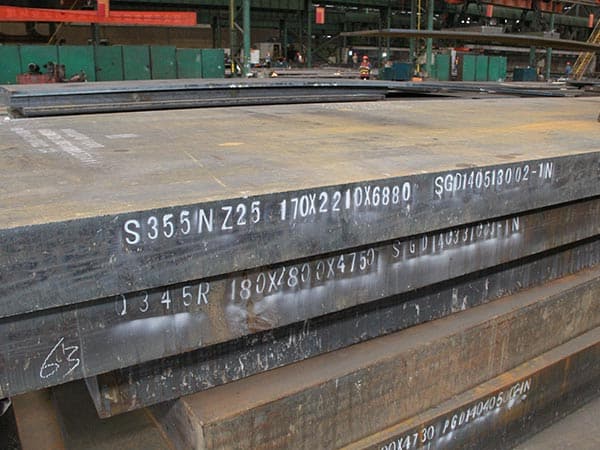
Understanding S355MC Carbon Steel Plate Pricing in the Malaysian Market
Determining the exact price of S355MC carbon steel plates in Malaysia requires an analysis of global raw material costs, local logistics, and the specific technical requirements of the project. S355MC is a high-yield-strength steel designed for cold forming, governed by the EN 10149-2 standard. In Malaysia's industrial landscape, which spans from automotive manufacturing to heavy infrastructure, this grade is prized for its balance of strength and weight-saving potential.
Currently, prices for S355MC in the Malaysian region fluctuate based on the origin of the material—whether it is sourced from Tier-1 European mills, Chinese manufacturers, or local stockists in Klang or Johor. Buyers can expect price points to be influenced by the Ringgit (MYR) exchange rate against the USD, as well as prevailing maritime freight rates. Because S355MC is a thermomechanically rolled steel, its pricing often carries a premium over standard structural grades like s355jr due to the specialized rolling processes required to achieve its fine-grained microstructure.
Technical Specifications and Chemical Composition of S355MC
The performance of S355MC is rooted in its precise chemical makeup. Unlike traditional hot-rolled plates, S355MC utilizes micro-alloying elements such as Niobium (Nb), Vanadium (V), and Titanium (Ti) to refine grain size. This refinement allows the steel to maintain high strength while remaining exceptionally ductile for cold forming operations.
| Element | Maximum Content (%) |
|---|---|
| Carbon (C) | 0.12 |
| Manganese (Mn) | 1.50 |
| Silicon (Si) | 0.50 |
| Phosphorus (P) | 0.025 |
| Sulfur (S) | 0.020 |
| Aluminium (Al) | 0.015 (Min) |
The low carbon content is a critical factor for Malaysian fabricators. It ensures that the material has an extremely low Carbon Equivalent Value (CEV), which directly translates to superior weldability. In the humid, tropical climate of Southeast Asia, the consistency of the alloy's chemistry also aids in predictable surface treatment outcomes, such as galvanizing or specialized coating systems.
Mechanical Properties and Performance Advantages
The "355" in S355MC denotes a minimum yield strength of 355 MPa. However, its real value lies in its elongation properties and impact toughness. For companies in Malaysia's transport and crane manufacturing sectors, using S355MC allows for thinner sections without compromising structural integrity, effectively reducing the dead weight of vehicles and machinery.
- Yield Strength: Min 355 MPa (for thicknesses ≤ 16mm).
- Tensile Strength: 430–550 MPa.
- Elongation: Min 19% to 23% depending on thickness.
- Bendability: Excellent cold-folding capacity with small bending radii.
These mechanical attributes make it a superior choice compared to standard S355JR. While S355JR is a general-purpose structural steel, S355MC is specifically engineered for parts that require complex forming, such as chassis components, cold-pressed profiles, and structural sections in heavy-duty trucks. The thermomechanical rolling process (denoted by the 'M') ensures a uniform grain structure that prevents cracking during high-stress fabrication.
Processing Performance: Welding, Cutting, and Forming
From a workshop perspective in Malaysia, S355MC is highly regarded for its ease of processing. High-strength steels can sometimes be difficult to work with, but the low-alloy design of S355MC mitigates these issues. Laser cutting speeds are typically higher for S355MC compared to traditional high-carbon plates because of the clean, low-impurity surface finish and consistent thickness tolerances.
Weldability: S355MC can be welded using all standard methods, including MIG/MAG, TIG, and submerged arc welding. Because of the low CEV, preheating is rarely required for standard thicknesses, which reduces labor costs and energy consumption in Malaysian fabrication yards. Cold Forming: This is where the 'C' designation shines. The material can be bent to tight radii without edge cracking, provided the grain direction is considered during the layout phase. This makes it ideal for the production of telescopic booms and complex automotive frames.
Environmental Adaptability in the Malaysian Climate
Malaysia's high humidity and coastal environments pose significant challenges regarding atmospheric corrosion. While S355MC is not a weathering steel (like Corten), its fine-grained structure provides a slightly more uniform surface for protective coatings to adhere to compared to coarse-grained hot-rolled steels. For offshore support structures or coastal infrastructure projects in Port Klang or Bintulu, S355MC is often used in conjunction with high-performance epoxy coatings or hot-dip galvanizing.
The thermal stability of S355MC is also noteworthy. In the high ambient temperatures of Malaysia, the material maintains its mechanical properties without significant degradation. Its impact toughness at low temperatures (often tested at -20°C or -40°C depending on the specific sub-grade) also ensures safety in pressurized applications or specialized cold-storage structural frames.
Market Dynamics and Procurement Strategies in Malaysia
When sourcing S355MC in Malaysia, several factors will dictate the final quotation. Volume is the primary driver; bulk indent orders directly from overseas mills will yield the lowest per-ton price but require lead times of 8 to 12 weeks. Conversely, buying from local stockists in Shah Alam or Penang offers immediate availability but at a premium to cover warehousing and financing costs.
The price is also sensitive to thickness and width. Standard sizes (e.g., 1500mm x 6000mm) are more readily available and cheaper. Non-standard widths or extra-long plates may require custom rolling, which increases the price significantly. Buyers should also verify the Mill Test Certificate (MTC) to ensure the material meets EN 10204 3.1 standards, as "commercial grade" substitutes often fail to meet the strict yield requirements of S355MC.
Applications Across Malaysian Industries
The versatility of S355MC has led to its widespread adoption across various high-growth sectors in Malaysia. Its ability to reduce weight while maintaining strength is a key driver in modern engineering projects.
- Automotive & Transportation: Used extensively for truck chassis, trailers, and heavy-duty vehicle frames to increase payload capacity.
- Construction Machinery: Essential for crane arms, excavator buckets, and lifting equipment where high yield strength is mandatory.
- Renewable Energy: Increasingly used in the structural supports for solar farms and components for hydroelectric power stations.
- Agriculture: Fabrication of heavy-duty plows, harvesters, and storage silos that require durability against mechanical wear.
By choosing S355MC, Malaysian engineers can optimize their designs, leading to lower fuel consumption in transport applications and reduced material usage in static structures. This aligns with the growing trend toward sustainable engineering and cost-efficiency in the regional market.
Conclusion on Pricing and Value
While the price of S355MC carbon plate in Malaysia may be higher than basic structural steel, the total cost of ownership is often lower. The reduction in material weight, ease of welding, and superior forming characteristics lead to significant savings in fabrication and logistics. For an accurate quote, it is recommended to provide suppliers with the specific thickness, quantity, and required certifications, as the Malaysian steel market remains dynamic and responsive to global economic shifts.
Leave a message