
How to distinguish hot rolled S700MC steel for car gear and cold rolled steel by naked eyes
Expert guide on visually distinguishing S700MC hot rolled steel from cold rolled steel in automotive applications. Learn about surface textures, edge characteristics, and mechanical properties.
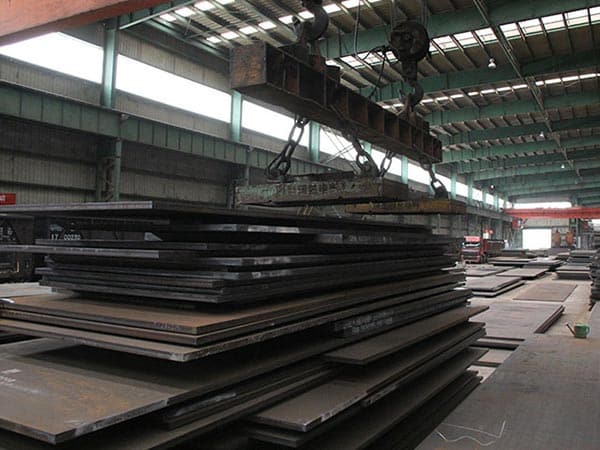
Understanding the Visual Identity of S700MC High-Strength Steel
In the high-stakes world of automotive manufacturing, identifying materials accurately is paramount for structural integrity and cost-efficiency. S700MC is a thermomechanically rolled, high-yield-strength steel designed specifically for cold forming. While it is technically a hot-rolled product, its refined processing often leads to confusion with cold-rolled alternatives. Distinguishing S700MC from standard cold-rolled steel by naked eyes requires a keen understanding of surface metallurgy, edge profiles, and the physical manifestations of the thermomechanical rolling process.
The Surface Texture: Mill Scale vs. Metallic Luster
The most immediate visual indicator lies in the surface finish. Hot rolled S700MC typically features a thin, tightly adherent layer of dark grey or bluish-black oxide, known as mill scale. Because S700MC undergoes thermomechanical rolling (the 'MC' designation), this scale is much finer and smoother than that found on standard S235JR hot-rolled plates. However, it still lacks the reflective, bright, or matte-silver finish characteristic of cold-rolled steel.
Cold rolled steel is processed at room temperature, which removes the oxide scale and results in a highly smooth, often oily surface. When inspecting S700MC, you will notice a slightly porous or 'grainy' texture if viewed under bright light, whereas cold-rolled steel will appear uniform and almost mirror-like if it hasn't been skin-passed for a matte finish.
- S700MC: Darker grey, non-reflective, fine oxide texture.
- Cold Rolled Steel: Bright, metallic, smooth, and often coated with a light rust-preventative oil.
Edge Morphology and Thickness Variations
The edges of the steel sheet provide significant clues. Hot rolled S700MC is often delivered with 'mill edges,' which are slightly rounded and irregular due to the rolling process. Even if the S700MC has been slit, the edge will show a distinct 'shear zone' that appears darker and more fibrous. Cold rolled steel, by contrast, is almost always slit with high precision, resulting in very sharp, square, and bright edges.
Thickness is another giveaway. S700MC is frequently utilized in thicknesses ranging from 3.0mm to 10.0mm for automotive gears, brackets, and chassis components. Cold rolling becomes significantly more expensive as thickness increases; therefore, if you are looking at a plate thicker than 3.0mm that maintains high strength, it is statistically more likely to be a hot-rolled high-strength grade like S700MC.
Mechanical Integrity and Dimensional Precision
While you cannot 'see' yield strength, you can observe the physical results of the steel's dimensional tolerances. Cold rolled steel boasts incredibly tight tolerances. If you place a straight edge across the surface, a cold-rolled sheet will show almost zero light gap. S700MC, despite being a premium hot-rolled product, may exhibit slight 'waves' or crown variations that are characteristic of the hot-rolling cooling process.
| Feature | Hot Rolled S700MC | Standard Cold Rolled Steel |
|---|---|---|
| Surface Color | Dark grey to blue-black (oxide) | Silver-grey to bright metallic | Tactile Feel | Slightly rough/velvety | Extremely smooth/oily | Edge Profile | Rounded mill edge or dark slit edge | Sharp, bright, precision-cut edge | Common Thickness | 2.0mm - 12.0mm | 0.5mm - 3.0mm | Typical Yield Strength | 700 MPa (Minimum) | 280 - 550 MPa (Standard grades) |
Environmental Adaptability and Oxidation Patterns
The way the steel reacts to the atmosphere provides visual evidence of its processing. If left in a humid warehouse, cold rolled steel will develop 'red rust' (ferric oxide) very quickly in patches or fingerprints because it lacks a protective scale. S700MC, thanks to its thermomechanical oxide layer, has a slightly higher natural resistance to flash rusting. The oxidation on S700MC tends to be more uniform and slower to penetrate, often appearing as a darkening of the existing scale rather than bright orange spots.
Application in the Automotive Sector
S700MC is a favorite for 'Car Gear' components—not necessarily the internal gears of a transmission, but the structural gearing, seat mechanisms, and heavy-duty brackets that require immense load-bearing capacity without the weight of traditional carbon steel. Its fine-grained microstructure, achieved through controlled cooling, allows it to be bent and folded into complex shapes without cracking, a feat that older hot-rolled grades could not achieve.
When you observe a part that has been intricately bent but still shows the tell-tale signs of a hot-rolled surface, you are likely looking at S700MC. Cold rolled steel is typically used for 'outer skin' parts where surface perfection is the priority, whereas S700MC is the 'muscle' hidden beneath, providing the strength-to-weight ratio needed for modern fuel efficiency standards.
Visual Inspection during Fabrication
During welding or laser cutting, S700MC behaves differently. A laser cutter will produce a slightly cleaner edge on cold-rolled steel because there is no scale to interfere with the beam. On S700MC, you might see tiny spatters of scale near the cut line. Similarly, during welding, the oxide layer on S700MC may cause a slightly darker weld pool compared to the clean, bright melt seen on cold-rolled surfaces. These process-related visual cues are essential for quality control officers on the shop floor.
Identifying S700MC by naked eye is an art backed by metallurgical science. By focusing on the interplay between the dark, refined oxide scale and the structural thickness of the material, professionals can distinguish this high-performance thermomechanical steel from its cold-rolled counterparts, ensuring the right material is used for the right automotive application.
Leave a message