
What is the B750L thermomechanically processed price export to British
Explore the current export pricing dynamics for B750L thermomechanically processed steel to the UK. This guide covers mechanical properties, processing advantages, and market factors influencing B750L costs for British automotive and engineering sectors.
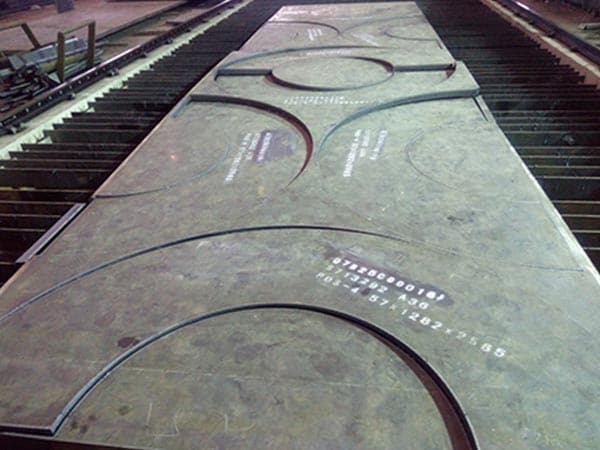
Understanding B750L Thermomechanically Processed Steel in the British Market
When discussing the B750L thermomechanically processed price export to British, it is essential to first define what makes this material a premium choice for high-end engineering. B750L is a high-strength low-alloy (HSLA) steel specifically designed for automotive structural components, particularly those requiring a high strength-to-weight ratio. The 'B' often refers to the manufacturer standard (such as Baosteel), '750' denotes the minimum yield strength of 750 MPa, and 'L' signifies its suitability for longitudinal beam applications. The thermomechanical control process (TMCP) is the cornerstone of its performance, ensuring a fine-grained microstructure that balances hardness with ductility.
For British importers and manufacturers, the price of B750L is not a static figure. It is influenced by a complex interplay of metallurgical excellence, international trade logistics, and the specific requirements of the UK’s stringent safety standards. Understanding the technical nuances of this grade allows procurement managers to justify the investment in B750L over lower-grade alternatives.
Mechanical Excellence and Material Composition
The mechanical properties of B750L are the primary drivers of its value. Unlike traditional hot-rolled steels, B750L undergoes precise temperature control during the rolling process. This results in a material that can withstand extreme stresses without failure. For the British automotive sector, where lightweighting is a priority to meet carbon emission targets, B750L offers a significant advantage.
Yield Strength and Tensile Strength: B750L boasts a yield strength of at least 750 MPa and a tensile strength typically ranging between 800 and 950 MPa. This allows for the use of thinner gauges without sacrificing structural integrity, directly impacting the fuel efficiency of heavy-duty vehicles and trailers manufactured in the UK.
Elongation and Formability: Despite its high strength, B750L maintains excellent elongation properties (often above 12%). This ensures that the steel can be cold-formed into complex shapes like chassis rails and cross-members without cracking. The B750L thermomechanically processed price export to British reflects this dual-benefit of strength and workability.
| Property | Typical Value (B750L) | Significance for UK Engineering |
|---|---|---|
| Yield Strength (MPa) | ≥ 750 | High load-bearing capacity for chassis |
| Tensile Strength (MPa) | 800 - 950 | Resistance to structural failure |
| Elongation (%) | ≥ 12 | Superior cold-forming capabilities |
| Impact Energy (-20°C) | ≥ 40 J | Safety in cold British climates |
Processing Performance and Weldability
One of the reasons the B750L thermomechanically processed price export to British remains competitive is the reduced cost of downstream processing. Because the steel is produced via TMCP, it has a low carbon equivalent (Ceq). This is a critical factor for British fabricators who rely on automated welding systems.
- Excellent Weldability: The low carbon content reduces the risk of cold cracking in the heat-affected zone (HAZ). This means British manufacturers can utilize high-speed welding processes without the need for expensive pre-heating or post-weld heat treatments.
- Consistency in Laser Cutting: TMCP steels like B750L exhibit minimal internal stress. When British service centers use fiber lasers to cut complex parts, the material remains flat and stable, reducing scrap rates and improving production efficiency.
- Cold Bending Performance: B750L is optimized for tight bending radii. This is particularly useful for the UK’s trailer manufacturing industry, where space-efficient structural designs are required.
Environmental Adaptability and the UK Context
The British climate, characterized by high humidity and varying temperatures, demands materials with robust environmental adaptability. B750L, while not a stainless grade, offers improved atmospheric corrosion resistance compared to standard carbon steels due to its refined grain structure and specific alloying elements like Niobium (Nb) and Titanium (Ti).
Furthermore, the B750L thermomechanically processed price export to British is increasingly influenced by the UK’s Carbon Border Adjustment Mechanism (CBAM). As the UK moves toward a greener economy, the energy-efficient nature of the TMCP production route (which uses less energy than traditional quenching and tempering) makes B750L a more sustainable choice for forward-thinking British enterprises.
Factors Influencing Export Pricing to the UK
Determining the exact B750L thermomechanically processed price export to British requires an analysis of several dynamic variables. It is rarely a single price point but rather a range based on volume, specification, and timing.
Raw Material Volatility: The cost of iron ore and coking coal remains the foundation of steel pricing. Any fluctuations in the global commodities market will reflect in the FOB (Free on Board) price from major exporting ports.
Logistics and Freight: Shipping costs from Asian or European mills to British ports like Felixstowe or Southampton play a major role. Container availability and fuel surcharges can add a significant margin to the final landed cost.
Currency Exchange Rates: Since international steel trade is primarily conducted in USD, the GBP/USD exchange rate is a vital factor for British buyers. A weaker Pound can effectively increase the import price even if the base steel price remains stable.
UKCA/CE Marking and Certification: To enter the British market, B750L must often be accompanied by Mill Test Certificates (MTC) according to EN 10204 3.1. The cost of rigorous testing to ensure compliance with BS EN 10149-2 (the European equivalent for high-strength cold-forming steels) is factored into the export premium.
Expanding Applications Across British Industries
The versatility of B750L extends beyond the automotive sector. Its high strength and reliability make it a sought-after material in several key British industries:
- Heavy Lifting and Cranes: The UK’s construction and port sectors require lightweight yet strong materials for telescopic booms and outriggers. B750L provides the necessary safety margins.
- Agriculture Machinery: British farmers demand durable equipment. B750L is used in the frames of large harvesters and plows, where it resists the fatigue of constant soil interaction.
- Renewable Energy Infrastructure: As the UK expands its wind energy capacity, B750L is finding uses in the structural supports and transport frames for turbine components.
- Waste Management Vehicles: The high yield strength allows for the design of larger capacity refuse trucks that still fall within the UK's legal road weight limits.
Strategic Procurement for British Buyers
To optimize the B750L thermomechanically processed price export to British, buyers should look for long-term partnerships with reputable suppliers who understand the UK’s regulatory landscape. Buying in bulk or aligning orders with scheduled production runs can significantly reduce the per-ton cost. Additionally, specifying exact dimensions and tolerances can minimize waste at the point of use, further enhancing the value proposition of this high-performance steel grade.
The transition to B750L represents a move toward higher efficiency and greater safety. For the British market, where engineering excellence is a hallmark, this thermomechanically processed steel offers the perfect balance of technical capability and economic viability, provided the procurement strategy accounts for the multifaceted nature of global trade.
Leave a message