
Why choose the s550mc automotive steel coil steel sheet
A comprehensive technical guide on S550MC automotive steel, covering its mechanical properties, metallurgy, formability, and why it is the premier choice for modern vehicle lightweighting.
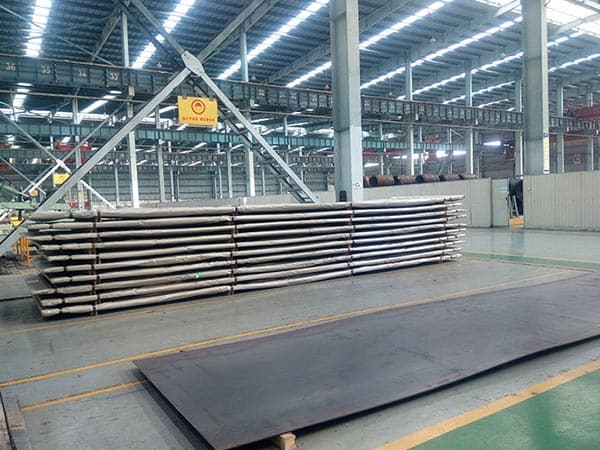
The Strategic Shift to S550MC in Modern Automotive Engineering
In the current landscape of automotive manufacturing, the demand for materials that balance extreme strength with reduced mass has never been higher. S550MC, a high-yield-strength steel for cold forming, has emerged as a cornerstone material for engineers seeking to optimize vehicle performance. This thermomechanically rolled steel, governed by the EN 10149-2 standard, offers a unique combination of structural integrity and processing flexibility that traditional carbon steels simply cannot match. By choosing S550MC automotive steel coil and sheet, manufacturers can achieve significant weight reductions without compromising the safety or durability of the vehicle chassis and structural components.
Understanding the Metallurgy: Thermomechanical Rolling and Micro-alloying
The superior properties of S550MC are not accidental; they are the result of precise metallurgical engineering. Unlike traditional normalized steels, S550MC is produced through a thermomechanical rolling process. This involves controlled deformation at specific temperature ranges, followed by accelerated cooling. This process creates a fine-grained ferrite-pearlite microstructure that is inherently tougher and stronger than coarse-grained alternatives.
Key to this performance is the addition of micro-alloying elements. Elements such as Niobium (Nb), Vanadium (V), and Titanium (Ti) are added in minute quantities. These elements form carbides and nitrides that pin grain boundaries during the rolling process, preventing grain growth and ensuring a highly refined structure. This refinement is the primary reason why S550MC can maintain high ductility even at a minimum yield strength of 550 MPa.
| Chemical Element | Maximum Content (%) |
|---|---|
| Carbon (C) | 0.12 |
| Manganese (Mn) | 1.80 |
| Silicon (Si) | 0.50 |
| Phosphorus (P) | 0.025 |
| Sulfur (S) | 0.015 |
| Aluminium (Al) | 0.015 |
Mechanical Excellence: Yield Strength and Tensile Performance
The designation "S550MC" directly refers to its mechanical capabilities. The "S" stands for structural steel, "550" denotes a minimum yield strength of 550 MPa, and "MC" indicates it is thermomechanically rolled (M) and suitable for cold forming (C). In practice, this steel provides a tensile strength range between 600 and 760 MPa, providing a robust safety margin for dynamic loads.
One of the most critical aspects of S550MC is its elongation property. For thicknesses less than 3mm, the minimum elongation is typically around 12%, while thicker sheets offer up to 14%. This ductility is vital because it allows the steel to absorb energy during an impact, a fundamental requirement for automotive crash structures. The high yield-to-tensile ratio ensures that the material remains stable under high stress, making it ideal for longitudinal beams and cross members in truck frames.
Superior Formability and Workshop Processing
A common misconception is that higher strength leads to poor workability. S550MC defies this logic. Thanks to its low carbon content and fine grain structure, it exhibits excellent cold forming characteristics. It can be bent, flanged, and cold-pressed into complex geometries that would cause cracking in standard high-carbon steels.
- Bending Radius: For a 90-degree bend, S550MC typically requires a minimum inner bending radius of only 1.0 to 1.5 times the material thickness (depending on the orientation relative to the rolling direction).
- Edge Quality: The material's homogeneity ensures that sheared edges remain stable during subsequent forming operations, reducing the risk of edge cracking.
- Surface Finish: S550MC is usually supplied with a pickled and oiled surface, which protects the steel during transport and provides a clean base for laser cutting and welding.
Optimized Weldability for Automated Production
In automotive assembly lines, welding speed and joint integrity are paramount. S550MC features a very low Carbon Equivalent (CEV), which significantly enhances its weldability. It can be joined using all standard welding methods, including MAG (Metal Active Gas), laser welding, and resistance spot welding.
Because the alloying content is kept low, there is a minimal risk of cold cracking in the heat-affected zone (HAZ). Unlike some high-strength steels that require preheating, S550MC can be welded at ambient temperatures, which streamlines the production process and reduces energy costs. Furthermore, the fine-grained structure helps maintain the toughness of the weld joint, ensuring that the entire assembly performs as a monolithic unit under stress.
Expanding Applications: Beyond the Automotive Sector
While S550MC is branded as an automotive steel, its properties have led to widespread adoption in other demanding industries. The drive for efficiency and material reduction is universal. In the heavy machinery and transport sectors, S550MC is used to manufacture crane arms, trailer chassis, and agricultural equipment.
In the construction of heavy-duty trailers, replacing S355MC with S550MC allows for a reduction in plate thickness of approximately 20-30% while maintaining the same load-bearing capacity. This weight saving translates directly into higher payloads for the end-user and lower fuel consumption, providing a clear economic advantage over the vehicle's lifecycle.
Environmental Adaptation and Sustainability
Modern manufacturing must account for environmental impact. S550MC contributes to sustainability through the principle of "doing more with less." By using thinner, higher-strength sheets, the total amount of raw iron ore and energy required to produce a vehicle is reduced. Furthermore, the weight reduction in the final vehicle leads to lower CO2 emissions during operation, particularly in internal combustion engine vehicles, and increased range for electric vehicles (EVs).
The material is also 100% recyclable. At the end of the vehicle's life, S550MC can be processed in electric arc furnaces to produce new high-quality steel, supporting a circular economy. Its resistance to atmospheric corrosion can be further enhanced through modern coating technologies like hot-dip galvanizing or zinc-magnesium coatings, ensuring a long service life even in harsh environments.
Technical Comparison: S550MC vs. Conventional Grades
When comparing S550MC to conventional structural steels like S355, the advantages become stark. While S355 is a versatile workhorse, it lacks the strength-to-weight ratio needed for modern lightweighting. S550MC offers nearly 55% higher yield strength than S355, allowing for drastic design changes. Compared to even higher grades like S700MC, S550MC often provides a better balance of cost and formability, making it the "sweet spot" for many structural automotive applications where extreme strength is required but high-volume cold pressing is still necessary.
| Property | S355MC | S550MC | S700MC |
|---|---|---|---|
| Min. Yield (MPa) | 355 | 550 | 700 | Tensile (MPa) | 430-550 | 600-760 | 750-950 | Min. Elongation (%) | 19 | 12-14 | 10-12 |
| Formability | Excellent | Very Good | Good |
Strategic Procurement and Quality Assurance
Selecting the right S550MC automotive steel coil requires attention to detail. It is essential to verify that the material meets the tight tolerances required for automated manufacturing. Consistency in thickness and flatness is critical for laser cutting precision and robotic welding alignment. Reputable suppliers provide full mill test certificates (MTC) that document the chemical heat analysis and the mechanical test results for every coil.
Engineers should also consider the orientation of parts during nesting. Because S550MC is a rolled product, its properties can vary slightly between the longitudinal and transverse directions. Professional steel service centers can provide guidance on how to optimize part layout to take full advantage of the material's grain structure, ensuring maximum performance in the final application.
Leave a message