
What is the S315MC material application
Discover the extensive applications and technical properties of S315MC steel. This guide covers its chemical composition, mechanical performance, and industrial use.
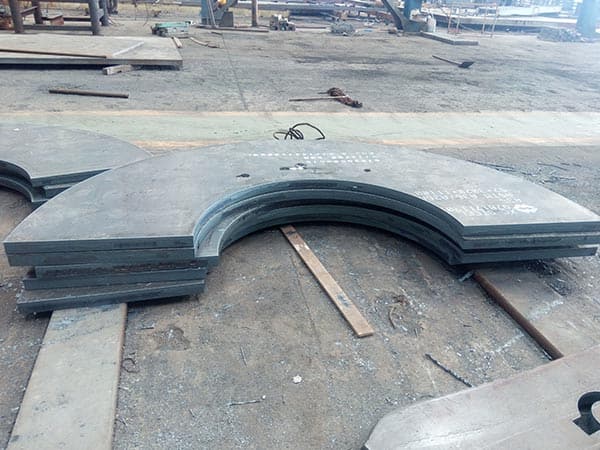
Understanding the Fundamentals of S315MC Steel
S315MC is a high-yield strength, hot-rolled steel specifically designed for cold forming. It belongs to the EN 10149-2 standard, which specifies the delivery conditions for thermomechanically rolled steels. The 'S' in the designation stands for structural steel, while '315' represents the minimum yield strength of 315 MPa. The 'MC' suffix indicates that the material is suitable for cold forming (C) and has been thermomechanically rolled (M). This unique combination of processing and chemistry allows for a material that is both strong and exceptionally ductile, making it a staple in modern manufacturing where weight reduction and structural integrity are paramount.
Chemical Composition and Metallurgical Advantages
The performance of S315MC is rooted in its precise chemical makeup. Unlike traditional structural steels, S315MC utilizes micro-alloying elements to achieve its properties without the need for high carbon content, which improves weldability and toughness. The typical chemical composition includes low carbon (usually below 0.12%) to ensure excellent ductility and weldability. Manganese (around 1.30%) is added to increase strength and hardenability, while Silicon (up to 0.50%) acts as a deoxidizer.
The true secret to S315MC lies in the addition of micro-alloying elements such as Niobium (Nb), Vanadium (V), and Titanium (Ti). These elements facilitate grain refinement during the thermomechanical rolling process. Smaller grain sizes result in a material that can withstand higher stresses while maintaining the ability to be bent or folded without cracking. Phosphorus and Sulfur levels are kept extremely low (typically below 0.025% and 0.020% respectively) to minimize impurities that could lead to brittleness or lamellar tearing during fabrication.
| Element | Maximum Content (%) |
|---|---|
| Carbon (C) | 0.12 |
| Manganese (Mn) | 1.30 |
| Silicon (Si) | 0.50 |
| Phosphorus (P) | 0.025 |
| Sulfur (S) | 0.020 |
| Aluminium (Al) | 0.015 (Min) |
| Niobium (Nb) | 0.09 |
| Titanium (Ti) | 0.15 |
Mechanical Properties and Structural Integrity
Engineers favor S315MC because it offers a predictable and reliable mechanical profile. The minimum yield strength of 315 MPa provides a significant upgrade over standard S235JR steels, allowing designers to reduce the thickness of components without sacrificing safety. The tensile strength ranges between 390 and 510 MPa, ensuring that the material can absorb significant energy before failure.
Ductility is measured by elongation, and S315MC typically exhibits an elongation at break of at least 20% to 24% depending on the thickness. This high level of plasticity is critical for cold-forming operations such as deep drawing, bending, and flanging. Furthermore, the material maintains its impact toughness at low temperatures, which is essential for equipment operating in harsh environments or northern climates.
| Property | Value |
|---|---|
| Yield Strength (Reh) | Min 315 MPa |
| Tensile Strength (Rm) | 390 - 510 MPa |
| Elongation (A5) | Min 20% - 24% |
| Bending Radius (90°) | 0.9t to 1.5t |
Advanced Processing: Bending, Welding, and Cutting
The versatility of S315MC is most evident during the fabrication process. Because of its low carbon equivalent (CEV), the material is exceptionally easy to weld using standard methods such as MIG/MAG, TIG, and submerged arc welding. There is a reduced risk of cold cracking in the heat-affected zone (HAZ), which simplifies the welding procedure and reduces the need for pre-heating in most thicknesses.
In terms of cold forming, S315MC is a dream for operators. It can be bent to very tight radii—often as low as 0.9 times the thickness of the plate—without showing signs of surface cracking or orange peel effects. This allows for the creation of complex geometries in automotive frames and structural profiles. When it comes to cutting, whether using laser, plasma, or waterjet, S315MC provides clean edges with minimal slag, facilitating faster assembly and better fit-up of parts.
Dominance in the Automotive and Transportation Industry
The primary application of S315MC is found in the automotive sector, specifically for heavy-duty vehicles and trucks. The push for lightweighting to improve fuel efficiency and increase payload capacity has made S315MC an indispensable material. It is used extensively for truck chassis, longitudinal beams, and cross members. These components must withstand high cyclic loads and vibration; the fatigue resistance of S315MC ensures a long service life for the vehicle.
Beyond the chassis, S315MC is utilized in the production of seat frames, bumper brackets, and suspension components. Its ability to absorb energy during an impact makes it a preferred choice for safety-critical parts that must deform in a controlled manner during a collision. By replacing thicker, heavier mild steels with thinner S315MC, manufacturers can achieve weight savings of up to 20% while maintaining the same structural performance.
Expanding Applications in Heavy Machinery and Infrastructure
The utility of S315MC extends far beyond the highway. In the agricultural sector, it is used to manufacture trailer frames, plow components, and harvester structures. These machines operate in demanding conditions where they are subjected to soil abrasion and heavy mechanical stress. S315MC provides the necessary toughness to resist deformation under load.
In the construction and logistics industries, S315MC is found in high-load racking systems, crane arms, and cold-formed sections for building frames. The material's high strength-to-weight ratio is particularly beneficial for mobile cranes, where reducing the weight of the boom allows for greater lifting capacity and reach. Additionally, the consistency of the material ensures that automated manufacturing processes, such as roll forming, can run at high speeds with minimal downtime.
Environmental Adaptability and Sustainability
Modern engineering is increasingly focused on the environmental footprint of materials. S315MC contributes to sustainability goals in several ways. First, the weight reduction achieved through its high strength directly leads to lower fuel consumption and CO2 emissions in transport applications. Second, the thermomechanical rolling process is more energy-efficient than traditional heat treatment processes like quenching and tempering.
Furthermore, S315MC is fully recyclable. At the end of a vehicle or machine's life cycle, the steel can be recovered and re-melted without loss of quality. The low alloy content makes it easy to integrate into standard scrap recycling streams, supporting a circular economy. The material also responds well to various surface treatments, including galvanizing and painting, which protects it from corrosion and extends the functional lifespan of the end product.
Comparative Analysis: S315MC vs. Other Grades
When selecting a material, it is important to understand where S315MC sits in the hierarchy of high-strength steels. Compared to standard S235 or S355 structural steels, S315MC offers superior formability and a more consistent yield-to-tensile ratio. While S355MC offers higher strength, S315MC is often chosen for parts requiring more aggressive bending or deep drawing where the higher strength of S355MC might lead to springback issues or cracking.
In comparison to traditional hot-rolled plates (like S235JR), S315MC provides a much cleaner surface finish and tighter dimensional tolerances. This is a result of the thermomechanical rolling process and the optional pickling and oiling (P&O) treatment often applied to these coils. For manufacturers using automated robotic welding or high-precision CNC bending, the consistency of S315MC translates to fewer adjustments and lower rejection rates.
Optimizing Production with S315MC
To maximize the benefits of S315MC, manufacturers should focus on optimizing their tooling and process parameters. Because the material has a higher yield strength than mild steel, slightly higher press forces may be required during bending. However, the predictable springback characteristics allow for precise control over the final part geometry. Utilizing high-quality lubricants during forming can further enhance the surface quality and extend tool life.
For welding operations, using filler metals that match the strength of S315MC is recommended to ensure the integrity of the joint. The low carbon content means that a wide range of welding speeds can be employed, making it suitable for high-volume production lines. By integrating S315MC into the design phase, companies can rethink their product architecture, moving away from heavy castings or multi-part weldments toward streamlined, cold-formed monolithic structures.
Future Outlook for High-Strength Cold-Forming Steels
The demand for S315MC continues to grow as industries seek a balance between performance, cost, and manufacturability. While even higher strength grades like S700MC are available, S315MC remains the 'sweet spot' for many applications due to its extreme ease of processing and cost-effectiveness. As global standards for emissions and efficiency become stricter, the transition from traditional structural steels to micro-alloyed grades like S315MC is expected to accelerate across all manufacturing sectors.
Technological advancements in steelmaking are also improving the purity and consistency of S315MC. Enhanced cooling controls during rolling and more precise micro-alloying techniques are resulting in even better fatigue properties and tighter tolerance bands. For any industry involved in metal fabrication, understanding the capabilities of S315MC is not just an advantage—it is a necessity for staying competitive in a rapidly evolving market.
Leave a message