
What is the S700MC exporter machining
Comprehensive guide on S700MC exporter machining, covering mechanical properties, laser cutting, welding, and cold forming techniques for high-strength low-alloy steel.
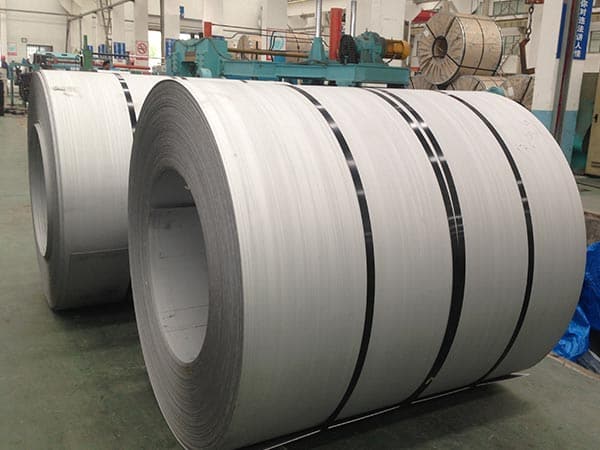
The Essence of S700MC: Beyond Basic High-Strength Steel
When discussing S700MC, we are delving into the world of thermomechanically rolled, high-strength low-alloy (HSLA) steels. The "S" stands for structural steel, "700" denotes a minimum yield strength of 700 MPa, and "MC" signifies that the material is produced through thermomechanical rolling for cold forming. For global exporters and precision machining facilities, S700MC represents a pinnacle of weight-to-strength efficiency. Unlike traditional carbon steels, S700MC achieves its remarkable properties through a precise combination of micro-alloying and controlled cooling processes rather than heavy heat treatment. This makes the material highly desirable for industries where reducing dead weight is critical without sacrificing structural integrity.
Chemical Composition and Its Impact on Machinability
The machining behavior of S700MC is dictated by its unique chemical fingerprint. Exporters prioritize this grade because its low carbon equivalent (CEV) ensures excellent weldability and formability. The inclusion of micro-alloying elements like Niobium (Nb), Vanadium (V), and Titanium (Ti) creates a fine-grained microstructure. This fine grain is the secret behind its high yield strength and toughness. From a machining perspective, the low carbon content (typically below 0.12%) reduces the risk of hard spots during thermal cutting, while the micro-alloys increase tool wear compared to mild steel. Understanding this balance is essential for any facility specializing in S700MC exporter machining.
| Element | Max Content (%) | Role in Machining/Properties |
|---|---|---|
| Carbon (C) | 0.12 | Ensures weldability and reduces brittleness. |
| Manganese (Mn) | 2.10 | Increases strength and hardenability. |
| Silicon (Si) | 0.60 | Deoxidizer, improves tensile strength. |
| Niobium (Nb) | 0.09 | Refines grain size for better toughness. |
| Titanium (Ti) | 0.22 | Stabilizes the microstructure during welding. |
Precision Cutting: Laser, Plasma, and Waterjet
Laser cutting is the preferred method for S700MC exporter machining. Due to the material's high yield strength, thermal cutting must be executed with precision to avoid excessive heat-affected zones (HAZ). High-power fiber lasers allow for narrow kerfs and minimal distortion. When processing S700MC, the internal stresses from the thermomechanical rolling process can sometimes cause the plate to "bow" slightly after cutting. Professional exporters use stress-relieved plates or advanced nesting software to compensate for this movement.
Plasma cutting is also viable, especially for thicker sections (above 15mm), but it requires careful calibration of the gas mixture to prevent nitrogen absorption, which can harden the edges and make subsequent drilling or milling difficult. For components requiring zero thermal impact, waterjet cutting is utilized, though it is slower and more costly. The choice of cutting technology directly influences the cost-effectiveness of the exported component.
The Challenges of Mechanical Machining: Drilling and Milling
Machining S700MC requires robust equipment. Because the material is significantly tougher than standard S355 steel, the cutting forces are higher. Carbide-tipped tools are mandatory for drilling and milling operations. When drilling S700MC, heat dissipation is the primary concern. High-pressure internal cooling (through-spindle coolant) is highly recommended to prevent the work-hardening of the hole surface.
- Cutting Speed: Should be reduced by 20-30% compared to S355 to extend tool life.
- Feed Rate: Must be kept consistent to avoid rubbing, which leads to rapid tool degradation.
- Tool Geometry: Positive rake angles help in shearing the material more efficiently, reducing the load on the CNC spindle.
Cold Forming and Bending: Managing Springback
S700MC is specifically designed for cold forming. However, its high yield strength introduces a significant challenge: springback. When an exporter machines a part that requires bending, they must account for the fact that S700MC will attempt to return to its original shape more aggressively than lower-grade steels. The minimum bending radius is typically expressed as a multiple of the plate thickness (t), often ranging from 1.0t to 2.0t depending on the orientation relative to the rolling direction.
Exporters utilize high-tonnage CNC press brakes with integrated angle sensors to manage this. Bending perpendicular to the rolling direction is always preferred to minimize the risk of cracking. The surface quality of S700MC is generally excellent, which prevents localized stress concentrations during the bending process, allowing for very tight tolerances in complex geometries like crane booms or chassis rails.
Advanced Welding Techniques for S700MC
Welding is a critical component of S700MC exporter machining. The goal is to match the strength of the base metal without creating a brittle HAZ. Since S700MC derives its strength from the thermomechanical rolling process, excessive heat input can "soften" the material, leading to a localized drop in yield strength.
MAG (Metal Active Gas) welding with a low heat input is the industry standard. Using a filler metal with a yield strength matching or slightly exceeding 700 MPa is vital. Preheating is generally not required for S700MC unless the ambient temperature is very low or the thickness is extreme, which is one of its major advantages in reducing fabrication time. Exporters must strictly follow the Welding Procedure Specification (WPS) to ensure that the cooling time (t8/5) is within the optimal range to maintain the fine-grained structure.
Environmental Adaptability and Durability
S700MC exhibits good atmospheric corrosion resistance compared to standard carbon steels, though it is not "weathering steel" like Corten. In many export scenarios, components are subjected to harsh environments, such as maritime transport or construction sites. The fine-grained structure provides excellent low-temperature toughness, often maintaining its impact strength down to -20°C or even -40°C. This makes S700MC machined parts ideal for equipment operating in arctic or high-altitude conditions.
For long-term protection, S700MC responds well to galvanizing and high-performance paint systems. The low silicon content in specific "galvanizing quality" batches ensures a uniform zinc coating, preventing the Sandelin effect which can cause brittle, thick coatings on other steel types.
Key Industry Applications
The demand for S700MC exporter machining is driven by sectors that prioritize the strength-to-weight ratio. By switching from S355 to S700MC, engineers can often reduce the thickness of a component by 30-40% while maintaining the same load-bearing capacity. This leads to lower fuel consumption in transport and higher payloads in logistics.
- Automotive and Transport: Truck chassis, cross members, and side protection beams.
- Lifting Equipment: Telescopic crane booms, aerial work platforms, and outriggers.
- Agriculture: High-stress components for harvesters, plows, and trailers.
- Renewable Energy: Structural supports for solar arrays and wind turbine internal components.
Quality Assurance in S700MC Export
Reliable exporters of S700MC machined parts implement rigorous testing protocols. This includes Ultrasonic Testing (UT) to ensure no internal laminations exist, especially for parts used in lifting applications. Dimensional inspection using CMM (Coordinate Measuring Machines) ensures that the high-precision requirements of modern assembly lines are met. Furthermore, every batch of S700MC should be accompanied by a 3.1 or 3.2 material test certificate according to EN 10204, documenting the chemical analysis and mechanical testing results. This transparency is what builds trust in the international steel trade.
Optimizing the Machining Workflow
To stay competitive, S700MC machining facilities must optimize their workflow. This involves using high-performance CAD/CAM systems that can simulate the machining process, predicting potential issues with tool paths or heat accumulation. Because S700MC is a premium material, minimizing scrap through efficient nesting is paramount. Many exporters now offer "kit-ready" components, where parts are cut, machined, bent, and surface-treated, ready for immediate assembly by the end customer. This vertical integration reduces logistics costs and ensures that the integrity of the S700MC grade is maintained throughout every step of the fabrication process.
Leave a message