
What are the uses of en 10149-2 s420mc
Discover the comprehensive uses of EN 10149-2 S420MC steel. This guide covers its mechanical properties, chemical composition, processing advantages, and industrial applications.
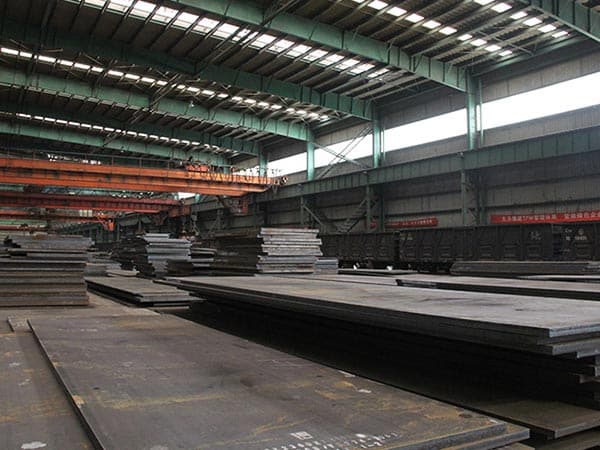
Defining EN 10149-2 S420MC: The Engineering Powerhouse
EN 10149-2 S420MC is a high-yield strength, thermomechanically rolled steel specifically designed for cold forming. The designation reveals its core identity: 'S' stands for structural steel, '420' denotes a minimum yield strength of 420 MPa, and 'MC' indicates it is produced through a thermomechanical rolling process (M) and is suitable for cold forming (C). This material bridges the gap between standard structural steels and high-performance alloys, offering a unique combination of strength, ductility, and weldability. Unlike traditional hot-rolled steels, the TMCP (Thermomechanical Control Process) used for S420MC refines the grain structure, allowing for higher strength without the need for excessive alloying elements that could compromise weldability or toughness.
Chemical Architecture and the TMCP Process
The performance of S420MC is rooted in its precise chemical composition. By maintaining a low carbon content (typically below 0.12%), the steel achieves exceptional weldability and prevents the formation of brittle martensite in the heat-affected zone. The strength is primarily derived from micro-alloying elements such as Niobium (Nb), Titanium (Ti), and Vanadium (V). These elements facilitate grain refinement and precipitation hardening during the controlled cooling phase of the rolling process.
| Element | Max Content (%) |
|---|---|
| Carbon (C) | 0.12 |
| Manganese (Mn) | 1.60 |
| Silicon (Si) | 0.50 |
| Phosphorus (P) | 0.025 |
| Sulfur (S) | 0.015 |
| Aluminium (Al) | 0.015 |
The low sulfur and phosphorus levels are critical for the steel's cleanliness, which directly translates to better fatigue resistance and improved performance during laser cutting and bending operations. The controlled rolling process ensures that the steel maintains a fine-grained ferritic-pearlitic structure, which is essential for consistent mechanical properties across the entire coil or plate.
Mechanical Integrity and Yield Dynamics
Engineers favor S420MC because it provides a significant weight reduction potential compared to standard S235 or S355 grades. With a minimum yield strength of 420 MPa, designers can use thinner sections to support the same loads, which is a primary driver in the automotive and heavy machinery industries. The elongation properties remain impressive, ensuring that the material can absorb energy and deform plastically before failure.
| Property | Value |
|---|---|
| Yield Strength (ReH) | min. 420 MPa |
| Tensile Strength (Rm) | 480 - 620 MPa |
| Elongation (A80mm) | min. 16% (t < 3mm) |
| Elongation (A5) | min. 19% (t ≥ 3mm) |
Beyond static strength, S420MC exhibits excellent impact toughness, even at lower temperatures. While the standard specifically focuses on cold forming properties, the fine grain structure naturally lends itself to better performance in dynamic loading environments, making it suitable for components subjected to vibration and shock.
Cold Forming and Fabrication Excellence
The 'C' in S420MC signifies its aptitude for cold forming. This steel is designed to be bent, flanged, and cold-pressed into complex shapes without cracking. This is a critical attribute for modern manufacturing where high-speed stamping and automated bending are standard. The minimum recommended bending radius for S420MC is remarkably tight, often allowing for a 1.0t to 1.5t radius (where t is the thickness), depending on the bending axis relative to the rolling direction.
Furthermore, S420MC is a preferred choice for laser cutting. Its low impurity levels and uniform microstructure result in a clean cut edge with minimal dross. This reduces the need for secondary grinding or finishing operations, streamlining the production pipeline. When it comes to welding, the low carbon equivalent (CEV) ensures that S420MC can be joined using all standard methods, including MIG/MAG, TIG, and submerged arc welding, without the strict preheating requirements often associated with high-strength steels.
Core Industrial Applications
The versatility of EN 10149-2 S420MC allows it to penetrate various sectors where strength-to-weight ratio is paramount. Its uses are diverse and expanding as industries push for more efficient designs.
- Automotive Sector: S420MC is extensively used for chassis components, longitudinal beams, cross members, and cold-pressed structural parts. It helps manufacturers reduce vehicle weight, thereby improving fuel efficiency and reducing emissions without compromising safety.
- Heavy Lifting and Construction: Within the manufacturing of cranes, excavators, and telescopic booms, S420MC provides the necessary strength to handle heavy loads while keeping the equipment's self-weight manageable.
- Logistics and Warehousing: High-load storage racks and shelving systems utilize S420MC to achieve high load-bearing capacities with thinner profiles, maximizing warehouse space and reducing material costs.
- Agricultural Machinery: Components for plows, trailers, and harvesters benefit from the steel's toughness and ability to withstand the abrasive and high-stress environments of modern farming.
- Transportation Infrastructure: It is used in the production of truck trailers, container frames, and railway wagons where durability and payload optimization are critical.
Comparative Performance: S420MC vs. S355MC
When comparing S420MC to the more common S355MC, the primary advantage is the approximately 18% increase in yield strength. This increase allows for a direct reduction in material thickness by roughly 10-15% in many structural applications. This weight saving is not just a matter of material cost; it also reduces shipping costs, energy consumption during transport, and allows for easier handling during the assembly process. While S355MC is sufficient for many general purposes, S420MC is the logical step up when performance limits are reached or when lightweighting becomes a competitive necessity.
Environmental Adaptability and Longevity
While S420MC is not a dedicated weathering steel like Corten, its refined microstructure provides a stable base for various protective coatings. It responds exceptionally well to hot-dip galvanizing, powder coating, and sophisticated automotive painting processes. The surface quality of S420MC, typically supplied in the pickled and oiled condition, ensures excellent adhesion of these coatings, which is vital for long-term corrosion resistance in harsh outdoor environments.
The fatigue life of S420MC is another highlight. In cyclic loading scenarios, such as those found in truck frames or moving machinery parts, the fine grain structure helps inhibit the initiation and propagation of fatigue cracks. This leads to a longer service life and lower maintenance costs for the end-user, enhancing the overall lifecycle value of the equipment.
Best Practices for Processing S420MC
To fully leverage the benefits of S420MC, certain processing guidelines should be followed. During welding, it is advisable to use filler metals that match the strength of the base material. While preheating is generally not required for thicknesses under 10mm, ensuring a clean joint and controlling heat input will help maintain the integrity of the grain structure. For bending, it is always recommended to bend transverse to the rolling direction to achieve the tightest possible radius, although S420MC performs admirably in both directions compared to traditional grades.
Avoiding high-temperature heat treatments is also crucial. Since the strength of S420MC is derived from the TMCP process and micro-alloying, excessive heat (such as stress relieving at temperatures above 580°C) can lead to grain growth and a subsequent reduction in yield strength. If thermal processing is necessary, it must be carefully controlled to preserve the steel's high-performance characteristics.
Optimizing S420MC Selection
Choosing EN 10149-2 S420MC is a strategic decision for manufacturers looking to modernize their product lines. By integrating this high-yield strength steel, companies can achieve a balance of structural rigidity, weight efficiency, and ease of fabrication. As global standards move toward more sustainable and efficient engineering practices, the role of S420MC as a reliable, high-performance material continues to grow. Whether it is in the chassis of a heavy-duty truck or the intricate frame of a solar tracking system, S420MC provides the mechanical foundation required for the next generation of industrial innovation.
Leave a message