
What is the s420mc steel equivalent extrusion technology
A comprehensive guide to S420MC steel properties, global equivalents, and its specialized application in cold extrusion and advanced forming technologies for industrial manufacturing.
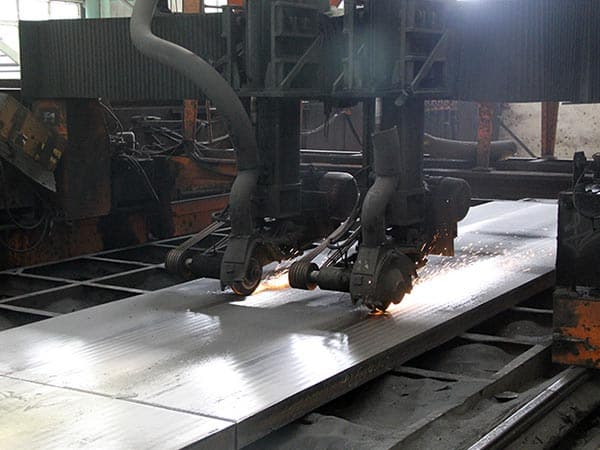
Understanding S420MC Steel: The Backbone of Modern Structural Engineering
S420MC is a high-strength, low-alloy (HSLA) steel grade specifically designed for cold-forming applications. Governed by the EN 10149-2 standard, this material is thermomechanically rolled, which provides a unique combination of high yield strength and excellent ductility. When engineers discuss the S420MC steel equivalent extrusion technology, they are often referring to how this material behaves under extreme deformation processes, such as cold extrusion or complex roll-forming, and which international standards provide comparable performance characteristics.
The 'S' in S420MC stands for structural steel, '420' denotes the minimum yield strength of 420 MPa, and 'MC' indicates that the material is thermomechanically rolled (M) and intended for cold forming (C). This grade is favored in industries where weight reduction is critical without compromising structural integrity. By utilizing the fine-grained microstructure achieved through micro-alloying elements like niobium (Nb), vanadium (V), and titanium (Ti), S420MC offers superior toughness and weldability compared to traditional carbon steels.
Chemical Composition and Micro-Alloying Precision
The performance of S420MC in extrusion-like processes is deeply rooted in its chemical makeup. Unlike standard structural steels, S420MC maintains a very low carbon content, which is essential for its weldability and impact resistance. The strength is not derived from carbon-heavy martensite but from grain refinement and precipitation hardening.
| Element | Maximum Content (%) |
|---|---|
| Carbon (C) | 0.12 |
| Manganese (Mn) | 1.60 |
| Silicon (Si) | 0.50 |
| Phosphorus (P) | 0.025 |
| Sulfur (S) | 0.015 |
| Aluminium (Al) | 0.015 |
| Nb + V + Ti | 0.22 |
This precise balance of elements ensures that the material remains stable during cold extrusion technology applications. The low sulfur content is particularly important as it minimizes the presence of non-metallic inclusions, which could act as crack initiation sites during intense forming operations. The addition of Niobium and Titanium creates a fine-grained structure that resists grain growth even during the heat generated by friction in extrusion processes.
Mechanical Properties and Forming Limits
When evaluating S420MC for extrusion or heavy cold forming, the mechanical properties provide the roadmap for tool design and press capacity. The material exhibits a high yield-to-tensile ratio, which means it can withstand significant loads before permanent deformation occurs, yet it retains enough elongation to be shaped into complex geometries.
- Yield Strength (ReH): Minimum 420 MPa.
- Tensile Strength (Rm): 480 - 620 MPa.
- Elongation (A80mm): Minimum 16% to 19% depending on thickness.
- Bending Radius: Can typically be bent at 0.5t to 1.5t (where t is thickness), making it ideal for tight-profile extrusion-like shapes.
In cold extrusion technology, the material is forced through a die to create a specific cross-section. While steel is harder to extrude than aluminum, S420MC’s controlled ductility allows for "impact extrusion" or "cold forging" of structural components. This process benefits from the material's work-hardening characteristics, where the finished part often exhibits even higher strength than the raw coil.
Global Equivalents: Matching Standards Across Borders
Identifying the S420MC steel equivalent is vital for global manufacturing chains. While EN 10149-2 is the European benchmark, other regions have developed similar grades that meet the same functional requirements for extrusion and forming.
| Standard | Equivalent Grade | Region |
|---|---|---|
| ASTM | A1011 HSLAS Class 1 Grade 60 | USA |
| JIS G3134 | SPFH 590 | Japan |
| GB/T 1591 | Q420L / Q420MD | China |
| ISO 6930 | HSE 420 | International |
While these equivalents share similar yield strengths, the S420MC grade is often preferred in high-precision extrusion environments due to its tighter tolerances on chemical impurities and its optimized thermomechanical rolling history. When substituting, it is critical to verify the impact energy requirements, especially if the part will operate in sub-zero temperatures.
Extrusion and Advanced Forming Technologies for S420MC
Traditional extrusion is usually associated with non-ferrous metals, but for S420MC, "extrusion technology" refers to a hybrid of cold drawing, roll forming, and impact extrusion. These processes take advantage of the steel's ability to flow under high pressure without fracturing.
In the automotive sector, S420MC is used in variable cross-section roll forming. This technology mimics extrusion by creating complex longitudinal profiles that vary in thickness or shape along the length of the part. Because S420MC has a consistent microstructure, it responds predictably to the high-pressure rollers, ensuring that springback is minimized and dimensional accuracy is maintained. This is a cost-effective alternative to hot-extruded profiles for structural chassis components.
Furthermore, cold extrusion of S420MC is used for manufacturing heavy-duty fasteners, bushings, and hollow shafts. The process involves high-speed mechanical presses where the steel slug is forced into a die. The fine grain size of S420MC prevents "orange peel" surface defects, which are common in coarser-grained steels when subjected to such high strains. This results in a superior surface finish and high fatigue resistance in the final component.
Environmental Adaptability and Durability
S420MC is designed to perform in harsh environments. Its low carbon equivalent (CEV) makes it highly resistant to cold cracking during welding, which is a common failure point in structural assemblies. Additionally, the material's performance at low temperatures is a significant advantage. Many structural components in the construction and transport industries must maintain their toughness at -20°C or even -40°C.
Because S420MC is often used in exposed environments, such as truck frames or crane arms, its compatibility with surface treatments is essential. The low silicon content (often controlled to specific ranges) makes it highly suitable for hot-dip galvanizing. The resulting zinc coating is uniform and provides excellent long-term corrosion protection, ensuring that the extruded or formed parts can last for decades in outdoor applications.
Industry Applications: Beyond the Basics
The versatility of S420MC and its equivalent technologies allows it to permeate various high-stakes industries. In the automotive industry, it is the standard for longitudinal beams, cross-members, and suspension parts. The ability to use thinner gauges of S420MC to replace thicker standard carbon steel leads to significant vehicle weight reduction, which directly improves fuel efficiency and reduces carbon emissions.
In the renewable energy sector, S420MC is used for the structural frames of solar tracking systems. These components require high torsional rigidity and must be produced in large volumes using automated forming lines. The consistency of S420MC ensures that the automated extrusion-forming tools do not suffer from premature wear, maintaining high production speeds and low maintenance costs.
Heavy machinery manufacturers utilize S420MC for telescopic booms in cranes and excavators. Here, the high strength-to-weight ratio is paramount. By employing advanced forming techniques that utilize the material's high yield strength, designers can create lighter booms that can lift heavier loads at greater reaches, pushing the boundaries of mechanical engineering.
Processing Guidelines for Optimal Results
To maximize the benefits of S420MC in extrusion and forming, certain processing parameters must be respected. During welding, while the material is easily joinable using MIG, TIG, or Laser welding, it is important to use consumables that match the strength of the base metal. Preheating is generally not required for thicknesses under 10mm due to the low carbon content.
When it comes to cutting, S420MC responds well to laser, plasma, and waterjet cutting. Laser cutting is particularly effective as it produces a narrow heat-affected zone (HAZ), preserving the thermomechanical properties near the edge. For cold extrusion applications, the lubrication of the die is critical. High-pressure lubricants or phosphate coatings are often applied to the S420MC slugs to reduce friction and prevent galling, ensuring a smooth flow of metal through the extrusion die.
Finally, the storage of S420MC coils or sheets should be in a controlled environment to prevent surface oxidation. While the material is robust, maintaining a clean surface is vital for high-precision forming and subsequent coating processes. Proper handling ensures that the S420MC steel equivalent extrusion technology delivers the high-performance results required in today's competitive industrial landscape.
Leave a message