
What is the S355MC hot-rolled steel impact test
Explore the technical nuances of S355MC hot-rolled steel impact testing. Learn about its mechanical toughness, metallurgical composition, and industrial performance.
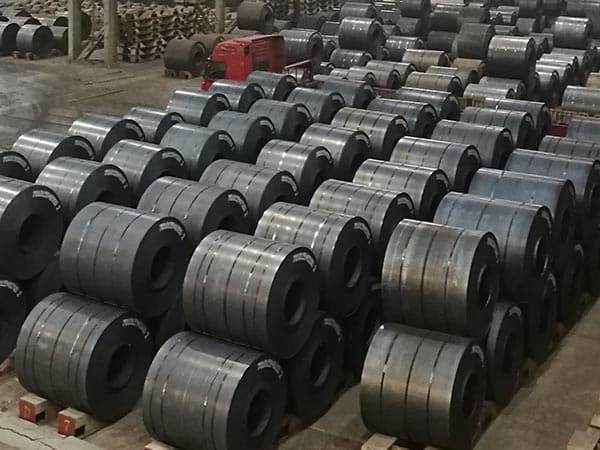
Understanding the Essence of S355MC Hot-Rolled Steel
S355MC is a high-yield-strength, hot-rolled steel specifically designed for cold forming applications. Governed by the EN 10149-2 standard, this material is a staple in the automotive and heavy machinery sectors. The designation 'S' signifies structural steel, '355' represents the minimum yield strength of 355 MPa, 'M' indicates it has been thermomechanically rolled, and 'C' confirms its suitability for cold forming. While yield and tensile strength are critical, the impact test serves as the ultimate benchmark for evaluating the material's toughness and its ability to resist brittle fracture under dynamic loading conditions.
The Mechanics of the Charpy V-Notch Impact Test
The impact test, commonly known as the Charpy V-notch test, measures the energy absorbed by a standard notched specimen while breaking under an impulse load. For S355MC, this test is pivotal because the material is frequently used in environments where it must withstand sudden shocks or operate in sub-zero temperatures. The test involves a heavy pendulum swinging from a known height to strike the specimen. The difference between the initial height and the height reached after breaking the specimen quantifies the energy absorbed, measured in Joules (J).
In the context of S355MC, the impact test isn't just a quality check; it is a verification of the steel's fracture toughness. High energy absorption indicates a ductile material that can deform plastically before failing, whereas low energy absorption suggests a brittle material prone to sudden, catastrophic failure. For engineers, this data is vital when designing components like truck chassis, crane arms, and cross members that endure high-stress cycles.
Metallurgical Influence on Impact Resistance
The superior impact performance of S355MC is a direct result of its thermomechanical rolling (TMCP) process. Unlike traditional normalized steels, TMCP involves precise control of the temperature and deformation during the rolling process. This technique results in an exceptionally fine-grained ferrite-pearlite microstructure. According to the Hall-Petch relationship, a finer grain size not only increases yield strength but also significantly enhances toughness and lowers the Ductile-to-Brittle Transition Temperature (DBTT).
Furthermore, S355MC utilizes micro-alloying elements such as Niobium (Nb), Vanadium (V), and Titanium (Ti). These elements form stable carbides and nitrides that pin grain boundaries during the rolling process, preventing grain growth. This metallurgical strategy ensures that the steel remains tough even when subjected to the heat of welding or the stresses of cold bending.
| Element | Max Content (%) | Role in Toughness |
|---|---|---|
| Carbon (C) | 0.12 | Keeps weldability high and reduces brittleness. |
| Manganese (Mn) | 1.50 | Enhances strength and improves impact energy. |
| Silicon (Si) | 0.50 | Deoxidizer, improves structural integrity. |
| Niobium (Nb) | 0.09 | Grain refinement for superior low-temp toughness. |
| Vanadium (V) | 0.20 | Increases strength through precipitation hardening. |
Impact Test Requirements and Standards
While EN 10149-2 focuses heavily on cold forming and yield strength, the impact energy requirements are often specified by the end-user or through optional clauses in the standard. Typically, for S355MC, an impact energy of 27 Joules or 40 Joules at a specific temperature (often -20°C or -40°C) is requested to ensure performance in cold climates. The orientation of the test specimen—whether longitudinal or transverse to the rolling direction—is also a critical factor. Longitudinal specimens generally show higher energy absorption due to the alignment of the microstructural grains.
It is important to distinguish S355MC from S355J2. While both have a yield strength of 355 MPa, S355J2 (EN 10025-2) is a standard structural steel with guaranteed impact energy of 27J at -20°C. S355MC, being a thermomechanically rolled steel for cold forming, offers better formability and a cleaner surface, but the impact properties must be verified if the application involves extreme dynamic loads at low temperatures.
| Mechanical Property | Value (Thickness ≤ 16mm) |
|---|---|
| Min. Yield Strength | 355 MPa |
| Tensile Strength | 430 - 550 MPa |
| Min. Elongation (A80mm) | 19% - 23% (varies by thickness) |
| Typical Impact Energy | 27J or 40J (Optional/Specified) |
Processing Performance and Environmental Adaptability
The impact resistance of S355MC plays a significant role in its processing performance. During cold bending or flanging, the steel is subjected to intense localized stress. A material with high impact toughness can absorb this energy without initiating micro-cracks. This makes S355MC an ideal candidate for complex geometries in automotive frames where safety and weight reduction are paramount.
From an environmental perspective, S355MC is engineered to perform across diverse climates. In arctic or high-altitude environments, standard steels can become brittle, leading to sudden failure. The micro-alloyed structure of S355MC ensures that the material maintains its ductility, providing a safety buffer for mobile equipment operating in sub-zero conditions. This adaptability is why it is preferred for refrigerated trailer chassis and offshore support structures.
Weldability and the Heat Affected Zone (HAZ)
One of the standout features of S355MC is its exceptional weldability, attributed to its low carbon equivalent (CEV). However, welding introduces heat that can alter the carefully crafted TMCP microstructure. The impact test is often used to evaluate the Heat Affected Zone (HAZ). Because S355MC is micro-alloyed, the HAZ remains relatively tough compared to conventional steels, but choosing the right welding parameters is essential to avoid grain coarsening, which would otherwise diminish the impact energy in the joint area.
- Low Carbon Content: Minimizes the risk of cold cracking in the weld metal.
- Grain Refinement: Helps maintain toughness in the HAZ even after thermal cycles.
- Preheating: Usually not required for S355MC due to its low CEV, which speeds up production.
Expanding Industrial Applications
The unique combination of high yield strength, excellent formability, and reliable impact toughness makes S355MC indispensable across various high-demand industries. In the logistics and transportation sector, it is used to manufacture lightweight yet strong truck frames, reducing the overall vehicle weight and increasing fuel efficiency without compromising structural safety.
In the construction and lifting equipment industry, S355MC is utilized for telescopic crane booms and excavator arms. These components are subject to massive dynamic loads and must operate reliably in outdoor environments. The impact test data provides the necessary assurance that these parts will not fail under the sudden stress of a heavy lift. Additionally, the steel's clean surface and tight thickness tolerances make it perfect for precision laser cutting and automated welding processes, further enhancing manufacturing productivity.
Beyond heavy machinery, S355MC is found in renewable energy infrastructure, specifically in the structural supports for solar arrays and wind turbine components. Its ability to be cold-formed into complex profiles while maintaining high toughness allows for innovative designs that can withstand high wind loads and seismic activities.
Technical Comparison: S355MC vs. Alternative Grades
When selecting a material, it is crucial to understand how S355MC compares to other S355 variants. While s355jr is cost-effective for general construction, it lacks the guaranteed toughness at low temperatures and the superior formability of S355MC. S355J2 offers good toughness but is generally thicker and not as optimized for the weight-sensitive applications seen in the automotive sector. S355MC bridges the gap by offering high strength, weight-saving potential, and the toughness required for dynamic applications, all while being optimized for modern, high-speed manufacturing environments.
The impact test is the silent guardian of structural integrity for S355MC hot-rolled steel. By ensuring the material can absorb energy and resist cracking, it allows engineers to push the boundaries of design, creating safer, lighter, and more efficient machines and structures. Whether it is a truck navigating a frozen highway or a crane lifting tons of material on a windy site, the toughness of S355MC, verified by rigorous impact testing, is what keeps the world moving safely.
Leave a message