
What is the asme material BS700MC weldable structural steel equivalent
Comprehensive guide to BS700MC steel, exploring its ASME equivalents like ASTM A1011 and A656, mechanical properties, and industrial welding applications.
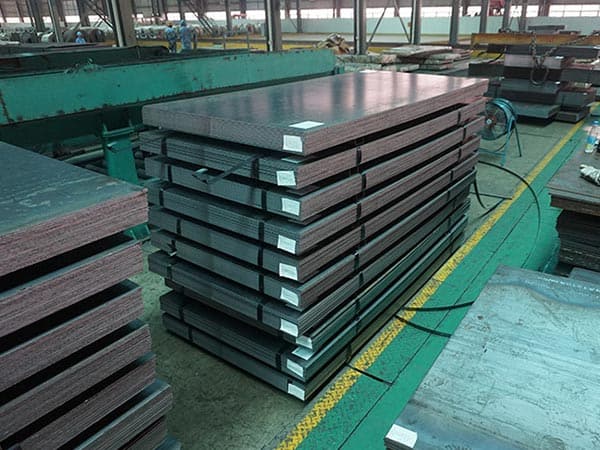
Deciphering BS700MC and Its Global Engineering Equivalents
BS700MC is a high-strength, cold-forming steel that has become a cornerstone in modern engineering, particularly where weight reduction and structural integrity are paramount. Originally popularized under the European EN 10149-2 standard as S700MC, the 'BS' prefix often refers to Baosteel's internal designation or specific British iterations. When engineers ask for an ASME material BS700MC equivalent, they are typically looking for a material that matches its 700 MPa minimum yield strength, exceptional weldability, and superior bendability within the American Society of Mechanical Engineers (ASME) or ASTM frameworks.
Finding a direct 1:1 match in the ASME Boiler and Pressure Vessel Code (BPVC) is complex because BS700MC is a thermomechanically rolled (TMCP) steel, while many ASME standards traditionally focused on normalized or quenched and tempered (Q&T) processes. However, the closest functional equivalents are found under ASTM A1011/A1011M HSLAS-F Grade 100 for thin sheets and ASTM A656 Grade 80 or 100 for thicker plates. In some high-pressure vessel contexts, designers might look toward ASME SA-514, though the metallurgy differs significantly due to the Q&T nature of SA-514 compared to the TMCP nature of BS700MC.
Mechanical Properties and Metallurgical Superiority
The primary appeal of BS700MC lies in its high yield-to-tensile ratio and its ability to remain ductile even at high stress levels. The 'MC' suffix denotes that the steel is thermomechanically rolled (M) and possesses a chemistry suitable for cold forming (C). This process creates a fine-grained microstructure that is far superior to traditional hot-rolled steels.
| Property | BS700MC (Typical) | ASTM A1011 Gr 100 | ASTM A656 Gr 100 |
|---|---|---|---|
| Yield Strength (MPa) | 700 Min | 690 Min | 690 Min |
| Tensile Strength (MPa) | 750 - 950 | 760 Min | 760 Min |
| Elongation (%) | 12% (Lo=5.65√So) | 12-15% | 15% |
| Bending Radius (90°) | 1.5t - 2.0t | 2.0t | 2.5t |
The chemical composition of BS700MC is strictly controlled to ensure a low Carbon Equivalent (CEV). By utilizing micro-alloying elements such as Niobium (Nb), Titanium (Ti), and Vanadium (V), the steel achieves high strength without the brittleness associated with high carbon content. This low carbon profile is exactly what makes it 'weldable' in the most demanding industrial sense.
Weldability and Fabrication Excellence
One of the most critical questions regarding BS700MC is its behavior during fabrication. Unlike traditional high-strength steels that require extensive preheating to prevent cold cracking, BS700MC can often be welded at ambient temperatures. This is due to its extremely low carbon content (usually below 0.12%) and low CEV values (typically < 0.39).
Welding Considerations: While the steel is highly weldable, the Heat Affected Zone (HAZ) is sensitive to excessive heat input. Because the strength is derived from the TMCP grain refinement, too much heat can cause grain growth, leading to a localized drop in yield strength. It is recommended to use low-hydrogen welding consumables and maintain a controlled interpass temperature. Common filler metals include those matching the ER110S or ER120S classifications under AWS standards.
- Cold Forming: BS700MC excels in bending and folding. Its fine-grain structure prevents 'orange peel' defects and cracking on the outer radius of a bend.
- Laser Cutting: The clean, low-impurity surface and consistent thickness make it ideal for high-speed laser cutting with minimal dross.
- Surface Quality: Usually supplied in a pickled and oiled condition, it provides an excellent substrate for painting and powder coating.
Environmental Adaptability and Toughness
Beyond strength, BS700MC is engineered for durability in harsh environments. The TMCP process imparts excellent low-temperature notch toughness. Most BS700MC variants are rated for impact energy at -20°C or even -40°C, making them suitable for machinery operating in arctic conditions or high-altitude environments.
In terms of atmospheric corrosion, while BS700MC is not a 'weathering steel' like Corten, its dense microstructure provides a slightly better resistance to uniform corrosion compared to standard A36 carbon steel. However, for marine or highly corrosive industrial environments, protective coatings are still necessary. The steel's compatibility with modern galvanizing processes is excellent, provided the silicon content is monitored to avoid the Sandelin effect.
Expanding Industry Applications
The shift toward BS700MC and its ASME equivalents is driven by the global demand for 'lightweighting.' By replacing standard S355 or Grade 50 steels with BS700MC, engineers can reduce structural weight by up to 30-40% without sacrificing load-bearing capacity.
Mobile Cranes and Lifting Equipment: The boom sections of telescopic cranes require the extreme strength-to-weight ratio that only 700MPa steels can provide. The ability to weld these sections without massive preheat stations simplifies the manufacturing of complex lattice structures.
Automotive and Transportation: Heavy-duty truck chassis, trailers, and side-impact beams utilize BS700MC to increase payload capacity. In the trailer industry, using a thinner gauge of BS700MC instead of a thicker mild steel reduces fuel consumption and carbon emissions over the vehicle's lifecycle.
Agricultural Machinery: Modern harvesters and plows face immense mechanical stress. The fatigue resistance of BS700MC ensures that these machines can withstand years of cyclic loading in abrasive soil conditions.
Strategic Selection: ASME SA-514 vs. BS700MC
When working within the ASME framework, a common point of confusion is whether to use ASME SA-514. SA-514 is a quenched and tempered alloy steel with a yield strength of approximately 690 MPa (100 ksi). While the strength levels are similar to BS700MC, the fabrication requirements differ. SA-514 often requires specific preheat and post-weld heat treatment (PWHT) protocols to maintain its tempered martensitic structure. BS700MC, being a TMCP steel, is generally more 'forgiving' in the welding shop but cannot be used in applications where the service temperature exceeds 400°C, as this would undo the effects of the thermomechanical rolling. For structural components not subject to high heat, BS700MC (or its ASTM A1011/A656 equivalents) often proves to be a more cost-effective and fabrication-friendly choice than SA-514.
Technical Summary for Procurement
When sourcing BS700MC or its equivalents, it is vital to verify the mill test certificates (MTC) for the following: Yield Strength (Rp0.2), Tensile Strength (Rm), and Impact Energy values. If your project is governed by ASME codes, ensure that the material is dual-certified or that the engineer of record has approved the ASTM A1011 or A656 substitution. The transition to these high-performance steels represents a significant leap in structural efficiency, enabling the next generation of infrastructure and machinery to be stronger, lighter, and more sustainable.
Leave a message