
What is the difference between open flat and original s420mc astm equivalent
Explore the critical differences between S420MC open flat and original mill plates. This guide covers ASTM equivalents, mechanical properties, chemical composition, and industrial applications for high-strength steel buyers.
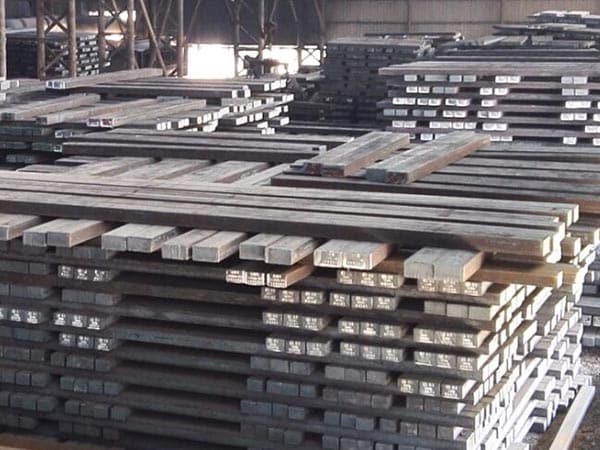
Decoding S420MC: The Intersection of European Standards and Industrial Utility
S420MC is a high-yield strength, thermomechanically rolled steel specifically designed for cold forming. Governed by the EN 10149-2 standard, this grade represents a pinnacle of balance between weight reduction and structural integrity. When procurement teams discuss 'Open Flat' versus 'Original' S420MC, they are navigating the nuances of steel processing and its subsequent impact on material behavior during fabrication. Understanding these differences, alongside the ASTM equivalents, is vital for ensuring the safety and longevity of heavy-duty components.
Open Flat vs. Original Mill Plate: Processing and Internal Stress
The term 'Original' usually refers to steel in its primary produced state, such as a mill-produced plate or a master coil. 'Open Flat' (also known as decoiled or leveled sheet) refers to steel that has been unrolled from a coil and flattened through a leveling machine. While they share the same chemical DNA, their mechanical 'memory' differs significantly.
- Residual Stress: Original mill plates, particularly those produced as quarto plates, tend to have lower internal stress. Open flats, having been wound into a tight coil, retain 'coil set' or longitudinal stress. Even after high-precision leveling, these stresses can manifest during laser cutting or welding, causing the material to bow or 'spring back'.
- Flatness Tolerances: Original mill plates often adhere to stricter flatness standards (like EN 10029 Class N or S). Open flats depend entirely on the quality of the leveling line. For high-precision robotic welding, the stability of an original plate is often preferred.
- Surface Quality: Original coils are protected by their own layers during transport. Open flats undergo additional handling, which can introduce surface scratches if the decoiling line is not meticulously maintained.
ASTM Equivalents: Mapping S420MC to North American Standards
For engineers working across borders, finding the correct ASTM equivalent for S420MC is a common challenge. S420MC features a minimum yield strength of 420 MPa (approx. 61 ksi). The closest matches in the ASTM universe are found within the HSLA (High Strength Low Alloy) categories.
| Standard | Grade | Yield Strength (min) | Tensile Strength | Elongation (min) |
|---|---|---|---|---|
| EN 10149-2 | S420MC | 420 MPa | 480-620 MPa | 16-19% |
| ASTM A1011 | HSLAS-F Grade 60 | 410 MPa | 520 MPa | 18% |
| ASTM A656 | Grade 60 | 415 MPa | 520 MPa | 17% |
| ASTM A572 | Grade 60 | 415 MPa | 520 MPa | 16% |
ASTM A1011 HSLAS-F Grade 60 is perhaps the most accurate functional equivalent for thin-gauge applications. The 'F' suffix denotes 'improved formability,' mimicking the fine-grain structure of S420MC achieved through thermomechanical rolling. For thicker structural sections, ASTM A656 Grade 60 is the preferred choice due to its low carbon content and excellent weldability.
Chemical Composition and Micro-Alloying Strategy
The performance of S420MC is not accidental; it is the result of precise micro-alloying. Unlike traditional carbon steels that rely on high carbon levels for strength, S420MC utilizes Niobium (Nb), Titanium (Ti), and Vanadium (V) to refine grain size.
- Carbon (C): Kept below 0.12% to ensure superior weldability and prevent the formation of brittle martensite in the heat-affected zone (HAZ).
- Manganese (Mn): Typically around 1.60%, providing solid solution strengthening.
- Trace Elements: The combination of Nb and Ti inhibits grain growth during the rolling process, resulting in a fine ferritic-pearlitic structure that absorbs energy efficiently.
Mechanical Properties and Cold Forming Excellence
The 'MC' in S420MC stands for 'Thermomechanically Rolled' (M) and 'Cold Forming' (C). This steel is designed to be bent, folded, and pressed without cracking. The ratio of yield strength to tensile strength is relatively high, which means the material stays within its elastic limit for longer but requires powerful equipment for permanent deformation.
When working with S420MC, the minimum bending radius is a critical parameter. For a thickness (t) under 3mm, a 0.5t radius is often achievable, though 1.0t is safer for maintaining structural integrity. Using open flats might require slightly more over-bending to compensate for the residual stresses mentioned earlier.
Environmental Adaptability and Fatigue Resistance
S420MC exhibits excellent performance in dynamic environments. Its fine-grain structure provides high fatigue strength, making it ideal for components subjected to constant vibration and cyclic loading. While it is not a 'weathering steel' like Corten, its low impurity levels (low Phosphorus and Sulfur) improve its resistance to atmospheric corrosion compared to standard mild steels.
In low-temperature environments, S420MC maintains its toughness better than many ASTM A36 variants. This makes it suitable for chassis components in vehicles operating in sub-zero climates, where brittle fracture is a significant risk.
Expanding Industrial Applications
The versatility of S420MC, whether in original coil or open flat form, allows it to dominate several high-stakes industries:
- Automotive and Trucking: Used extensively for truck frames, chassis members, and cross-beams. The weight savings achieved by switching from S355 to S420MC can significantly increase fuel efficiency and payload capacity.
- Lifting and Excavation: Crane booms and excavator arms benefit from the high strength-to-weight ratio, allowing for longer reaches and higher lift capacities without increasing the overall machine weight.
- Cold Pressed Profiles: S420MC is the gold standard for manufacturing complex C and Z profiles used in solar mounting systems and light-gauge steel framing.
- Agricultural Machinery: Plow shares and trailer frames require the impact resistance and formability that S420MC provides.
Practical Procurement Considerations
When ordering S420MC, the choice between open flat and original plate should be dictated by your processing equipment. If you utilize high-speed fiber lasers with automated loading, the flatness of the material is paramount. In such cases, specifying 'high-precision leveled open flats' or 'original mill plates' is essential. Furthermore, always request a Mill Test Certificate (MTC) to verify that the chemical composition and yield strengths align with EN 10149-2, especially if the material is being used as a substitute for ASTM grades.
The distinction between open flat and original S420MC lies in the physical state and internal tension of the steel, while the ASTM equivalents provide a bridge for global engineering standards. By selecting the right form and understanding the metallurgical strengths of S420MC, manufacturers can optimize their production lines for both cost and performance.
Leave a message