
What is the S315MC truck chassis assemblies steel available size
Discover the comprehensive size range, mechanical properties, and processing advantages of S315MC steel for truck chassis assemblies. This expert guide covers thickness, width, and technical specifications for automotive engineering.
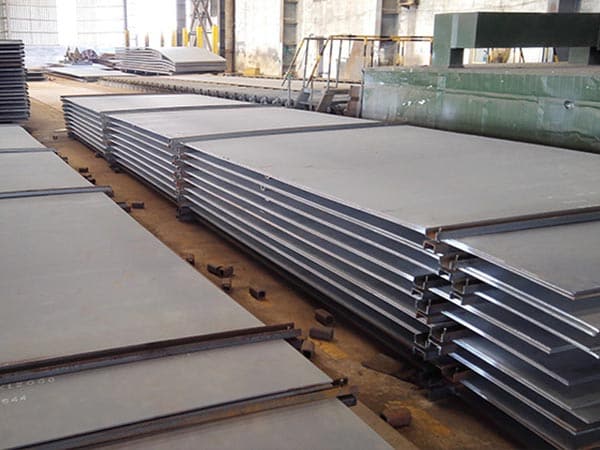
Understanding S315MC Steel for Truck Chassis Assemblies
S315MC is a high-yield strength steel specifically designed for cold forming, governed by the European standard EN 10149-2. In the automotive and heavy-duty transport industry, this grade is a cornerstone for manufacturing truck chassis assemblies, longitudinal beams, and cross members. The 'S' denotes structural steel, '315' indicates a minimum yield strength of 315 MPa, and 'MC' signifies that the material is thermomechanically rolled (M) and intended for cold forming (C). Choosing the right size and understanding the material's limits is critical for engineers aiming to balance structural integrity with vehicle weight reduction.
Available Size Ranges for S315MC Steel
The availability of S315MC steel sizes depends largely on the production capabilities of the steel mill, but it generally follows standard industrial dimensions for hot-rolled flat products. Manufacturers typically provide S315MC in the following ranges:
- Thickness: Typically ranges from 1.5 mm to 20 mm. For truck chassis, the most common thicknesses are between 4.0 mm and 12.0 mm, depending on the load-bearing requirements of the vehicle.
- Width: Standard widths include 1000 mm, 1250 mm, and 1500 mm. Some specialized mills can produce widths up to 1800 mm or 2000 mm to accommodate large-scale chassis pressings.
- Length: For sheet forms, lengths often range from 2000 mm to 12000 mm. However, S315MC is frequently supplied in coil form (hot rolled strip) to allow for continuous feeding into laser cutting or stamping lines.
It is important to note that dimensional tolerances for S315MC are usually strictly controlled according to EN 10051. This ensures that the thickness remains consistent across the entire plate, which is vital for automated welding and precision bending in chassis assembly lines.
Chemical Composition and Metallurgy
The exceptional performance of S315MC is rooted in its chemical makeup. Unlike traditional carbon steels, S315MC utilizes micro-alloying techniques. By adding small amounts of Niobium (Nb), Titanium (Ti), or Vanadium (V), the grain structure of the steel is refined during the thermomechanical rolling process.
| Element | Maximum Content (%) |
|---|---|
| Carbon (C) | 0.12 |
| Manganese (Mn) | 1.30 | 0.50 |
| Phosphorus (P) | 0.025 |
| Sulfur (S) | 0.020 |
| Aluminum (Al) | 0.015 |
The low carbon content ensures excellent weldability, while the manganese and micro-alloys provide the necessary strength without making the material brittle. The low sulfur content is particularly important for cold forming, as it reduces the risk of edge cracking during tight bending operations.
Mechanical Properties and Structural Integrity
The primary reason for selecting S315MC for truck chassis is its high yield-to-tensile ratio and impressive elongation properties. These characteristics allow the chassis to absorb energy and resist permanent deformation under heavy loads.
| Property | Value |
|---|---|
| Yield Strength (ReH) | Min. 315 MPa |
| Tensile Strength (Rm) | 390 - 510 MPa |
| Elongation (A80mm, t < 3mm) | Min. 20% |
| Elongation (A5, t ≥ 3mm) | Min. 24% |
These mechanical properties ensure that the truck frame can withstand the dynamic stresses of road transport, including torsion, vibration, and impact. The high elongation value is a key indicator that the material can be bent into complex shapes without fracturing.
Cold Forming and Bending Performance
S315MC is optimized for cold forming. In truck chassis manufacturing, longitudinal beams are often formed into 'C' or 'U' channels. The ability of S315MC to undergo significant deformation without losing structural integrity is a major advantage. When bending S315MC, the minimum recommended bending radius depends on the thickness (t) of the material. For S315MC, a typical minimum bending radius is 0.25t to 0.5t for transverse bending, which is significantly better than standard structural steels like S235JR.
However, engineers must account for springback. Because S315MC has a higher yield strength than mild steel, it tends to return slightly toward its original shape after the bending force is removed. Precision tooling and over-bending techniques are required to achieve the exact dimensions needed for chassis assemblies.
Weldability in Chassis Manufacturing
Chassis assemblies involve extensive welding, including robotic MIG/MAG welding and spot welding. S315MC is highly weldable due to its low Carbon Equivalent Value (CEV). It does not require pre-heating or post-weld heat treatment in most standard thicknesses. The heat-affected zone (HAZ) remains stable, maintaining the strength of the joint. This is critical for the safety of the vehicle, as the chassis joints must handle the full weight of the cargo and the engine.
Environmental Adaptability and Corrosion Resistance
Truck chassis are exposed to harsh environments, including road salt, moisture, and extreme temperature fluctuations. While S315MC is not a corrosion-resistant steel by nature (like stainless steel), its surface quality after thermomechanical rolling is ideal for protective coatings. The fine grain structure provides an excellent substrate for hot-dip galvanizing, E-coating (electrophoretic deposition), or high-performance powder coatings. These treatments ensure that the chassis can reach a service life of 10 to 20 years even in corrosive environments.
Industry Applications and Weight Reduction
The push for "lightweighting" in the automotive industry has made S315MC more popular than ever. By using S315MC instead of thicker sections of lower-grade steel, manufacturers can reduce the dead weight of the truck. This leads to higher fuel efficiency and increased payload capacity. Beyond truck chassis, S315MC is used in:
- Crane booms and lifting equipment components.
- Agricultural machinery frames.
- Railway wagon structures.
- Cold-pressed parts for trailers.
The versatility of S315MC in terms of size and formability makes it a preferred choice for any structural application where weight and strength must be balanced.
Sourcing and Quality Assurance
When sourcing S315MC for chassis assemblies, it is vital to verify the Mill Test Certificate (MTC). The certificate should confirm compliance with EN 10149-2 and detail the actual yield strength, tensile strength, and chemical analysis of the specific heat. Given the safety-critical nature of truck frames, sourcing from reputable mills that utilize advanced TMCP (Thermomechanical Controlled Processing) technology is non-negotiable. This ensures that the mechanical properties are uniform throughout the length of the coil or plate, preventing weak spots in the final assembly.
In summary, the available sizes of S315MC cover a wide spectrum of engineering needs, from thin structural brackets to thick, heavy-duty longitudinal beams. Its combination of strength, formability, and weldability ensures it remains a leading material in the evolution of modern transport infrastructure.
Leave a message