
What is yield strength of en 10149-2 s355mc equivalent
Comprehensive analysis of EN 10149-2 S355MC yield strength, chemical composition, and global equivalents like ASTM A1011 and Q355MC. Learn about its cold forming and welding performance.
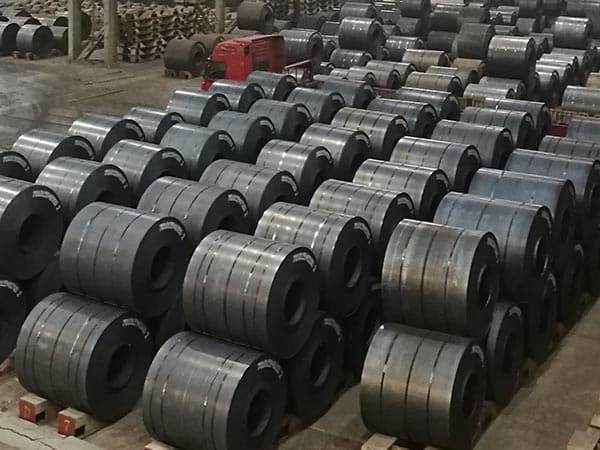
Understanding the Yield Strength of EN 10149-2 S355MC
When engineering high-performance structures, the yield strength of EN 10149-2 S355MC stands as a critical benchmark. S355MC is a thermomechanically rolled, high-yield strength steel designed specifically for cold forming. The designation 'S' signifies structural steel, '355' denotes the minimum yield strength in Megapascals (MPa), 'M' indicates its thermomechanically rolled condition, and 'C' highlights its suitability for cold forming. For thicknesses less than or equal to 8mm, the minimum yield strength is strictly 355 MPa. This value is not merely a number but a guarantee of the material's ability to withstand significant stress without permanent deformation, making it a staple in the automotive and heavy machinery sectors.
Mechanical Properties and Performance Metrics
Beyond the primary yield strength, S355MC exhibits a balanced profile of tensile strength and elongation. The tensile strength typically ranges between 430 and 550 MPa. One of the standout features of this grade is its ductility. Unlike standard hot-rolled structural steels, S355MC maintains an elongation at break of approximately 19% to 23% (depending on thickness), allowing for complex bending and folding operations without the risk of micro-cracking.
| Property | Value (Thickness ≤ 8mm) | Testing Method |
|---|---|---|
| Minimum Yield Strength (Reh) | 355 MPa | EN ISO 6892-1 |
| Tensile Strength (Rm) | 430 - 550 MPa | EN ISO 6892-1 |
| Min. Elongation (A80mm) | 19% | EN ISO 6892-1 |
| Min. Elongation (A5) | 23% | EN ISO 6892-1 |
Global Equivalents of S355MC
Identifying an EN 10149-2 S355MC equivalent requires looking at international standards like ASTM (USA), GB/T (China), and JIS (Japan). While no two standards are identical in every chemical trace, several grades offer comparable mechanical performance and processing characteristics. For instance, ASTM A1011 HSLAS-F Grade 50 is often considered the North American counterpart due to its high-strength low-alloy nature and improved formability.
| Standard | Equivalent Grade | Comparison Notes |
|---|---|---|
| China (GB/T 1591) | Q355MC | Nearly identical chemical and mechanical specs. |
| USA (ASTM) | A1011 HSLAS-F Gr 50 | Focuses on cold formability and yield. |
| Japan (JIS G3134) | SPFH 540 | Similar yield, often used in automotive frames. |
| Europe (Old DIN) | QStE 360 TM | The predecessor to S355MC in German standards. |
Chemical Composition and Weldability
The superior performance of S355MC is rooted in its low-carbon chemistry and micro-alloying strategy. By utilizing elements like Niobium (Nb), Titanium (Ti), and Vanadium (V), manufacturers achieve grain refinement during the thermomechanical rolling process. This allows for a lower Carbon Equivalent Value (CEV), which directly translates to exceptional weldability. Unlike higher carbon steels, S355MC does not require preheating for most welding applications, significantly reducing production time and costs in assembly lines.
- Carbon (C): Max 0.12% - Ensures high ductility and weldability.
- Manganese (Mn): Max 1.50% - Enhances strength and hardness.
- Silicon (Si): Max 0.50% - Acts as a deoxidizer.
- Micro-alloys (Nb, V, Ti): Sum max 0.22% - Refines grain structure for high yield strength.
Cold Forming and Processing Advantages
S355MC is engineered for the modern workshop. Its 'C' designation confirms it is optimized for cold pressing and bending. When compared to standard s355jr, S355MC allows for much tighter bending radii. For a sheet thickness (t) under 3mm, a 180-degree bend can often be achieved with a radius of 0.5t, whereas standard structural steels might require 1.5t or more to avoid cracking. This attribute is indispensable for manufacturing complex chassis components, longitudinal beams, and cross-members where space and weight optimization are paramount.
Industrial Applications and Sector Expansion
The high strength-to-weight ratio of S355MC drives its adoption across diverse industries. In the transportation sector, it is the material of choice for truck frames, trailers, and crane arms. By using S355MC instead of traditional S235 or S275 grades, engineers can reduce the thickness of components without sacrificing structural integrity, leading to lighter vehicles and improved fuel efficiency. Furthermore, in the agricultural machinery industry, its resistance to impact and fatigue makes it ideal for plows, harvesters, and silage equipment that operate in harsh, unpredictable environments.
Environmental Adaptation and Durability
While S355MC is not a weathering steel like Corten, its fine-grained structure provides better resistance to atmospheric corrosion than many conventional hot-rolled steels. Its performance in low-temperature environments is also noteworthy. The thermomechanical process ensures that the steel maintains its toughness even at sub-zero temperatures, which is a critical safety factor for machinery used in Arctic conditions or high-altitude construction projects. The material's fatigue life is also enhanced by its clean internal structure, reducing the likelihood of crack initiation under cyclic loading.
Precision in Laser Cutting and Surface Quality
For manufacturers utilizing CNC laser cutting, S355MC offers distinct advantages. The thermomechanical rolling process results in a very thin, tightly adherent scale or a pickled and oiled surface. This consistency prevents the 'popping' or uneven cutting often associated with the heavy mill scale found on standard hot-rolled plates. The internal stress distribution is also more uniform, meaning parts stay flatter after cutting, reducing the need for secondary leveling operations. This precision is a key reason why S355MC is favored for laser-cut brackets, plates, and intricate structural components.
Strategic Selection: S355MC vs. S355JR
It is vital to distinguish between S355MC and the more common S355JR. While both share a 355 MPa yield strength, S355JR is a hot-rolled product governed by EN 10025-2, designed for general structural use. S355MC, governed by EN 10149-2, is a specialized product for cold forming. Choosing S355MC over S355JR provides better surface quality, tighter dimensional tolerances, and vastly superior formability. For any application involving significant bending or weight reduction, S355MC is the technically superior choice that justifies its specific manufacturing route.
Leave a message