
1.0982 thermomechanically rolled steels equivalent ASME material
Explore the technical specifications of 1.0982 (S460MC) steel, including mechanical properties, chemical composition, and a detailed comparison with ASME/ASTM equivalent materials like ASTM A656 and A1011.
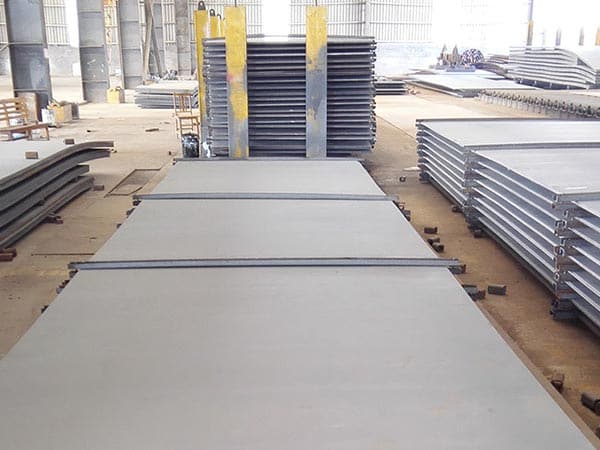
Understanding the Technical DNA of 1.0982 Steel
The material designated as 1.0982, commonly known by its EN 10149-2 grade name S460MC, represents a pinnacle of metallurgical engineering in the category of high-yield-strength steels for cold forming. This steel is produced via the Thermomechanically Rolled (TMCP) process, a sophisticated manufacturing route that combines controlled rolling temperatures and specific cooling rates to achieve a fine-grained microstructure without the need for expensive alloying elements or secondary heat treatments.
Unlike traditional normalized steels, 1.0982 leverages micro-alloying elements such as Niobium (Nb), Vanadium (V), and Titanium (Ti). These elements facilitate grain refinement and precipitation hardening, resulting in a material that offers an exceptional balance of high strength, superior ductility, and excellent weldability. Engineers favor this grade when weight reduction is critical, as its high yield strength allows for thinner sections to carry the same loads as thicker, lower-grade structural steels.
ASME and ASTM Equivalent Materials for 1.0982
Identifying an exact 1.0982 thermomechanically rolled steel equivalent ASME material requires a nuanced understanding of both European (EN) and American (ASTM/ASME) standards. While there is no 1:1 identical match due to differences in testing methodologies and tolerance limits, several ASTM standards—which are often adopted by ASME Section II—serve as functional equivalents.
The most frequent cross-references include:
- ASTM A656 Grade 65: This is perhaps the closest structural equivalent. It is a high-strength low-alloy (HSLA) steel intended for use in truck frames, brackets, and crane booms where weight savings are paramount.
- ASTM A1011 HSLAS Class 2 Grade 65: Suitable for thinner hot-rolled sheets, this grade provides similar cold-forming capabilities and yield strength profiles.
- ASTM A1018 HSLAS Grade 65: Used for thicker sections (above 6mm), mirroring the application range of S460MC.
| Feature | EN 10149-2 (1.0982) | ASTM A656 Grade 65 | ASTM A1011 HSLAS-F Gr 65 |
|---|---|---|---|
| Yield Strength (min) | 460 MPa | 450 MPa (65 ksi) | 450 MPa (65 ksi) |
| Tensile Strength | 520-670 MPa | 550 MPa min | 550 MPa min | 14% (t < 3mm) | 15% (in 8 inches) | 16% (in 2 inches) |
Mechanical Performance and Structural Integrity
The mechanical properties of 1.0982 are defined by its 460 MPa minimum yield strength. However, the true value of this steel lies in its yield-to-tensile ratio and its energy absorption capacity. The TMCP process ensures that the material remains tough even at lower temperatures, which is a vital characteristic for equipment operating in diverse climates.
Impact Toughness: Although EN 10149-2 does not always mandate Charpy V-notch impact testing unless specified (unlike EN 10025 standards), the fine-grained nature of 1.0982 naturally imparts better low-temperature performance than conventional carbon steels. For critical structural applications, designers often request impact testing at -20°C or -40°C to ensure brittle fracture resistance.
Cold Formability: As an "MC" grade (M = Thermomechanically rolled, C = Cold forming), 1.0982 is designed to be bent, flanged, and folded. The minimum recommended inside bend radius is typically 1.0 to 1.5 times the thickness (t), depending on the orientation relative to the rolling direction. This makes it ideal for complex geometries in automotive chassis and heavy machinery components.
Chemical Composition and Weldability
The weldability of 1.0982 is significantly better than that of normalized steels of equivalent strength. This is due to the Low Carbon Equivalent (CEV). By keeping carbon levels low (typically < 0.12%) and using micro-alloys for strength, the steel is less prone to cold cracking in the heat-affected zone (HAZ).
| Element | Max % (1.0982) | Typical ASME Equivalent (A656) |
|---|---|---|
| Carbon (C) | 0.12 | 0.15 |
| Manganese (Mn) | 1.60 | 1.65 |
| Silicon (Si) | 0.50 | 0.60 |
| Phosphorus (P) | 0.025 | 0.035 |
| Sulfur (S) | 0.015 | 0.035 |
When welding 1.0982 to an ASME equivalent material, standard processes such as MAG (GMAW), submerged arc welding (SAW), and laser welding are highly effective. It is important to control the heat input; excessive heat can lead to grain growth in the HAZ, potentially reducing the yield strength gained from the TMCP process. Preheating is generally not required for standard thicknesses, which reduces fabrication costs and time.
Industrial Applications and Environmental Adaptability
The adoption of 1.0982 and its ASME counterparts spans across industries where the strength-to-weight ratio is a primary design driver. In the transportation sector, it is used for longitudinal beams, cross members, and reinforcement parts in trucks and trailers. By switching from S355 to S460MC (1.0982), manufacturers can often achieve a weight reduction of 15-20% without sacrificing structural safety.
In lifting and mobile equipment, such as telescopic cranes and agricultural machinery, the high yield strength allows for longer reaches and higher load capacities. The material's environmental adaptability is also noteworthy. While it is not a "weathering steel" like Corten, its dense surface scale and fine microstructure provide a consistent base for modern anti-corrosion coatings and galvanizing processes.
For offshore and energy applications, where ASME standards are more prevalent, using 1.0982 as a substitute for ASTM A656 requires verification of the specific project's design code. If the project follows ASME Section VIII or B31.3, the material must be cross-certified or meet the specific "Unlisted Material" requirements of the code, which usually involves verifying the chemical and mechanical properties against the ASTM equivalent.
Advanced Processing: Cutting and Machining
1.0982 responds exceptionally well to modern thermal cutting techniques. Laser cutting produces clean, precise edges with a very narrow heat-affected zone, preserving the TMCP properties close to the cut. Plasma and oxy-fuel cutting are also viable, though the larger HAZ should be considered in the design of fatigue-sensitive joints.
Machining this grade is straightforward. Due to its low alloy content, tool wear is manageable. However, because of its higher strength compared to mild steel, slightly lower cutting speeds and higher feed rates are recommended to prevent work hardening. Proper lubrication and cooling are essential to maintain dimensional stability during precision machining operations.
Global Procurement and Quality Assurance
When sourcing 1.0982 or searching for an ASME equivalent, quality documentation is paramount. A Type 3.1 inspection certificate according to EN 10204 is standard, detailing the actual heat analysis and mechanical test results. For global projects, requesting "dual certification" or a "statement of equivalence" can bridge the gap between EN 10149-2 and ASTM A656/A1011.
The shift toward TMCP steels like 1.0982 is driven by the global push for sustainability. Thinner, stronger steel means less raw material usage, lower transport emissions, and more efficient end-use performance. Whether you are operating under European or American standards, understanding the nuances of these high-performance materials ensures that engineering designs are both safe and economically optimized.
Leave a message