
What is the asme material B750L plate zero cut equivalent
Discover the technical specifications, mechanical properties, and international equivalents of ASME B750L steel plate. Learn about the advantages of zero-cut services for industrial manufacturing and material selection.
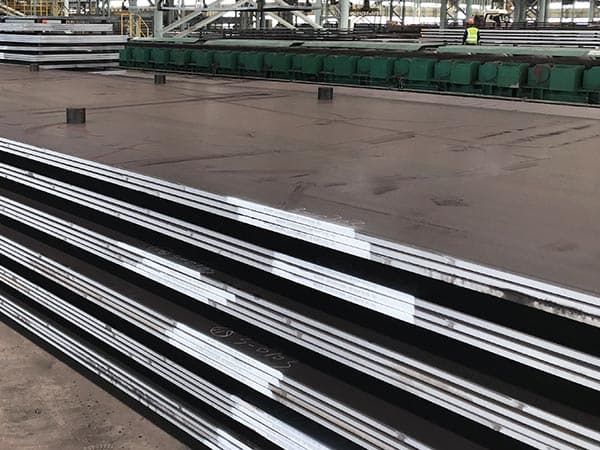
Defining the ASME B750L Specification and Its Industrial Context
In the complex landscape of industrial metallurgy, identifying the precise equivalent for specialized grades like ASME B750L is critical for engineering integrity and cost-efficiency. While the designation B750L often surfaces in specific project specifications—frequently associated with high-yield structural applications or specialized pressure vessel environments—it represents a class of material designed for high-strength performance combined with enhanced low-temperature toughness, as denoted by the 'L' suffix.
The concept of "Zero Cut" refers to the precision-to-size procurement model. Instead of purchasing standard oversized plates and managing the scrap internally, zero-cut services provide the exact dimensions required for the final component. This approach is particularly valuable for high-grade materials where material waste translates directly into significant financial loss. Understanding the equivalent grades ensures that engineers can source materials globally without compromising on safety or performance standards.
Mechanical Properties and Performance Benchmarks
The performance of ASME B750L is defined by its ability to maintain structural stability under high stress. Typically, these materials are characterized by a yield strength exceeding 700 MPa, making them part of the High-Strength Low-Alloy (HSLA) or quenched and tempered steel families. The "L" designation implies that the material has undergone Charpy V-notch impact testing at sub-zero temperatures (often -40°C or -60°C) to ensure resistance against brittle fracture.
Key mechanical parameters usually include:
- Yield Strength (ReH): 650 - 750 MPa depending on thickness.
- Tensile Strength (Rm): 780 - 930 MPa.
- Elongation (A5): Minimum 14-16%.
- Impact Energy: Minimum 27J at specified low temperatures.
Global Equivalents for ASME B750L
When sourcing B750L, manufacturers often look toward international standards that offer identical or superior performance characteristics. The most common equivalents are found within the EN 10025-6 and ASTM frameworks. These materials are engineered to provide the same strength-to-weight ratio and weldability profiles.
| Standard | Equivalent Grade | Primary Characteristics |
|---|---|---|
| EN 10025-6 | S690QL / S700MC | Quenched and tempered high-yield steel with excellent low-temp toughness. |
| ASTM | A514 Grade Q / A709 Grade 100 | High-strength quenched and tempered alloy steel for bridges and structures. |
| JIS G3128 | SHY685 | High strength steel plates for welded structures. |
| GB/T 16270 | Q690E | High strength structural steel with impact testing at -40°C. |
Chemical Composition and Weldability Analysis
The chemical makeup of B750L and its equivalents is meticulously balanced to ensure that high strength does not come at the cost of weldability. Low carbon equivalents (CEV) are maintained by using micro-alloying elements such as Boron, Vanadium, and Niobium. This allows for welding without the extensive pre-heating requirements typically associated with high-carbon steels.
Carbon (C): Usually kept below 0.20% to prevent martensitic brittleness in the Heat Affected Zone (HAZ).
Manganese (Mn): Added to improve hardenability and tensile strength.
Nickel (Ni): Crucial for the 'L' designation, as nickel significantly improves low-temperature notch toughness.
Chromium and Molybdenum: Enhance the tempering resistance and overall depth of hardness during the quenching process.
The Strategic Value of "Zero Cut" Precision Sizing
Procuring ASME B750L as a "zero cut" product transforms the supply chain from raw material handling to component integration. In high-performance steel, the cost per kilogram is substantially higher than standard carbon steel. Therefore, the traditional method of buying a 2000mm x 6000mm plate to cut a 1450mm x 3200mm piece results in expensive offcuts that are often scrapped.
Zero cut benefits include:
- Reduced Capital Tied in Inventory: You only pay for the net weight of the part.
- Elimination of Internal Processing: Saves time on plasma, laser, or waterjet cutting within your facility.
- Lower Logistics Costs: Shipping smaller, precise dimensions reduces freight weight and handling complexity.
- Improved Edge Quality: Professional zero-cut providers use high-definition CNC equipment that ensures the edges are ready for immediate beveling or welding.
Processing and Fabrication Guidelines
Working with B750L equivalents requires specialized knowledge in fabrication. Because these are quenched and tempered steels, excessive heat input during cutting or welding can "soften" the material, leading to a localized loss of strength. When opting for zero-cut plates, it is vital to specify if the edges should be laser-cut or waterjet-cut to minimize the Heat Affected Zone.
For cold forming, these high-strength plates require larger bend radii compared to standard S355 or A36 steels. Engineers must account for the high spring-back effect characteristic of 700MPa yield materials. Using the correct equivalent ensures that the fabrication parameters—such as welding wire selection (e.g., ER110S-G) and pre-heat temperatures—remain consistent with industry best practices.
Environmental Adaptability and Lifecycle
Materials like ASME B750L are frequently deployed in harsh environments, including offshore oil platforms, mining equipment in arctic regions, and heavy lifting cranes. The atmospheric corrosion resistance is often enhanced through the addition of copper or chrome in specific sub-grades. The 'L' grade specifically addresses the phenomenon of "cold shortness," where steel becomes brittle as temperatures drop. By maintaining ductility at -40°C or lower, B750L ensures the safety of structures in extreme climates.
Diverse Applications Across Heavy Industry
The versatility of B750L and its equivalents makes it a staple in sectors where weight reduction is paramount without sacrificing load-bearing capacity. By using a higher strength plate, designers can use thinner sections, reducing the overall weight of mobile machinery, which in turn lowers fuel consumption and increases payload.
- Mobile Cranes and Lifting Gear: Telescopic booms require the high strength-to-weight ratio provided by S700/B750L.
- Mining Equipment: Used in the chassis of heavy dump trucks and the wear-resistant parts of excavators.
- Energy Sector: Support structures for wind turbines and components for pressure vessels operating in low-temperature environments.
- Bridge Engineering: High-strength plates allow for longer spans and slimmer profiles in modern infrastructure projects.
Technical Procurement Considerations
When requesting a quote for ASME B750L zero-cut plates, it is essential to provide the full specification, including any supplementary requirements (S-requirements) such as ultrasonic testing (UT) to ASTM A578 Level C, or Z-direction tensile tests to prevent lamellar tearing in highly constrained weldments. Ensuring that the supplier provides a 3.1 or 3.2 Material Test Report (MTR) according to EN 10204 is the final step in guaranteeing that the equivalent material meets the rigorous demands of the original ASME B750L specification.
Leave a message