
What is the 1.8974 steel for large truss truck boom price export to South Africa
A comprehensive guide to 1.8974 (S700MC) steel for large truss truck booms, covering mechanical properties, welding techniques, and export price factors for the South African market.
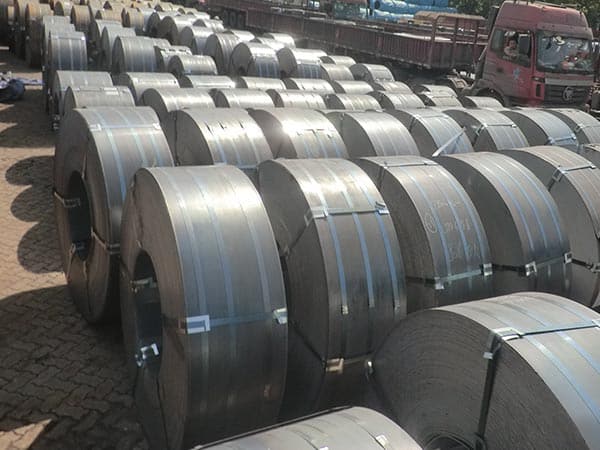
The Role of 1.8974 Steel in Modern Heavy-Duty Lifting Systems
Engineering large truss truck booms requires a material that balances extreme yield strength with lightweight properties. 1.8974 steel, widely recognized under the EN 10149-2 standard as S700MC, is a high-strength, thermomechanically rolled steel designed specifically for cold forming. For the South African market, where mining and infrastructure development demand robust machinery, understanding the technical nuances of 1.8974 is essential for manufacturers and procurement officers alike.
The 1.8974 designation indicates a steel that has undergone controlled rolling and cooling processes to achieve a minimum yield strength of 700 MPa. Unlike traditional quenched and tempered steels, the thermomechanical rolling process (TMCP) allows for a lower carbon equivalent, which significantly enhances weldability and toughness without sacrificing structural integrity. This makes it the ideal candidate for the complex lattice structures of truss booms, which must withstand dynamic loading and high-altitude stress in regions like the Highveld.
Mechanical Properties and Performance Standards
The mechanical excellence of 1.8974 steel is defined by its ability to maintain high load-bearing capacity while reducing the overall weight of the truck boom. This weight reduction directly translates to higher payloads and better fuel efficiency for heavy-duty vehicles operating in South African logistics corridors.
| Property | Value (Minimum/Range) |
|---|---|
| Yield Strength (Reh MPa) | 700 MPa |
| Tensile Strength (Rm MPa) | 750 - 950 MPa |
| Elongation (A5 %) | 12% (t < 3mm) / 10% (t > 3mm) |
| Bending Radius (90°) | 1.5 x t (thickness) |
The high tensile strength allows for thinner plates to be used in the fabrication of the truss, which reduces the dead weight of the boom. For a large truss truck, this means the center of gravity is lowered, improving the stability of the vehicle during transit and lifting operations. The ductility of 1.8974 ensures that the boom can absorb energy without catastrophic failure, a critical safety factor in the unpredictable environments of open-pit mines in the Northern Cape.
Chemical Composition and Micro-Alloying Advantages
The superior performance of 1.8974 steel is a result of its precise chemical composition. By utilizing micro-alloying elements such as Niobium (Nb), Vanadium (V), and Titanium (Ti), the grain structure of the steel is refined during the rolling process.
- Carbon (C): Kept below 0.12% to ensure excellent weldability and prevent cold cracking.
- Manganese (Mn): Enhances strength and toughness, typically around 2.10% max.
- Silicon (Si): Provides deoxidation and increases strength without significantly reducing ductility.
- Niobium and Titanium: These elements form fine carbides that pin grain boundaries, leading to a fine-grained ferritic-pearlitic structure.
This low carbon equivalent (CEV) is particularly beneficial for South African fabricators who may work in varying ambient temperatures. It reduces the need for extensive pre-heating during the welding process, saving time and energy costs in the workshop.
Fabrication and Process Performance for Truss Booms
When manufacturing large truss truck booms, the steel must undergo rigorous processing, including laser or plasma cutting, bending, and welding. 1.8974 steel is engineered to excel in these areas.
Cold Forming and Bending: Despite its high strength, 1.8974 exhibits excellent cold-forming properties. It can be bent to tight radii without surface cracking, provided the grain direction is considered. For large truss components, this allows for the creation of complex geometric shapes that optimize the strength-to-weight ratio of the boom arms.
Welding Integrity: The low carbon content makes 1.8974 compatible with all standard welding methods, including MAG (Metal Active Gas) and SAW (Submerged Arc Welding). It is vital to use consumables that match the strength of the base metal. Due to the TMCP nature of the steel, heat input should be carefully controlled to avoid softening in the Heat Affected Zone (HAZ). Proper welding parameters ensure that the joints are as strong as the parent material, maintaining the safety of the entire truss structure.
Environmental Adaptability in the South African Context
South Africa presents unique environmental challenges for steel structures. From the corrosive coastal air of Durban to the intense UV radiation and temperature fluctuations of the interior plateau, 1.8974 steel must be protected and maintained.
While 1.8974 has moderate atmospheric corrosion resistance, truss booms are typically treated with high-performance coatings or galvanizing. The smooth surface finish of cold-rolled 1.8974 allows for superior paint adhesion, ensuring long-term protection against rust. Furthermore, its impact toughness at low temperatures (often tested at -20°C or -40°C upon request) ensures that machinery remains operational during the cold winter nights in the Drakensberg regions or high-altitude mining sites.
Export Logistics and Pricing Factors for South Africa
The price of 1.8974 steel for export to South Africa is influenced by several global and local variables. Understanding these factors is crucial for accurate budgeting in large-scale engineering projects.
- Global Raw Material Costs: Fluctuations in iron ore and coking coal prices directly impact the base cost of high-strength steel.
- Energy Surcharges: The TMCP process is energy-intensive; therefore, energy prices in the country of origin (often China or Europe) affect the final quote.
- Shipping and Freight: Shipping to South African ports like Durban or Port Elizabeth involves maritime freight costs, which vary based on fuel prices and container availability. Bulk shipments of steel plates or coils often require specialized handling.
- Import Duties and Taxes: South African importers must account for customs duties, VAT, and potential anti-dumping measures. However, high-performance steels not produced locally (like certain grades of S700MC) may qualify for duty rebates in specific industrial sectors.
- Quality Certification: Ensuring the steel comes with 3.1 or 3.2 material test certificates (MTC) according to EN 10204 is mandatory for safety-critical applications like crane booms, which can slightly influence the premium paid for the material.
To obtain the best price, it is recommended to source from manufacturers with integrated supply chains and proven experience in the South African market. Consistency in thickness tolerances and flatness is paramount for automated welding and cutting systems used in modern boom fabrication.
Application Expansion: Beyond the Truss Boom
While the primary focus is on large truss truck booms, the versatility of 1.8974 steel allows for its use in various other high-stress applications within South Africa's industrial sector. This includes the chassis of heavy-duty trailers, components for agricultural machinery, and structural parts for renewable energy projects, such as wind turbine transport frames. The ability to design lighter, stronger structures is a universal requirement that 1.8974 meets with efficiency.
By choosing 1.8974 (S700MC), engineers are not just buying steel; they are investing in a technology that enables higher performance, safer operations, and long-term durability. Whether it is for a mobile crane operating in Johannesburg or a specialized transport vehicle in the Western Cape, this steel grade remains the gold standard for high-yield strength applications.
Leave a message