
S550MC steel for car parts yield reached the leading level in China
Discover the superior mechanical properties and processing advantages of S550MC high-strength steel. This comprehensive guide covers its role in automotive lightweighting, weldability, and industry-leading yield performance.
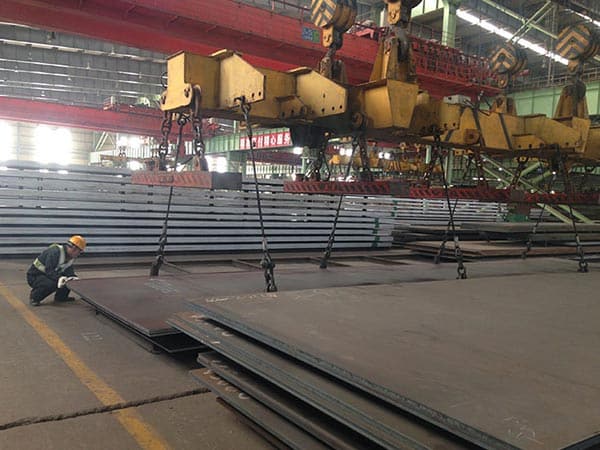
The Evolution of S550MC High-Strength Steel in Modern Engineering
In the pursuit of automotive efficiency and safety, S550MC high-strength low-alloy (HSLA) steel has emerged as a cornerstone material. As a thermomechanically rolled steel defined by the EN 10149-2 standard, S550MC represents a sophisticated balance between extreme yield strength and exceptional cold-forming capabilities. The 'S' denotes structural steel, '550' indicates a minimum yield strength of 550 MPa, and 'MC' signifies its thermomechanically rolled condition, which is critical for achieving a fine-grained microstructure without the need for additional heat treatment.
The demand for S550MC in the automotive sector is driven by the global mandate for lightweighting. By utilizing thinner gauges of S550MC to replace thicker conventional carbon steels, manufacturers can reduce vehicle weight by up to 30% in specific structural components without compromising crash safety. This reduction directly translates to lower fuel consumption and reduced CO2 emissions, making it a vital asset for both internal combustion and electric vehicle (EV) platforms.
Mechanical Excellence and Chemical Synergy
The performance of S550MC is not accidental; it is the result of precise micro-alloying. By incorporating trace amounts of elements such as Niobium (Nb), Titanium (Ti), and Vanadium (V), steelmakers induce grain refinement and precipitation hardening. This allows the material to maintain high strength while preserving the ductility required for complex stamping and bending operations.
| Mechanical Property | Value Range (Standard) | Practical Engineering Performance |
|---|---|---|
| Yield Strength (ReH) | Min 550 MPa | Typically reaches 580-620 MPa in leading batches |
| Tensile Strength (Rm) | 600 - 760 MPa | Ensures high energy absorption during impact |
| Elongation (A80mm) | Min 12% (t < 3mm) | Allows for tight radius bending without cracking |
| Bending Radius (180°) | 0.5t to 1.5t | Exceptional for complex structural geometries |
The low carbon content (typically below 0.12%) ensures that the material remains highly weldable. Unlike traditional high-carbon steels that suffer from brittleness in the heat-affected zone (HAZ), S550MC maintains its structural integrity across various welding processes, including MIG, MAG, and laser welding. This is particularly crucial for automotive chassis components and cross-members where weld fatigue is a primary design concern.
Advanced Processing Capabilities: Bending, Cutting, and Welding
One of the primary advantages of S550MC is its predictability during manufacturing. High-strength steels often face challenges like springback—the tendency of a metal to return to its original shape after bending. S550MC is engineered with a controlled yield-to-tensile ratio, which allows engineers to accurately calculate compensation factors in die design, ensuring high dimensional precision in mass production.
- Cold Forming: S550MC is optimized for cold forming. Its fine-grained structure prevents the 'orange peel' effect on the surface during deep drawing, which is essential for parts that require subsequent coating or aesthetic finishing.
- Laser and Plasma Cutting: Due to its low impurity levels (low Phosphorus and Sulfur), S550MC exhibits excellent edge quality when cut. This reduces the need for secondary grinding operations, lowering the overall production cost per part.
- Weldability: The carbon equivalent (CEV) of S550MC is remarkably low. This minimizes the risk of cold cracking and ensures that the joint strength is comparable to the base metal, a critical requirement for safety-critical parts like truck frames and crane arms.
Environmental Adaptability and Fatigue Resistance
Automotive parts are subjected to harsh environments, from corrosive road salts to extreme temperature fluctuations. S550MC demonstrates robust environmental adaptability. While it is not a stainless grade, its dense surface structure provides an excellent substrate for cathodic dip painting (KTL) and galvanizing. These coatings adhere more uniformly to HSLA steels, providing long-term corrosion protection for the vehicle's underbody.
Furthermore, the fatigue life of S550MC is superior to standard S355 grades. In cyclic loading tests—common for suspension systems and heavy-duty truck beams—S550MC shows a higher endurance limit. This allows designers to push the boundaries of component longevity, ensuring that parts can withstand millions of stress cycles over the lifespan of a commercial vehicle.
Industry Applications: Beyond the Passenger Car
While S550MC is a staple in the passenger car industry for parts like bumper beams, seat frames, and longitudinal beams, its utility extends far into other heavy industries. The drive for efficiency is universal, and S550MC provides the perfect solution for sectors requiring high strength-to-weight ratios.
- Commercial Vehicles: Used extensively in truck chassis, side members, and cross-beams to increase payload capacity by reducing dead weight.
- Lifting Equipment: Mobile cranes and telehandlers utilize S550MC for boom sections to achieve greater reach without increasing the machine's footprint.
- Agricultural Machinery: Plow frames and trailer structures benefit from the impact resistance and toughness of S550MC, especially in low-temperature environments.
Strategic Advantages of Leading Yield Levels
When S550MC yield levels reach the leading standards in China, it signifies a leap in metallurgical control. High-purity smelting and precision rolling technology ensure that the mechanical properties are consistent across the entire width and length of the coil. For the end-user, this consistency means fewer machine adjustments, lower scrap rates, and a more stable supply chain.
By choosing S550MC, manufacturers are not just buying steel; they are investing in a material that enables innovation in design. It allows for the creation of thinner, stronger, and more complex shapes that were previously impossible with conventional materials. As the automotive industry moves toward a greener future, S550MC remains a pivotal material in the quest for sustainable high-performance engineering.
Leave a message