
What are the operation principles to be followed in the 1.0984 steel for boom cutting process
Explore the critical operation principles for cutting 1.0984 (S700MC) steel in boom manufacturing. This guide covers thermal management, mechanical property preservation, and advanced cutting techniques to ensure structural safety and efficiency.
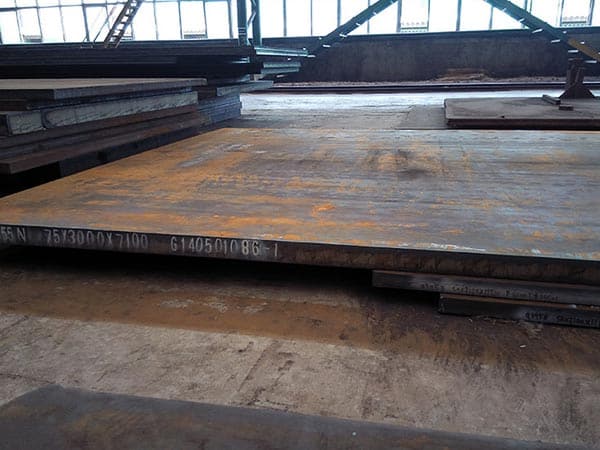
Understanding the Material Essence of 1.0984 Steel
1.0984 steel, commonly known in the industry as S700MC, represents the pinnacle of thermomechanically rolled high-yield strength steels. Engineered specifically for cold forming, this grade offers a minimum yield strength of 700 MPa. Its unique microstructure is achieved through a controlled rolling process followed by rapid cooling, resulting in an exceptionally fine grain size. When dealing with boom structures—whether for mobile cranes, concrete pumps, or forestry equipment—the material must maintain its integrity under extreme tension and compression. The cutting process is the first critical step where the material's internal balance is challenged. Because 1.0984 relies on its specific microstructure for strength, improper cutting techniques can lead to localized softening or micro-cracking, compromising the entire structural component.
The Primary Principle: Thermal Input Management
The most significant risk during the 1.0984 steel cutting process is the creation of an oversized Heat Affected Zone (HAZ). Since S700MC derives its strength from thermomechanical treatment rather than high alloy content, excessive heat can cause grain growth and phase transformation at the cut edge. To preserve the 700 MPa yield strength, operators must adhere to the principle of "minimum heat residence time." High-speed laser cutting is generally preferred over oxy-fuel cutting because the concentrated energy beam minimizes the duration the surrounding metal stays at critical temperatures. If plasma cutting is used, underwater plasma or high-definition systems with optimized gas mixtures are recommended to accelerate heat dissipation.
Pre-Cutting Stress Analysis and Preparation
High-strength steels like 1.0984 harbor internal residual stresses from the thermomechanical rolling process. When a large boom section is cut, these stresses are released, which can cause the plate to "spring" or bow. This physical movement not only affects dimensional accuracy but can also damage the cutting head. Operational principles dictate that the plate must be properly leveled before cutting. Furthermore, the nesting layout should account for stress release by avoiding long, continuous longitudinal cuts without intermittent "bridge" points. Cleaning the surface is equally vital; mill scale, rust, or oil can interfere with the cutting beam's stability, leading to irregular edges that act as stress concentrators during the boom's service life.
Mechanical Performance Standards and Data
To ensure the cutting process aligns with the engineering requirements of 1.0984, it is essential to understand the baseline properties that must be preserved. The following table outlines the typical mechanical profile of 1.0984 steel:
| Property | Value (Typical) | Impact of Improper Cutting |
|---|---|---|
| Yield Strength (ReH) | Min 700 MPa | Reduction due to grain coarsening |
| Tensile Strength (Rm) | 750 - 950 MPa | Softening of the edge zone |
| Elongation (A5) | Min 12% | Brittleness if rapid quenching occurs |
| Impact Energy (-40°C) | Min 27 J | Loss of low-temperature toughness |
Operational Principles for Laser Cutting 1.0984
Laser cutting is the industry standard for 1.0984 boom sections due to its precision. The core principle here is focal point optimization. For high-strength steel, the focus should be set slightly below the surface to ensure a clean, perpendicular cut. Nitrogen is often preferred as the assist gas over oxygen for thinner sections to prevent edge oxidation, which can hinder subsequent welding processes. For thicker boom plates (above 10mm), oxygen cutting requires precise pressure control; too high a pressure increases the exothermic reaction, widening the HAZ and potentially causing dross adherence that requires mechanical grinding—a process that introduces further localized heat.
Plasma Cutting Strategies for Heavy Sections
When boom designs require plates exceeding the efficient range of standard lasers, plasma cutting becomes the primary tool. The operational principle shifts to arc stability and travel speed. Operators must maintain a consistent torch height to prevent kerf deviation. Using a "narrow gap" plasma setting helps concentrate the energy, effectively reducing the HAZ width compared to conventional plasma. It is critical to avoid restarting the arc in the middle of a critical structural edge; lead-ins and lead-outs should be positioned in non-stressed areas of the boom geometry to prevent "start-stop" notches which are notorious for initiating fatigue cracks.
Post-Cutting Edge Treatment and Inspection
Even with the best cutting parameters, the edge of a 1.0984 steel plate undergoes a metallurgical change. A fundamental principle in boom manufacturing is the mechanical removal of the cut-edge hardened layer. For components subject to high dynamic loads, the edges should be ground or milled to remove approximately 0.5mm to 1.0mm of material. This removes any micro-fissures and the primary HAZ. Inspection protocols must include:
- Visual inspection for slag, dross, or deep gouges.
- Magnetic Particle Inspection (MPI) on critical corners to detect surface cracks.
- Hardness testing across the cut edge to ensure it does not exceed 120% of the base metal hardness.
- Dimensional verification against the CAD model to ensure tight tolerances for robotic welding.
Environmental and Processing Adaptability
1.0984 steel is designed to perform in diverse environments, from arctic construction sites to tropical infrastructure projects. However, the cutting process must be adapted to the ambient shop environment. Cold plates (below 15°C) should be slightly preheated to remove moisture and reduce the thermal shock gradient. This prevents the formation of martensite at the edge, which is overly brittle. Furthermore, the high strength-to-weight ratio of 1.0984 allows for thinner sections than traditional S355 steel, meaning the cutting equipment must be calibrated for high-speed precision to avoid warping of these thinner, high-performance plates.
Industry Applications and Performance Requirements
The application of 1.0984 steel in boom cutting is driven by the need for weight reduction without safety compromise. In the mobile crane industry, every kilogram saved in the boom allows for a higher lifting capacity or a longer reach. Therefore, the cutting principle must prioritize the preservation of the material's fatigue resistance. Sharp corners should always be replaced with radii in the cutting program to distribute stress. In the concrete pump industry, where booms are subject to intense vibration and abrasive internal flow, the cut edges must be perfectly smooth to prevent the initiation of vibration-induced fatigue. Adhering to these rigorous operation principles ensures that the 1.0984 steel delivers its full theoretical performance in the most demanding real-world scenarios.
Leave a message