
Is B700L steel for construction machinery parts hot or cold rolled?
Explore the technical specifications of B700L steel, its hot-rolled manufacturing process, mechanical properties, and specialized applications in heavy construction machinery and automotive structures.
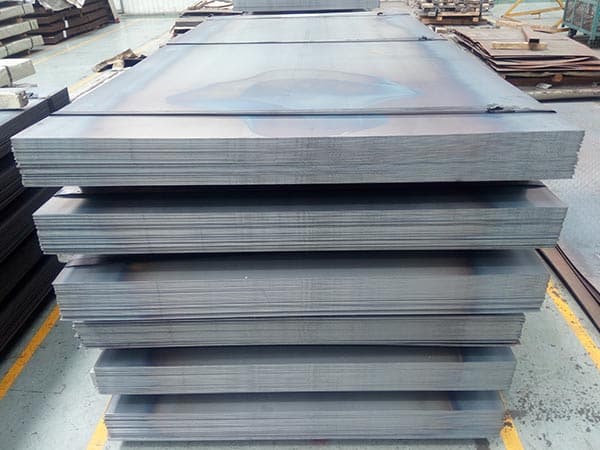
The Essential Rolling State of B700L Steel
When addressing the question of whether B700L steel is hot or cold rolled, the definitive answer lies in its metallurgical classification and intended industrial application. B700L is a high-strength low-alloy (HSLA) structural steel produced through a sophisticated hot-rolling process. Specifically, it is manufactured using Thermo-Mechanical Control Processing (TMCP). Unlike cold-rolled steels which are typically limited to thinner gauges and specific surface finishes, hot-rolled B700L is engineered to provide the heavy-duty thickness and structural integrity required for construction machinery and automotive frames. The 'L' in B700L traditionally denotes its suitability for 'Liang' (the Chinese term for beams or girders), emphasizing its role in load-bearing structural components. This steel grade bridges the gap between standard carbon steels and high-performance quenched and tempered alloys, offering a yield strength of 700 MPa while maintaining excellent formability.
The Role of TMCP in B700L Production
The high strength of B700L is not achieved through traditional heat treatment but through the precision of the hot-rolling mill. During the TMCP process, the steel is rolled at specific temperature ranges that control the recrystallization of austenite. By carefully managing the cooling rate on the run-out table after the final rolling pass, manufacturers can produce a very fine-grained ferrite and pearlite (or sometimes bainite) microstructure. This grain refinement is the only strengthening mechanism that simultaneously improves both strength and toughness. For construction machinery parts, this means the material can withstand high stress without becoming brittle, a critical factor for equipment operating in dynamic or cold environments.
Chemical Composition and Micro-alloying Strategy
The performance of B700L is rooted in its precise chemical balance. It utilizes a low carbon design to ensure superior weldability, which is vital for the assembly of complex machinery. The strength is bolstered by the addition of micro-alloying elements such as Niobium (Nb), Vanadium (V), and Titanium (Ti). These elements serve two purposes: they pin grain boundaries during rolling to prevent grain growth and provide precipitation hardening. Below is a typical chemical composition profile for B700L:
| Element | Carbon (C) | Silicon (Si) | Manganese (Mn) | Phosphorus (P) | Sulfur (S) | Nb+V+Ti |
|---|---|---|---|---|---|---|
| Content (%) | ≤ 0.12 | ≤ 0.50 | ≤ 2.00 | ≤ 0.025 | ≤ 0.015 | ≤ 0.22 |
This lean alloy design ensures that the Carbon Equivalent (Ceq) remains low, typically below 0.45, which significantly reduces the risk of cold cracking during welding operations.
Mechanical Performance and Structural Integrity
B700L is defined by its mechanical prowess. With a minimum yield strength of 700 MPa, it allows engineers to design thinner, lighter components without sacrificing safety. This 'lightweighting' is a primary driver in the construction machinery sector, as it reduces fuel consumption and increases the payload capacity of vehicles like concrete pump trucks and heavy-duty cranes. The mechanical properties are summarized as follows:
| Property | Yield Strength (MPa) | Tensile Strength (MPa) | Elongation (%) | Impact Energy (-20°C) |
|---|---|---|---|---|
| Specification | ≥ 700 | 750 - 950 | ≥ 12 | ≥ 27J |
The high tensile-to-yield ratio ensures that the material has a sufficient safety margin before ultimate failure, providing a buffer against unexpected overloads in the field.
Fabrication and Processing Characteristics
Despite its high strength, B700L exhibits remarkable processing flexibility. In the context of construction machinery manufacturing, three areas are paramount: cutting, bending, and welding. Laser and plasma cutting are the preferred methods for B700L, as they provide high precision with a narrow heat-affected zone (HAZ). Regarding cold bending, B700L can be formed into complex shapes provided the bending radius is appropriately managed. Generally, a minimum bending radius of 3 to 5 times the plate thickness (3t-5t) is recommended to prevent surface cracking. Welding is perhaps the most critical process. Due to its low carbon equivalent, B700L can often be welded without preheating for thicknesses under 10mm. Common welding methods include MAG (Metal Active Gas) and MIG (Metal Inert Gas) using high-strength filler wires such as ER110S-G. It is essential to control the heat input to avoid excessive grain growth in the HAZ, which could locally soften the steel.
Environmental Adaptability and Fatigue Resistance
Construction machinery often operates in grueling environments, from sub-zero mining sites to high-temperature construction zones. B700L is designed with high purity, minimizing non-metallic inclusions like sulfides that can act as crack initiation points. This purity, combined with the fine-grained structure, gives B700L excellent fatigue resistance. Under cyclic loading conditions—common in hydraulic excavator arms or crane booms—B700L maintains its structural integrity longer than traditional Q345 or Q355 grades. Furthermore, its atmospheric corrosion resistance is adequate for most industrial applications, though protective coatings are typically applied for long-term durability.
Strategic Application in Heavy Equipment
The adoption of hot-rolled B700L has revolutionized the design of several key machinery components. In crane manufacturing, B700L is used for the telescopic boom sections where high strength-to-weight ratios are non-negotiable. In concrete machinery, the delivery pipes and support legs of pump trucks utilize B700L to handle the immense pressure and vibration. For heavy trucks, the longitudinal beams of the chassis are often stamped from B700L, providing the necessary rigidity to carry heavy loads while resisting the torsional stresses encountered on uneven terrain. By replacing lower-strength steels with B700L, manufacturers can achieve weight reductions of up to 25-30%, which translates directly into operational efficiency and reduced carbon footprints.
Comparison with International Standards
B700L is often compared to the European standard S700MC (EN 10149-2). Both are hot-rolled, high-strength steels produced via TMCP. While their mechanical properties are nearly identical, B700L is specifically optimized for the processing habits and equipment common in the Asian manufacturing landscape. Understanding these nuances is vital for global OEMs who source components across different regions. Both grades offer the same core benefits: high yield strength, excellent cold forming, and reliable weldability, making them the global benchmark for modern high-strength structural applications.
Optimization of Material Selection
Choosing B700L involves more than just looking at the yield strength. Engineers must consider the entire lifecycle of the component. The transition from cold-rolled thinner sections to hot-rolled B700L for structural parts allows for larger-scale integration and fewer welded joints, which enhances the overall reliability of the machine. The surface quality of hot-rolled B700L has also seen significant improvements, with modern acid-pickling lines (Pickled and Oiled) providing a surface finish that rivals cold-rolled products, suitable for high-quality painting and coating processes. This makes B700L a versatile choice for both internal structural members and visible exterior components of heavy machinery.
Leave a message