
Alloy steel en 10149-2 s700mc equivalent 50mm thick plate
Discover the technical properties and equivalents of EN 10149-2 S700MC for 50mm thick plates. Explore mechanical performance, welding techniques, and industrial applications for high-strength steel solutions.
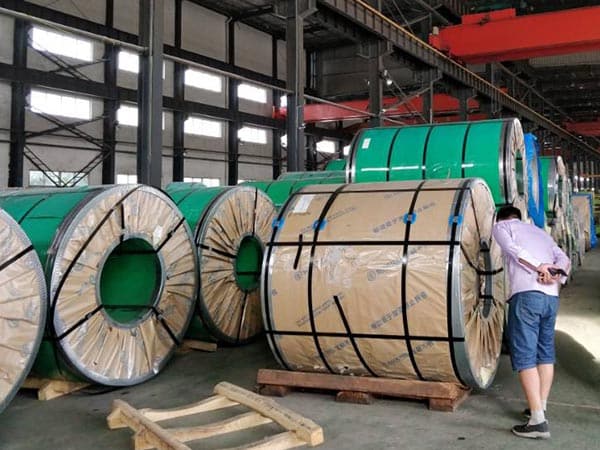
Introduction to EN 10149-2 S700MC and the Heavy Plate Challenge
The demand for high-strength structural materials has shifted the engineering landscape toward materials that offer a superior strength-to-weight ratio. EN 10149-2 S700MC is a thermomechanically rolled steel specifically designed for cold forming. While the standard typically covers thicknesses up to 20mm due to the nature of the TMCP (Thermomechanical Controlled Processing) cooling rates, modern heavy engineering often requires the high yield strength of 700 MPa in sections as thick as 50mm. Understanding the equivalents and the metallurgical transitions required for these heavy sections is critical for structural integrity in crane manufacturing, transport, and offshore construction.
When a project specifies a 50mm thick plate with S700MC properties, engineers must look toward EN 10025-6 S700QL or specific micro-alloyed equivalents. The 'MC' designation indicates thermomechanical rolling, while 'QL' signifies quenched and tempered (Q&T) steel. For heavy plates at 50mm, the Q&T process is more effective at achieving uniform through-thickness grain refinement than TMCP alone. This article explores the mechanical, chemical, and process-driven attributes of S700MC and its heavy-gauge counterparts.
Mechanical Performance and Equivalent Selection
The primary requirement for S700MC is a minimum yield strength of 700 MPa. For thin sections, this is achieved through fine grain structures induced by niobium, vanadium, and titanium micro-alloying. However, for a 50mm thick plate, achieving 700 MPa requires a focus on hardenability and impact toughness at low temperatures. Common equivalents for heavy-gauge requirements include ASTM A514 Grade Q, Q690D/E (Chinese standard), and WELDOX 700.
| Grade | Standard | Yield Strength (min MPa) | Tensile Strength (MPa) | Elongation (min %) | Thickness Range |
|---|---|---|---|---|---|
| S700MC | EN 10149-2 | 700 | 750-950 | 10-12 | Up to 20mm (Typical) |
| S700QL | EN 10025-6 | 700 | 770-940 | 14 | Up to 150mm |
| ASTM A514 Gr. Q | ASTM A514 | 690 | 760-895 | 18 | Up to 150mm |
| Q690D | GB/T 1591 | 690 | 770-940 | 14 | Up to 100mm |
For a 50mm plate, the S700QL variant is the most appropriate technical equivalent. It offers the same yield strength but adds superior low-temperature impact energy (typically 30J to 40J at -40°C or -60°C), which is vital for heavy structural members subject to dynamic loading. The quenching and tempering process ensures that the core of the 50mm plate possesses the same mechanical properties as the surface, a feat difficult to maintain with TMCP steels at that thickness.
Chemical Composition and Micro-Alloying Strategy
The chemistry of S700MC is characterized by low carbon content (usually <0.12%) and high levels of micro-alloying elements. This ensures excellent weldability by maintaining a low Carbon Equivalent Value (CEV). For a 50mm plate equivalent like S700QL, the chemistry is slightly adjusted to ensure through-hardening during the quenching phase.
- Carbon (C): Kept low to enhance weldability and prevent brittle zones in the heat-affected zone (HAZ).
- Manganese (Mn): Essential for strength and grain refinement.
- Boron (B): Often added in Q&T equivalents (S700QL) to increase hardenability without sacrificing toughness.
- Niobium (Nb) & Vanadium (V): Used for precipitation hardening and controlling grain growth during the heating cycles.
By keeping the CEV low (typically between 0.45 and 0.55 for 50mm S700QL), the steel maintains a high resistance to cold cracking, a significant advantage for fabricators working with heavy sections.
Processing Performance: Welding and Cutting
Working with 50mm high-strength steel requires specialized fabrication protocols. Because the strength is derived from specific heat treatments (TMCP or Q&T), excessive heat input during welding or cutting can lead to "softening" of the material, reducing the yield strength in the HAZ.
Thermal Cutting: When flame cutting or plasma cutting 50mm S700MC equivalents, preheating is often necessary to prevent edge cracking. Laser cutting is preferred for precision, but for 50mm, high-power oxygen-assisted plasma or oxy-fuel is standard. After cutting, edges should be ground to remove the oxide layer and any hardened martensitic zones.
Welding Protocols: Welding 50mm S700MC equivalent plates requires a balance between preheat temperature and interpass temperature. High-strength steels are sensitive to hydrogen-induced cracking. Therefore, low-hydrogen consumables (H5 or better) are mandatory.
- Use matching strength consumables (e.g., ER110S-G or equivalent).
- Maintain a controlled cooling rate to ensure the HAZ retains its toughness.
- Avoid high heat input (stay within 10-25 kJ/cm) to prevent grain coarsening.
Environmental Adaptability and Fatigue Resistance
High-strength steels like S700MC and its 50mm equivalents are often used in environments where weight reduction is critical but safety is paramount. One of the standout features of these steels is their fatigue resistance. In heavy machinery, components are subjected to millions of stress cycles. The fine-grained structure of S700 class steels provides a higher fatigue limit compared to traditional S355 structural steels.
In terms of corrosion resistance, while S700MC is not a "weathering" steel, its dense surface structure and controlled chemistry provide a stable substrate for advanced coating systems. For offshore or maritime applications, the 50mm S700QL variant is often preferred due to its tested impact properties at sub-zero temperatures, ensuring the steel does not undergo a brittle transition in arctic or deep-sea conditions.
Application Industries for 50mm S700 Grade Plates
The transition from 20mm S700MC to 50mm equivalents opens up new possibilities in heavy engineering. The weight savings achieved by using 700 MPa steel instead of 355 MPa steel can exceed 30%, which translates directly to higher payloads and lower fuel consumption in mobile equipment.
- Lifting and Equipment: Telescopic crane booms, heavy-duty jib sections, and chassis for mobile cranes where 50mm sections provide the necessary stiffness and strength at pivot points.
- Mining and Earthmoving: Mainframes for haul trucks and wear-resistant structural components in large excavators.
- Infrastructure: High-load bridge girders and specialized building structures where space constraints require thinner but stronger sections.
- Energy: Support structures for offshore wind turbines and components for heavy-duty power generation transport frames.
The use of 50mm thick S700 equivalent plates allows for the design of leaner, more efficient structures that can withstand extreme mechanical stresses. By selecting the correct grade—moving from S700MC to S700QL for heavy sections—engineers ensure that the theoretical strength of the design is fully realized in the physical component.
Conclusion on Material Selection
Specifying EN 10149-2 S700MC for a 50mm thickness requires a deep understanding of metallurgical limits. Since the MC process is optimized for thinner strips, the S700QL (EN 10025-6) stands as the most reliable equivalent for 50mm plates. It provides the required 700 MPa yield strength while ensuring through-thickness consistency and superior impact toughness. Fabricators must respect the material's chemistry by utilizing low-hydrogen welding techniques and controlled thermal cycles to maintain the integrity of the high-strength grain structure. As the industry pushes toward larger and more efficient machines, these high-yield heavy plates will continue to be the backbone of modern structural engineering.
Leave a message