
How to improve the quality of s700mc steel density
Explore advanced methods to enhance the internal quality and microstructural density of S700MC steel. This guide covers chemical optimization, TMCP parameters, and grain refinement to achieve superior mechanical properties.
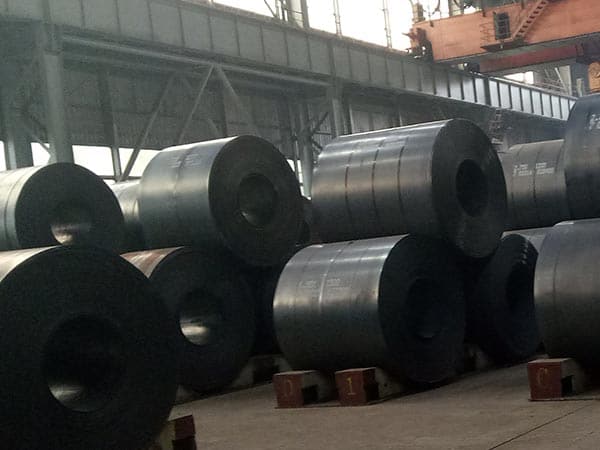
Understanding the Concept of Density in S700MC High-Strength Steel
When discussing S700MC steel, a high-strength cold-forming steel governed by the EN 10149-2 standard, the term "density" often transcends the simple physical measurement of mass per unit volume (which remains constant at approximately 7.85 g/cm³). In the context of metallurgy and high-end manufacturing, improving the quality of S700MC density refers to enhancing the internal soundness, microstructural compactness, and the homogeneity of the grain structure. Achieving a "denser" quality means eliminating internal defects like porosity, non-metallic inclusions, and micro-cracks that can compromise the integrity of heavy-duty components.
S700MC is a thermomechanically rolled (TMCP) steel designed for applications requiring high yield strength (minimum 700 MPa) and excellent bendability. To improve its quality, manufacturers must focus on the precision of the rolling process and the purity of the melt. A denser, more refined microstructure directly correlates with improved fatigue resistance and impact toughness, especially in sub-zero environments.
Chemical Composition Optimization for Enhanced Structural Integrity
The foundation of high-quality S700MC lies in its chemical recipe. While the standard sets limits, high-tier manufacturers optimize these ranges to ensure a "cleaner" and more "dense" internal structure. The use of micro-alloying elements is critical in this regard.
- Carbon (C) and Manganese (Mn): Keeping carbon levels low (typically <0.12%) ensures excellent weldability, while manganese provides solid solution strengthening without causing the brittleness associated with high-carbon steels.
- Niobium (Nb), Vanadium (V), and Titanium (Ti): These elements are pivotal for grain refinement. They form fine carbides and nitrides that pin grain boundaries during the rolling process, preventing grain growth and leading to a more compact, fine-grained structure.
- Sulfur and Phosphorus Control: To improve the "density" of the quality, sulfur levels should be kept extremely low (often <0.005%) through secondary metallurgy. This reduces the formation of manganese sulfide (MnS) inclusions, which can act as stress concentrators.
| Element | Standard Limit (Max %) | Optimized for High Quality (%) |
|---|---|---|
| Carbon (C) | 0.12 | 0.08 - 0.10 | Manganese (Mn) | 2.10 | 1.60 - 1.80 | Silicon (Si) | 0.60 | 0.20 - 0.30 | Niobium (Nb) | 0.09 | 0.04 - 0.06 | Sulfur (S) | 0.015 | < 0.003 |
The Role of TMCP in Refining Microstructural Density
The Thermomechanical Controlled Processing (TMCP) is the most critical factor in improving the internal quality of S700MC. Unlike traditional normalized steel, TMCP combines controlled rolling and controlled cooling to manipulate the phase transformation of the steel.
During the rolling stage, the steel is deformed at specific temperatures where recrystallization is suppressed. This creates a high density of dislocation sites within the austenite grains. Upon cooling, these sites serve as nucleation points for ferrite, resulting in an exceptionally fine-grained ferrite-bainite microstructure. This refinement increases the effective density of grain boundaries, which act as barriers to dislocation movement, thereby increasing strength and toughness simultaneously.
Precision cooling is equally vital. Accelerated cooling (AcC) after the final rolling pass ensures that the microstructure does not coarsen. By controlling the cooling rate, manufacturers can prevent the segregation of alloying elements, ensuring that the "density" of the mechanical properties is uniform across the entire width and length of the steel plate.
Improving Surface and Internal Soundness
To truly improve the quality of S700MC density, one must address the physical continuity of the material. Internal voids or "loose" structures can occur during the continuous casting phase. Implementing Soft Reduction technology during casting helps to eliminate center-line segregation and porosity by applying mechanical pressure to the strand as it solidifies.
Furthermore, vacuum degassing (VD) or Ruhrstahl-Heraeus (RH) degassing is used to remove dissolved gases like hydrogen and nitrogen. Hydrogen, in particular, can cause "flaking" or internal ruptures, which drastically reduces the structural density and safety of the steel. A clean, degassed melt is a prerequisite for any S700MC steel intended for high-stress applications like crane booms or chassis frames.
Mechanical Performance and Environmental Adaptability
The quality of S700MC is often judged by its performance under duress. By improving the microstructural density, the steel exhibits superior impact energy values. While the standard might require 40J at -20°C, high-quality S700MC can often achieve these values even at -40°C or -60°C.
Cold Formability: A denser, more uniform grain structure allows for tighter bend radii without cracking. This is essential for manufacturers of complex automotive components who need to reduce weight without sacrificing safety. The high yield-to-tensile ratio of S700MC, when optimized through grain refinement, allows for significant "lightweighting" in structural designs.
Advanced Testing Methods for Density Quality Assurance
Ensuring that the density and quality meet the required standards involves rigorous testing beyond the basic tensile test. To verify the internal integrity of S700MC, several advanced methods are employed:
- Ultrasonic Testing (UT): Used to detect internal laminations, inclusions, or voids that might affect the "density" of the material's strength.
- Scanning Electron Microscopy (SEM): Allows for the observation of the grain size and the distribution of micro-alloying precipitates at the nano-scale.
- EBSD (Electron Backscatter Diffraction): Provides a map of the crystallographic orientation, confirming the success of the TMCP process in creating a fine-grained structure.
Application Industries for High-Density S700MC
The demand for high-quality S700MC is driven by industries where failure is not an option and weight reduction is a competitive advantage. The compact and strong nature of this steel makes it the preferred choice for several high-tech sectors.
Heavy Lifting and Cranes: In the production of telescopic crane booms, S700MC provides the necessary strength to lift massive loads while keeping the boom's self-weight low. The internal density ensures that the steel can withstand the immense compressive and tensile stresses during operation.
Transportation and Automotive: Truck chassis, cross members, and specialized trailers utilize S700MC to increase payload capacity. The high fatigue resistance, a result of a dense and uniform microstructure, ensures a long service life under cyclic loading conditions.
Agricultural Machinery: Modern farm equipment requires materials that can resist wear and handle the stresses of uneven terrain. S700MC offers the toughness required to prevent brittle fractures during impact with rocks or hard soil.
Comparison of S700MC with Traditional Structural Steels
When comparing S700MC to traditional S355 grade steels, the difference in "quality density" becomes apparent. S700MC offers nearly double the yield strength, allowing for a 30-50% reduction in material thickness while maintaining the same load-bearing capacity.
| Feature | Standard s355jr | High-Quality S700MC |
|---|---|---|
| Yield Strength (MPa) | ≥ 355 | ≥ 700 | Microstructure | Coarse Ferrite/Pearlite | Fine Ferrite/Bainite | Weight Reduction Potential | Baseline | Up to 40% | Formability | Moderate | Excellent (Cold Forming) |
Future Trends in Enhancing S700MC Quality
The quest for even higher quality in S700MC continues with the exploration of Nano-precipitation strengthening. By further refining the size of niobium and titanium carbides to the sub-10 nanometer range, researchers aim to increase the strength further without losing ductility. Additionally, the integration of Artificial Intelligence (AI) in the TMCP rolling mills allows for real-time adjustments to the cooling rates and rolling pressures, ensuring that every millimeter of the steel plate achieves the peak density and quality possible.
Maintaining a strict control over the entire supply chain, from the iron ore purity to the final flatness leveling of the plate, is the only way to guarantee that the S700MC steel meets the rigorous demands of modern engineering. By focusing on microstructural refinement and internal soundness, manufacturers can deliver a product that truly redefines the limits of high-strength steel performance.
Leave a message