
s 700 mc steel freight rose
An in-depth analysis of S700MC steel, covering its mechanical properties, chemical composition, and processing advantages. Learn how its high strength-to-weight ratio offsets rising freight costs in the heavy transport and machinery sectors.
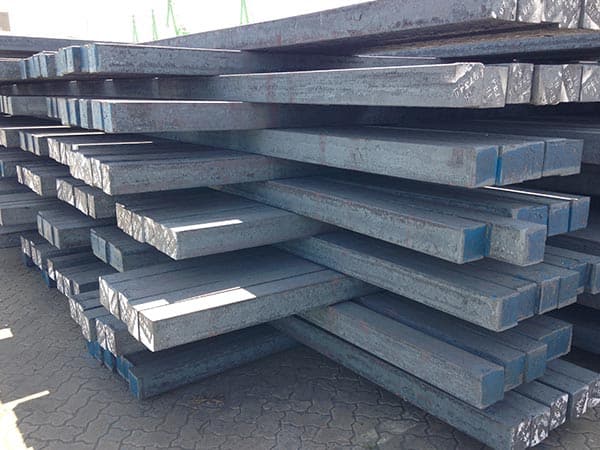
The Economic Paradox of S700MC Steel in a High-Freight Market
As global logistics face unprecedented pressure, the steel industry has observed a significant trend: s 700 mc steel freight rose. While rising shipping costs usually deter procurement, the demand for S700MC (High-Strength Low-Alloy steel) continues to climb. This phenomenon is driven by the material's unique ability to reduce overall structural weight, thereby mitigating the impact of increased freight rates. When a manufacturer utilizes S700MC, they are not just buying steel; they are investing in structural efficiency that reduces the total tonnage required for a project. This reduction in volume and weight directly translates to lower shipping costs per functional unit, effectively counteracting the rise in freight pricing.
Defining S700MC: The Peak of Thermomechanical Rolling
S700MC is a high-strength structural steel produced through a process known as thermomechanical rolling. Defined by the European standard EN 10149-2, the 'S' stands for structural steel, '700' indicates a minimum yield strength of 700 MPa, and 'MC' signifies that the material is thermomechanically rolled for cold forming. This specific production route involves a controlled cooling process that creates a fine-grained microstructure, which is the foundation of its exceptional strength and toughness. Unlike traditional quenched and tempered steels, S700MC achieves its properties through precise temperature control and micro-alloying, resulting in a product that is both incredibly strong and highly weldable.
Chemical Composition and Metallurgical Integrity
The secret to the performance of S700MC lies in its low carbon content and the strategic use of micro-alloying elements such as Niobium (Nb), Vanadium (V), and Titanium (Ti). These elements facilitate grain refinement and precipitation hardening during the rolling process. By keeping the carbon equivalent (CEV) low, S700MC maintains excellent weldability without the need for extensive preheating, which is a common requirement for other high-strength materials.
| Element | Maximum Content (%) |
|---|---|
| Carbon (C) | 0.12 |
| Manganese (Mn) | 2.10 |
| Silicon (Si) | 0.60 |
| Phosphorus (P) | 0.025 |
| Sulfur (S) | 0.015 |
| Aluminium (Al) | 0.015 |
| Nb + V + Ti | 0.22 |
This lean chemical profile ensures that the steel does not become brittle at low temperatures, making it suitable for equipment operating in harsh, cold environments. The low sulfur content also contributes to improved lamellar tearing resistance and superior surface quality.
Unrivaled Mechanical Properties for Heavy-Duty Engineering
The primary advantage of S700MC is its high yield strength. When compared to standard structural steels like S355, S700MC allows for a significant reduction in wall thickness without compromising the load-bearing capacity of the structure. This is particularly vital in the automotive and transport industries, where 'lightweighting' is the key to fuel efficiency and increased payload capacity.
| Property | Value (Minimum) |
|---|---|
| Yield Strength (ReH) | 700 MPa |
| Tensile Strength (Rm) | 750 - 950 MPa |
| Elongation (A5) | 10 - 12% (depending on thickness) |
| Impact Strength (Charpy V) | 40J at -20°C (optional -40°C) |
These properties enable engineers to design more slender components. For instance, in the production of crane booms or truck chassis, replacing S355 with S700MC can lead to weight savings of up to 30-40%. This weight reduction directly offsets the s 700 mc steel freight rose issues by allowing more components to be shipped in a single container or reducing the fuel consumption of the transport vehicle itself.
Cold Forming and Processing Versatility
One of the most remarkable features of S700MC is its cold-forming capability. Despite its high strength, the material exhibits excellent ductility. It can be bent, flanged, and cold-rolled into complex shapes without cracking. This is essential for the manufacturing of U-beams, C-channels, and complex frame parts in the commercial vehicle industry.
- Bending Radius: For thicknesses less than 3mm, the recommended internal bending radius is as low as 1.0 times the thickness (1.0t).
- Laser Cutting: The fine-grained structure and consistent surface finish make S700MC an ideal candidate for high-speed laser and plasma cutting, resulting in clean edges and high dimensional accuracy.
- Machinability: While harder than mild steel, S700MC can be machined using standard high-speed steel or carbide tools, provided that cutting speeds and feeds are optimized for its strength level.
Advanced Welding Characteristics
Welding S700MC requires an understanding of its thermomechanical history. Because the strength is derived from the rolling process rather than heat treatment, excessive heat input during welding can lead to a softening of the Heat Affected Zone (HAZ). However, due to its low carbon equivalent, S700MC is generally less susceptible to cold cracking than traditional high-strength steels.
Standard welding processes such as MAG (Metal Active Gas), TIG (Tungsten Inert Gas), and Laser Beam Welding are all highly effective. It is recommended to use consumables with matching strength levels or slightly lower strength if the design allows, to improve toughness. Minimizing heat input through multi-pass welding and maintaining low interpass temperatures ensures that the integrity of the 700 MPa yield strength is maintained across the joint.
Environmental Adaptation and Sustainability
In the modern industrial landscape, environmental impact is a critical metric. S700MC contributes significantly to sustainability goals. By reducing the mass of steel required for a structure, the energy consumed during melting, rolling, and transportation is lowered. Furthermore, vehicles built with S700MC components are lighter, which translates to lower CO2 emissions during their entire operational lifespan. This lifecycle benefit is a powerful argument for adopting S700MC, even when s 700 mc steel freight rose trends temporarily increase initial procurement costs.
Expanding Industry Applications
The versatility of S700MC has led to its adoption across a wide spectrum of demanding industries. Its high strength and fatigue resistance make it the preferred choice for components subject to dynamic loads.
- Transport and Logistics: Long-haul truck chassis, trailers, and tankers benefit from increased payloads.
- Construction Machinery: Mobile crane booms, concrete pump arms, and telescopic handlers require high strength at great heights.
- Agriculture: Soil cultivation equipment, spreaders, and heavy-duty trailers utilize S700MC to withstand high stress while remaining light enough for field operations.
- Waste Management: Refuse collection vehicles use S700MC for their compactors and containers to resist wear and structural fatigue.
In each of these sectors, the transition to S700MC represents a move toward technical optimization. The material's ability to endure extreme mechanical stress while maintaining a low profile allows for innovative designs that were previously impossible with lower-grade steels. As the industry continues to evolve, the strategic use of S700MC will remain a cornerstone of high-performance engineering, providing a robust solution to both technical challenges and fluctuating market costs.
Leave a message