
What is the available size of din en 10149-2?
Discover the extensive available size range of DIN EN 10149-2 steels, including S315MC to S700MC. Learn about thickness, width, length options, and technical properties for high-strength cold forming applications.
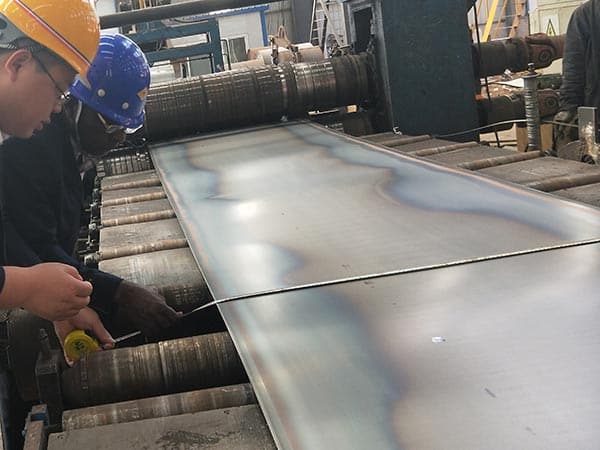
Technical Scope and Dimensional Overview of DIN EN 10149-2
DIN EN 10149-2 is the definitive European standard for hot-rolled flat products made of high yield strength steels for cold forming. Specifically, it focuses on thermomechanically rolled steels, designated with the 'MC' suffix. When engineers ask, "What is the available size of DIN EN 10149-2?", they are usually looking for the feasibility of integrating these high-performance materials into lightweight structural designs. The available size range is not merely a list of numbers; it is a reflection of the advanced thermomechanical rolling (TMCP) capabilities of modern steel mills.
Generally, the thickness range for DIN EN 10149-2 products spans from 1.5 mm to 20 mm. However, some specialized manufacturers can push these boundaries, offering sheets as thin as 1.2 mm or plates as thick as 25 mm for specific grades like S355MC or S420MC. The width typically ranges from 900 mm to 2000 mm, while lengths can be customized up to 12,000 mm for cut-to-length sheets or supplied in massive coils weighing up to 30 tons.
Standard Size Availability Matrix for MC Grades
The availability of specific sizes often depends on the grade of the steel. Higher grades like S700MC require more precise rolling pressure and cooling controls, which can sometimes limit the maximum thickness compared to lower grades like S315MC.
| Steel Grade | Thickness Range (mm) | Standard Widths (mm) | Form of Supply |
|---|---|---|---|
| S315MC / S355MC | 1.5 - 20.0 | 1000, 1250, 1500, 2000 | Coil, Sheet, Slit Strip |
| S420MC / S460MC | 1.5 - 16.0 | 1000, 1250, 1500, 1800 | Coil, Sheet, Slit Strip |
| S500MC / S550MC | 2.0 - 15.0 | 1000, 1250, 1500 | Coil, Sheet |
| S600MC / S650MC | 2.0 - 12.0 | 1000, 1250, 1500 | Coil, Sheet |
| S700MC | 2.0 - 10.0 (up to 12.0) | 1000, 1250, 1500 | Coil, Sheet |
Understanding Dimensional Tolerances: EN 10051
Knowing the available size is only half the battle; understanding the precision of those sizes is critical for automated manufacturing. DIN EN 10149-2 products are typically delivered according to the dimensional and shape tolerances specified in EN 10051. This standard governs the deviations in thickness, width, length, and flatness for continuously hot-rolled plate and strip.
- Thickness Tolerance: For a nominal thickness of 3mm, the tolerance is typically within +/- 0.17mm to 0.20mm depending on the width.
- Flatness: High-yield steels under DIN EN 10149-2 often require superior flatness for laser cutting. Specialized leveling processes ensure that even S700MC plates remain within restricted flatness tolerances (e.g., 3mm/m).
- Edge Condition: Available with mill edges (natural rolled edge) or trimmed edges (sheared for exact width precision).
The Relationship Between Size and Mechanical Integrity
The thermomechanical rolling process used for DIN EN 10149-2 involves precise temperature control during deformation. This results in a fine-grained microstructure that provides high yield strength and excellent toughness. However, as the thickness increases, achieving a uniform cooling rate through the entire cross-section becomes more challenging. This is why the standard yield strength values are guaranteed for thicknesses up to 20mm.
For instance, S700MC provides a minimum yield strength of 700 MPa. In thinner gauges (under 8mm), this material exhibits exceptional cold-forming properties, allowing for tight bending radii that would crack conventional carbon steels. The availability of these high strengths in thin gauges (1.5mm - 4mm) is what enables the automotive industry to reduce vehicle weight without compromising safety.
Processing Performance Across Available Sizes
One of the primary reasons for selecting DIN EN 10149-2 is its superior cold forming capability. Regardless of the size ordered, these steels are designed to be bent, flanged, and cold-bordered. The minimum recommended inside bend radius is usually expressed as a factor of the thickness (t).
- Bending: For S355MC, the bend radius can be as low as 0.25t. For S700MC, it is typically around 1.0t to 1.5t for 90-degree bends.
- Welding: Due to the low carbon equivalent (CEV), these steels are easily weldable using standard methods like MAG, TIG, or laser welding. The thin available sizes are particularly suited for high-speed robotic welding in chassis production.
- Laser Cutting: The clean surface and fine grain structure of MC steels make them ideal for precision laser cutting, ensuring minimal heat-affected zones (HAZ).
Industry-Specific Applications for Various Sizes
The diverse size range of DIN EN 10149-2 allows it to penetrate numerous industrial sectors. By choosing the right thickness and grade, manufacturers can optimize the strength-to-weight ratio of their components.
Automotive and Transportation: Thin-gauge S500MC and S700MC (2mm to 6mm) are widely used for truck frames, longitudinal beams, and cross members. The high yield strength allows for thinner sections, increasing the payload of the vehicle.
Lifting and Handling Equipment: For crane booms and telescopic arms, medium thicknesses (6mm to 12mm) of S700MC are preferred. The weight reduction in the boom allows for greater reach and lifting capacity.
Agricultural Machinery: Plow shares, trailer chassis, and harvesting equipment utilize the wear resistance and toughness of S420MC in thicknesses ranging from 4mm to 10mm.
Factors Influencing Size Selection
When specifying the size for a project, several factors must be considered beyond the raw dimensions. Surface finish is paramount; DIN EN 10149-2 is available in 'as rolled' or 'pickled and oiled' conditions. Pickled surfaces are essential for parts that will be painted or powder-coated, as they are free from mill scale.
Furthermore, the direction of rolling is vital. While DIN EN 10149-2 has excellent isotropic properties, the standard recommends that for the tightest bends, the bend axis should be transverse to the rolling direction. If the available width allows, nesting parts to take advantage of the rolling direction can significantly reduce scrap rates and prevent cracking during forming.
Environmental Adaptability and Longevity
While DIN EN 10149-2 is not a weathering steel (like Corten), its refined microstructure provides a consistent substrate for protective coatings. In harsh environments, the structural integrity of a 3mm S700MC plate is superior to a 6mm S235JR plate because the higher strength allows for designs that avoid water traps and stress concentrations. The material maintains its impact strength at low temperatures (down to -20°C or -40°C if specified), making it suitable for equipment operating in arctic or high-altitude conditions.
By leveraging the full spectrum of available sizes—from the thinnest strips for precision brackets to the thickest plates for heavy-duty chassis—engineers can push the boundaries of modern mechanical design. The versatility of DIN EN 10149-2 ensures that it remains a cornerstone of the global move toward sustainable, lightweight, and high-efficiency steel construction.
Leave a message