
What is the en 10149-2 equivalent smelt
Explore the comprehensive guide to EN 10149-2 equivalents, including S315MC to S700MC. Learn about chemical compositions, mechanical properties, and industrial applications of high-yield strength steels.
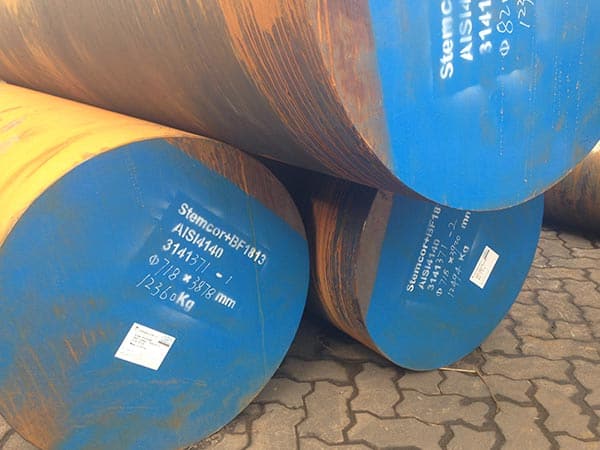
Understanding the Technical Landscape of EN 10149-2
EN 10149-2 is a European standard that specifies the technical delivery conditions for hot-rolled flat products made of high yield strength steels for cold forming. These steels are specifically produced using thermomechanical rolling (TMCP). The 'MC' suffix in grades like S355MC or S700MC denotes that the material is thermomechanically rolled and intended for cold forming applications. Identifying the EN 10149-2 equivalent requires a deep dive into global standards such as ASTM, GB/T, and JIS to ensure structural integrity and processing compatibility.
The Global Mapping: EN 10149-2 Equivalent Grades
Engineers and procurement specialists often need to find substitutes for EN 10149-2 grades when sourcing materials internationally. The most common equivalents are found in the American ASTM standards, the Chinese GB/T standards, and the Japanese JIS standards. Below is a detailed comparison of the most widely used grades.
| EN 10149-2 Grade | ASTM Equivalent (Approx.) | GB/T Equivalent (China) | JIS Equivalent (Japan) |
|---|---|---|---|
| S315MC | ASTM A1011 HSLAS-F Gr 45 | GB/T 1591 Q315MC | JIS G3134 SPFH 490 |
| S355MC | ASTM A1011 HSLAS-F Gr 50 | GB/T 1591 Q355MC | JIS G3134 SPFH 540 |
| S420MC | ASTM A1011 HSLAS-F Gr 60 | GB/T 1591 Q420MC | JIS G3134 SPFH 590 |
| S460MC | ASTM A1011 HSLAS-F Gr 65 | GB/T 1591 Q460MC | - |
| S500MC | ASTM A1011 HSLAS-F Gr 70 | GB/T 1591 Q500MC | - |
| S700MC | ASTM A656 Grade 80 / 100 | GB/T 1591 Q700MC | - |
Chemical Composition and Micro-Alloying Strategy
The superior properties of EN 10149-2 steels are achieved through a strictly controlled chemical composition. Unlike traditional carbon steels, these grades utilize micro-alloying elements such as Niobium (Nb), Vanadium (V), and Titanium (Ti). These elements facilitate grain refinement during the thermomechanical rolling process.
- Carbon Content: Kept extremely low (typically <0.12%) to enhance weldability and toughness.
- Manganese: Acts as a solid solution strengthener and improves hardenability.
- Silicon: Limited to prevent issues during galvanizing and to maintain surface quality.
- Micro-alloys (Nb, V, Ti): These form fine carbides and nitrides that pin grain boundaries, resulting in an ultra-fine ferrite-pearlite or bainitic microstructure.
Mechanical Performance: Strength vs. Ductility
The hallmark of EN 10149-2 steel is its high yield strength combined with excellent elongation. This balance is critical for cold forming operations where the material must withstand significant deformation without cracking. For instance, S700MC offers a minimum yield strength of 700 MPa, yet maintains enough ductility for tight bending radii.
| Grade | Min. Yield Strength (MPa) | Tensile Strength (MPa) | Min. Elongation (%) |
|---|---|---|---|
| S355MC | 355 | 430 - 550 | 19 - 23 |
| S500MC | 500 | 550 - 700 | 12 - 14 |
| S700MC | 700 | 750 - 950 | 10 - 12 |
Process Performance: Welding and Cold Forming
Fabricators prefer EN 10149-2 equivalents because of their predictable behavior during manufacturing. The low Carbon Equivalent (CEV) ensures that these steels can be welded using standard methods (MIG/MAG, TIG, Submerged Arc) without the need for extensive preheating, reducing production costs and time.
When it comes to cold forming, the fine-grained structure allows for small internal bending radii. This is particularly advantageous in the production of complex structural components where weight reduction is a priority. Using a higher strength grade like S700MC allows for thinner sections to carry the same load as thicker S355MC sections, leading to lightweighting in vehicle design.
Environmental Adaptability and Durability
While EN 10149-2 steels are not classified as weathering steels, their refined microstructure provides a degree of atmospheric corrosion resistance superior to ordinary mild steels. In harsh environments, these steels are often treated with protective coatings. Their high toughness at low temperatures (often tested at -20°C or -40°C) makes them suitable for use in arctic conditions or high-altitude structural projects.
Industrial Applications: Where Strength Meets Efficiency
The versatility of EN 10149-2 equivalents drives their adoption across various high-stakes industries. Their ability to reduce weight without sacrificing safety is a primary driver for their selection.
- Automotive Industry: Used for chassis frames, cross members, and suspension systems where high energy absorption and weight reduction are vital.
- Lifting and Excavation: Telescopic cranes, truck-mounted cranes, and excavator arms benefit from the high strength-to-weight ratio of S700MC.
- Transportation: Trailer frames and cold-pressed longitudinal beams in heavy-duty trucks.
- Agricultural Machinery: Plow frames and harvester components that require high fatigue resistance and durability.
Technical Considerations for Material Substitution
When replacing an EN 10149-2 grade with an equivalent from another standard, it is imperative to verify the impact energy requirements. Some standards may have different temperature benchmarks for Charpy V-notch tests. Additionally, the surface finish (pickled and oiled vs. black) should be specified to match the intended coating or welding process. Ensuring that the equivalent material meets the specific bending radius required for your tooling is the final step in a successful material transition.
Leave a message