
Is en 10149-2 s355mc equivalent and tool steel the same?
Explore the critical differences between EN 10149-2 S355MC and tool steel. This guide covers mechanical properties, chemical composition, equivalents, and industrial applications to help you choose the right material for your project.
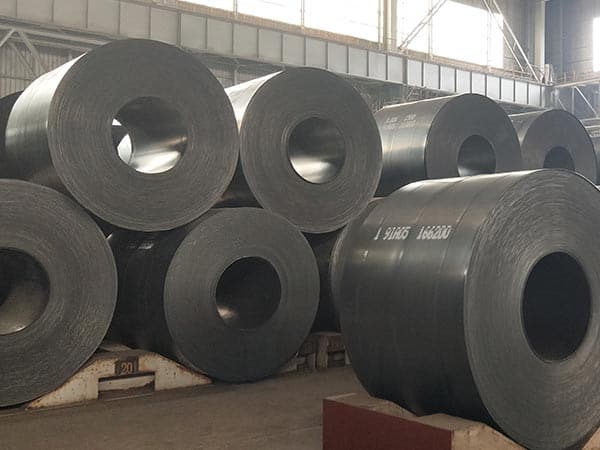
Understanding the Fundamental Differences: EN 10149-2 S355MC vs. Tool Steel
In the complex landscape of metallurgy, distinguishing between specific steel grades is crucial for engineering integrity. A common query arises regarding whether EN 10149-2 S355MC is equivalent to tool steel or if they share similar characteristics. To provide a clear answer: they are fundamentally different categories of steel designed for entirely different purposes. S355MC is a thermomechanically rolled, high-yield strength steel specifically engineered for cold forming, whereas tool steel encompasses a variety of high-carbon and alloy steels designed for cutting, forming, or shaping other materials. Understanding the nuances of their chemical profiles, mechanical behavior, and processing requirements is essential for any procurement or engineering decision.
Chemical Composition: Micro-Alloying vs. High Carbon Saturation
The chemical makeup of S355MC is governed by the EN 10149-2 standard, which emphasizes a low carbon footprint to ensure excellent weldability and ductility. It utilizes micro-alloying elements like Niobium (Nb), Titanium (Ti), and Vanadium (V) to achieve high strength through grain refinement. This is a stark contrast to tool steels, such as D2, H13, or O1, which typically contain much higher carbon content (often exceeding 0.5% to 1.5%) and significant amounts of Chromium, Tungsten, and Molybdenum to enhance hardness and wear resistance.
| Element | S355MC (Max %) | Typical Tool Steel (e.g., D2) (%) |
|---|---|---|
| Carbon (C) | 0.12 | 1.40 - 1.60 |
| Manganese (Mn) | 1.50 | 0.60 |
| Silicon (Si) | 0.50 | 0.60 |
| Chromium (Cr) | - | 11.0 - 13.0 |
| Phosphorus (P) | 0.025 | 0.03 |
The low carbon content in S355MC prevents the formation of brittle martensite during welding, making it ideal for structural components. Tool steels, however, rely on high carbon and alloy content to undergo heat treatment processes that reach high Rockwell hardness (HRC) levels, a property S355MC cannot achieve.
Mechanical Properties and Structural Integrity
The "S" in S355MC stands for structural steel, and "355" denotes its minimum yield strength of 355 MPa. The "MC" indicates it is thermomechanically rolled (M) and suitable for cold forming (C). Its primary mechanical advantage lies in its balance of strength and elongation, allowing it to be bent and shaped without cracking. Tool steels are measured differently; their performance is judged by hardness, toughness, and red hardness (the ability to maintain a cutting edge at high temperatures).
- Yield Strength: S355MC provides a consistent 355 MPa minimum, whereas tool steel yield strengths are significantly higher but often come at the cost of extreme brittleness unless tempered.
- Ductility: S355MC offers an elongation of 19-23%, making it perfect for complex pressings. Tool steels have very low elongation, often making them unsuitable for traditional cold-forming structural applications.
- Hardness: Tool steels can reach 58-64 HRC. S355MC remains relatively soft, typically measured on the Brinell scale around 120-150 HB.
Is S355MC Equivalent to Any Other Standards?
While S355MC is not equivalent to tool steel, it does have several global equivalents within the structural and high-strength low-alloy (HSLA) steel categories. Identifying these equivalents is vital for global supply chain management. For instance, in the North American market, ASTM A1011 HSLAS-F Grade 50 is often considered a functional equivalent, though the rolling methods may differ. In the Chinese market, GB/T 1591 Q355MC provides similar performance metrics.
It is important to note that substituting S355MC with a standard structural steel like S355J2 is often problematic. The "MC" grade has much better cold-forming properties and a tighter control on impurities than the "J2" (impact tested at -20°C) grade. When searching for equivalents, the focus should remain on the "cold forming" and "thermomechanically rolled" designations rather than just the yield strength number.
Processing Performance: Welding vs. Machining
The fabrication methods for these materials are polar opposites. S355MC is designed for high-volume production using cold-pressing, bending, and automated welding. Its low carbon equivalent (CEV) value ensures that it can be welded using standard MIG/MAG or submerged arc welding without the need for preheating or post-weld heat treatment (PWHT).
Tool steel processing usually involves heavy machining in an annealed state, followed by complex heat treatment cycles (quenching and tempering) to achieve final properties. Welding tool steel is notoriously difficult and requires specialized filler rods and strict temperature control to prevent cracking. For structural engineers, using S355MC reduces production time and costs significantly compared to any high-alloy tool steel.
Environmental Adaptability and Corrosion Resistance
S355MC is often used in environments where it will be subjected to mechanical stress and atmospheric exposure. While it is not a corrosion-resistant steel like stainless steel, its fine grain structure provides a slightly better surface for protective coatings (like galvanizing or painting) compared to traditional hot-rolled steels. Tool steels, particularly those with high Chromium content like D2, offer better natural corrosion resistance but are prone to pitting if not maintained, especially in humid industrial environments.
For low-temperature applications, S355MC maintains its toughness better than many high-carbon steels, which become brittle and prone to sudden fracture at sub-zero temperatures. This makes S355MC a preferred choice for heavy machinery operating in diverse climates.
Expanding Industry Applications
The application of S355MC is widespread across sectors requiring weight reduction without sacrificing safety. In the automotive industry, it is used for chassis frames, cross members, and suspension parts. The high strength-to-weight ratio allows manufacturers to use thinner gauges, improving fuel efficiency.
In the heavy machinery and construction sectors, S355MC is found in crane arms, excavator buckets, and trailer frames. These parts require the ability to withstand dynamic loads and vibrations. Conversely, tool steel finds its home in the tooling and die industry, creating the very molds and punches that shape S355MC sheets into automotive components. The two steels exist in the same ecosystem but serve opposite roles: one is the material being shaped, and the other is the tool doing the shaping.
Technical Summary for Procurement
When specifying materials, always verify the mill test certificate (MTC) to ensure compliance with EN 10149-2. If a project calls for S355MC, replacing it with tool steel would result in a catastrophic failure during the forming process due to the lack of ductility. Similarly, using S355MC to create a cutting tool would lead to immediate wear and deformation. Selecting the correct grade involves balancing the required yield strength, the complexity of the part's geometry, and the final environmental conditions the part will endure.
Leave a message