
Alloy steel S700MC high strength alloy steel for auto frame 50mm thick plate
Detailed analysis of S700MC high-strength steel, focusing on its mechanical properties, welding capabilities, and the technical advantages of 50mm thick plates for automotive and heavy machinery.
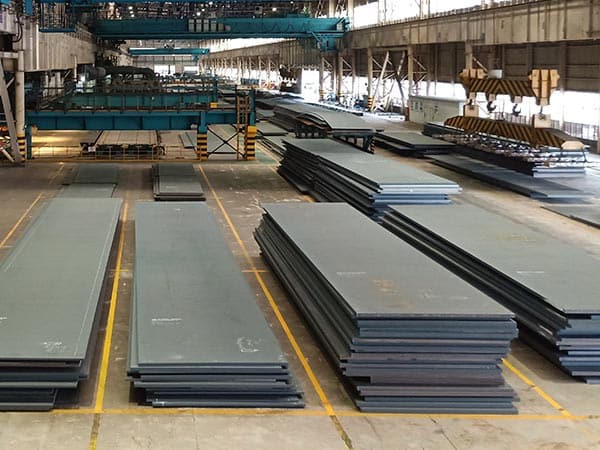
Understanding S700MC: The Pinnacle of Thermomechanically Rolled High Strength Steel
S700MC is a high-strength, low-alloy (HSLA) structural steel specifically designed for cold forming. As a grade governed by the EN 10149-2 standard, it represents the evolution of metallurgical engineering, combining extreme yield strength with remarkable ductility. The "S" denotes structural steel, "700" signifies its minimum yield strength of 700 MPa, and "MC" indicates that the material is thermomechanically rolled (M) and suitable for cold forming (C). While traditionally used in thinner gauges for automotive components, the demand for 50mm thick S700MC plates has surged in heavy-duty transport and structural engineering where weight reduction and load-bearing capacity are paramount.
Chemical Composition and the Science of Micro-Alloying
The exceptional performance of S700MC is rooted in its precise chemical balance. Unlike traditional carbon steels that rely on high carbon content for strength, S700MC utilizes a low-carbon design supplemented by micro-alloying elements such as Niobium (Nb), Vanadium (V), and Titanium (Ti). This approach ensures that the steel maintains high strength without sacrificing weldability or toughness.
| Element | Max Content (%) |
|---|---|
| Carbon (C) | 0.12 |
| Manganese (Mn) | 2.10 |
| Silicon (Si) | 0.60 |
| Phosphorus (P) | 0.025 |
| Sulfur (S) | 0.015 |
| Al (Total) | 0.015 |
| Nb + V + Ti | 0.22 |
By keeping the carbon equivalent (CEV) low, S700MC exhibits superior resistance to cold cracking during welding. The addition of Titanium and Niobium facilitates grain refinement during the thermomechanical rolling process, resulting in a fine-grained microstructure that is essential for achieving 700 MPa yield strength in sections as thick as 50mm.
Mechanical Properties: Strength Meets Flexibility
The primary advantage of S700MC is its high strength-to-weight ratio. For automotive frames, this allows engineers to use thinner sections or more compact designs without compromising structural integrity. When dealing with 50mm thick plates, the focus shifts to ensuring that these properties remain consistent through the thickness of the material.
- Yield Strength (ReH): Minimum 700 MPa. This ensures the frame can withstand immense loads without permanent deformation.
- Tensile Strength (Rm): 750 to 950 MPa, providing a significant safety margin against catastrophic failure.
- Elongation (A80/A5): Typically 10-12% for thick sections, allowing for energy absorption during impact.
- Impact Toughness: S700MC is often tested at -20°C or -40°C to ensure it remains ductile in extreme climates.
The 50mm Thick Plate Challenge: Consistency and Integrity
Manufacturing S700MC in a 50mm thickness requires sophisticated Thermomechanical Controlled Processing (TMCP). Standard hot rolling cannot achieve the same grain refinement in thick sections. TMCP involves precise temperature control during rolling and accelerated cooling. This ensures that the 50mm thick plate possesses a uniform microstructure from the surface to the core. For heavy-duty auto frames, such as those found in mining trucks or specialized trailers, this thickness provides the necessary stiffness to prevent buckling under torsional stress.
Superior Weldability for Complex Assemblies
One of the most critical aspects of S700MC in the automotive industry is its weldability. Because the strength is derived from grain refinement and micro-alloying rather than high carbon or alloy content, the steel does not require extensive preheating in many applications. Manual Metal Arc (MMA), MAG, and Laser welding are all highly effective. When welding 50mm plates, it is essential to manage the heat input to avoid softening the Heat Affected Zone (HAZ). Using low-hydrogen consumables is mandatory to prevent hydrogen-induced cracking, ensuring the joint matches the strength of the base metal.
Cold Forming and Processing Performance
Despite its high strength, S700MC is designed for cold forming. For a 50mm plate, the bending radius must be carefully calculated to avoid surface cracking. Typically, a minimum bending radius of 2 to 3 times the thickness is recommended. The fine-grained structure allows for clean laser and plasma cutting, with minimal edge hardening. This makes it an ideal material for complex frame geometries that require both precision and strength.
Environmental Adaptability and Longevity
Automotive frames are exposed to harsh environments, from road salts to extreme temperature fluctuations. S700MC’s low impurity content (low Sulfur and Phosphorus) improves its resistance to atmospheric corrosion compared to standard structural steels. Furthermore, its high fatigue strength ensures that components subjected to cyclic loading—common in vehicle chassis—have a long service life without the development of fatigue cracks.
Expanding Industry Applications
While the automotive frame is a primary driver for S700MC usage, its properties make it indispensable in other sectors:
- Lifting Equipment: Crane booms and telescopic arms benefit from the weight reduction, allowing for higher lift capacities.
- Heavy Transportation: Chassis for multi-axle trailers and low-loaders where 50mm plates provide the backbone for heavy cargo.
- Agricultural Machinery: Large-scale harvesters and soil preparation equipment that require high wear resistance and structural strength.
- Offshore Structures: Secondary structures where high strength and low-temperature toughness are required.
Optimizing Design with S700MC
Utilizing S700MC 50mm plates allows for a paradigm shift in engineering. By replacing standard S355 or S460 grades, designers can reduce the weight of a structure by up to 30-40%. This weight reduction directly translates to increased fuel efficiency for vehicles and lower carbon emissions during the lifecycle of the product. The ability to use thicker plates like 50mm means that instead of welding multiple thinner plates together—which increases labor costs and potential failure points—a single, robust plate can be used, streamlining the manufacturing process and improving overall safety.
Leave a message