
Which is better, carbon steel or S500MC cold forming autobobile steel price?
A professional comparison between carbon steel and S500MC cold forming steel, focusing on mechanical properties, processing performance, and cost-effectiveness for automotive engineering.
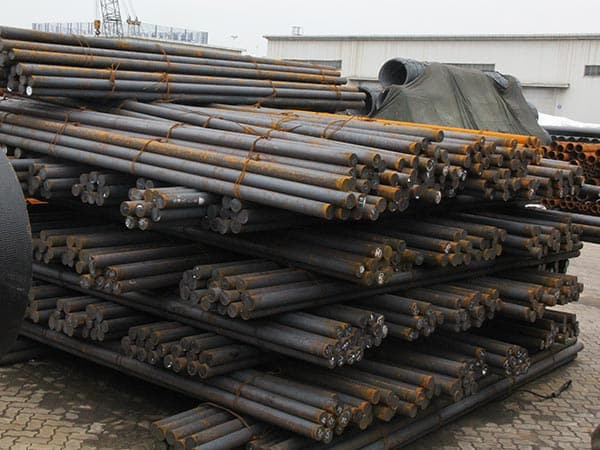
The Structural Evolution: Carbon Steel vs. S500MC High-Strength Steel
In the modern manufacturing landscape, particularly within the automotive and heavy machinery sectors, the debate between utilizing traditional carbon steel and advanced high-strength low-alloy (HSLA) steels like S500MC is more relevant than ever. Choosing the right material involves a complex calculation that balances raw material costs, processing efficiency, and the final performance of the component. While carbon steel has been the backbone of industrial construction for decades, S500MC represents a technological leap designed specifically for cold forming applications where weight reduction and high yield strength are paramount.
Chemical Composition and Microstructural Integrity
The fundamental difference between these two materials begins at the atomic level. Standard carbon steels, such as S355 or Q355, rely primarily on carbon and manganese to achieve their strength. However, increasing carbon content often leads to a decrease in weldability and toughness. S500MC, governed by the EN 10149-2 standard, utilizes a thermomechanically rolled process combined with micro-alloying elements like Niobium (Nb), Vanadium (V), and Titanium (Ti). These elements refine the grain structure, allowing the steel to achieve a yield strength of at least 500 MPa while maintaining a very low carbon content (typically below 0.12%). This fine-grained microstructure is what gives S500MC its superior edge in cold forming operations compared to traditional hot-rolled carbon steels.
| Property | Standard Carbon Steel (e.g., s355jr) | S500MC (HSLA) |
|---|---|---|
| Yield Strength (MPa) | Min 355 | Min 500 |
| Tensile Strength (MPa) | 470 - 630 | 550 - 700 |
| Elongation (%) | ~20% | ~12-14% (depending on thickness) |
| Carbon Content (%) | Up to 0.24% | Max 0.12% |
Mechanical Performance and Strength-to-Weight Ratio
The primary driver for choosing S500MC over carbon steel is the strength-to-weight ratio. In automotive chassis design, using S500MC allows engineers to reduce the thickness of structural components without compromising the load-bearing capacity. For instance, replacing a 6mm carbon steel plate with a 4mm S500MC plate can result in a weight saving of approximately 30%. This reduction is critical for meeting fuel efficiency standards and increasing the payload capacity of commercial vehicles. While the price per ton of S500MC is higher than that of basic carbon steel, the total volume of steel required for the same project is significantly lower, often resulting in a neutral or even lower total material cost.
Cold Forming and Processing Excellence
S500MC is specifically engineered for cold forming. Its high purity and fine grain structure allow for tight bending radii without the risk of cracking or surface defects. In contrast, standard carbon steels with higher carbon levels can exhibit brittleness during severe deformation.
- Bending: S500MC supports much smaller internal bending radii relative to its thickness, making it ideal for complex geometric profiles in truck frames.
- Welding: Due to its low carbon equivalent (CEV), S500MC offers exceptional weldability. It does not require preheating in most conditions, and the heat-affected zone (HAZ) maintains better toughness than high-carbon alternatives.
- Laser Cutting: The consistent surface quality and controlled chemical composition of S500MC ensure high-speed, clean laser cuts, which reduces post-processing time.
Environmental Adaptability and Fatigue Resistance
Automotive components are subjected to dynamic loads and harsh environmental conditions. S500MC demonstrates superior fatigue resistance compared to traditional carbon steel. The micro-alloying elements provide a stable structure that resists crack initiation under cyclic stress. Furthermore, the thermomechanical rolling process ensures that the material has uniform properties throughout the coil, which is essential for automated production lines where consistency is key to maintaining quality standards. While neither material is inherently corrosion-resistant without coating, the smooth surface finish of S500MC provides an excellent substrate for galvanizing or e-coating, ensuring long-term durability in road-facing applications.
Price Dynamics: The Real Cost of Material Selection
When analyzing the S500MC cold forming automobile steel price against carbon steel, it is vital to look beyond the invoice price per kilogram. The economic advantage of S500MC is found in the "system cost."
- Material Savings: Thinner gauges mean fewer tons purchased for the same number of parts.
- Logistics: Lighter parts reduce shipping costs and energy consumption during vehicle operation.
- Tooling Wear: Although S500MC is stronger, its consistent ductility can sometimes lead to more predictable tool wear compared to lower-grade steels with inconsistent inclusions.
- Manufacturing Throughput: Better weldability and formability lead to lower reject rates and faster assembly cycles.
Strategic Application in Heavy Industry
The shift toward S500MC is most visible in the production of longitudinal beams, cross members, and cold-pressed parts for trucks and trailers. It is also increasingly used in crane manufacturing and agricultural equipment where high strength is needed to handle extreme loads, but where weight must be kept to a minimum to ensure mobility. Carbon steel remains a viable choice for stationary structures where weight is not a constraint and where the lowest possible initial material price is the only priority. However, for any application involving motion, transport, or complex forming, the technical and economic benefits of S500MC typically outweigh the initial price premium.
Leave a message