
S460MC automotive steel coil factory freight rose
A detailed exploration of S460MC automotive steel coil, covering its mechanical properties, processing performance, and the impact of rising freight costs on the global supply chain.
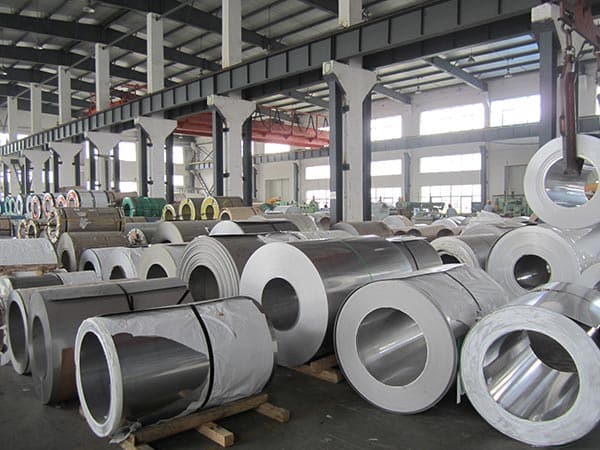
The Economic Shift: Why S460MC Automotive Steel Coil Factory Freight Rose
The global automotive supply chain is currently navigating a complex period where raw material excellence meets logistical challenges. Recent reports indicating that S460MC automotive steel coil factory freight rose have caught the attention of procurement officers and structural engineers alike. This increase is not merely a fluctuation in shipping rates but a reflection of broader shifts in energy costs, port efficiency, and the increasing demand for high-strength low-alloy (HSLA) steels. S460MC, a grade defined by the EN 10149-2 standard, remains a cornerstone for manufacturers aiming to balance structural integrity with vehicle weight reduction.
Understanding the implications of rising freight requires a deep dive into what makes S460MC indispensable. As a thermomechanically rolled steel, it offers a unique combination of high yield strength and exceptional cold formability. When logistics costs climb, the pressure to optimize material usage becomes even more critical. Manufacturers must ensure that every kilogram of S460MC delivered to the factory floor is utilized to its maximum potential, leveraging its superior mechanical properties to offset the increased landed cost.
Technical Profile: Chemical Composition and Metallurgical Precision
The performance of S460MC is rooted in its precise chemical makeup. Unlike standard carbon steels, S460MC utilizes micro-alloying elements to achieve its strength without compromising weldability or ductility. The controlled addition of Niobium (Nb), Vanadium (V), and Titanium (Ti) allows for grain refinement during the thermomechanical rolling process.
| Element | Maximum Content (%) |
|---|---|
| Carbon (C) | 0.12 |
| Manganese (Mn) | 1.60 |
| Silicon (Si) | 0.50 |
| Phosphorus (P) | 0.025 |
| Sulphur (S) | 0.015 |
| Aluminum (Al) | 0.015 (min) |
| Niobium (Nb) | 0.09 |
| Titanium (Ti) | 0.15 |
The low carbon content is particularly significant. It ensures that the steel remains highly weldable, a vital attribute for automotive assembly lines where robotic welding is the norm. The inclusion of Aluminum acts as a deoxidizer, while the micro-alloys create a fine-grained microstructure that resists crack propagation and enhances toughness even at low temperatures.
Mechanical Properties: The Core of Automotive Lightweighting
S460MC is specifically engineered for cold-formed components. Its name denotes its minimum yield strength of 460 MPa, which is significantly higher than conventional structural steels. This strength-to-weight ratio is the primary reason why it is favored for chassis parts, longitudinal beams, and cross members in both passenger and commercial vehicles.
- Yield Strength: Minimum 460 MPa, ensuring the structure can withstand significant loads without permanent deformation.
- Tensile Strength: Ranging between 520 and 670 MPa, providing a safety buffer for extreme stress scenarios.
- Elongation: Minimum 14% (for thicknesses < 3mm), allowing for complex shapes to be formed without fracturing.
- Impact Strength: Excellent energy absorption, which is critical for crash safety and passenger protection.
These properties allow engineers to reduce the thickness of steel parts without sacrificing safety. For instance, replacing a 4mm standard steel part with a 3mm S460MC component can result in a 25% weight reduction for that specific part. In an era where fuel efficiency and electric vehicle range are paramount, these marginal gains are invaluable.
Processing Performance: Bending, Cutting, and Welding
The utility of S460MC extends beyond its static properties into its behavior during fabrication. High-strength steels often present challenges in the workshop, but S460MC is designed to be user-friendly. Its cold-forming capabilities are among the best in its class. For a 180-degree bend, the minimum recommended bending radius is often as low as 0.5 to 1.0 times the material thickness, depending on the orientation relative to the rolling direction.
Laser cutting S460MC is highly efficient. The low levels of impurities and consistent microstructure result in clean edges and minimal heat-affected zones (HAZ). This precision is essential for modern automotive manufacturing where tolerances are measured in fractions of a millimeter. Furthermore, the steel's compatibility with various welding techniques—including MAG, TIG, and laser welding—makes it a versatile choice for complex assemblies.
When welding S460MC, it is important to manage the heat input. Because the steel gains its strength from thermomechanical rolling and micro-alloying, excessive heat can lead to grain growth in the HAZ, potentially softening the material. However, due to its low carbon equivalent (CEV), preheating is generally unnecessary for standard thicknesses, which streamlines the production process and reduces energy consumption.
Environmental Adaptation and Fatigue Resistance
Automotive components are subjected to harsh environments, from road salt and moisture to constant vibrations and cyclic loading. S460MC demonstrates robust environmental adaptability. While it is not a stainless grade, its fine-grained structure provides a more uniform surface for protective coatings like galvanization or E-coating to adhere to, enhancing long-term corrosion resistance.
Fatigue resistance is another critical factor. Chassis components undergo millions of stress cycles over a vehicle's lifespan. The micro-alloyed structure of S460MC helps distribute stress more evenly across the grain boundaries, delaying the onset of fatigue cracks. This durability ensures that vehicles remain safe and operational for longer periods, reducing the total cost of ownership for the end-user.
Navigating the Supply Chain: Strategies for Rising Freight
As the headline suggests, the rise in factory freight for S460MC coils presents a logistical hurdle. To mitigate these costs, manufacturers are adopting several strategic approaches. One method is the optimization of order volumes to maximize container or truck utilization. Another is looking for suppliers who offer value-added services, such as precision slitting or blanking, closer to the source to reduce the weight of scrap being shipped.
Furthermore, the geographic diversification of sourcing is becoming more common. By understanding the regional variations in freight rates and port congestion, procurement teams can navigate around bottlenecks. However, the quality of S460MC must remain the priority. Substituting a certified EN 10149-2 product with an inferior grade to save on shipping can lead to catastrophic failures in automotive applications and costly recalls.
Future Outlook for High-Strength Automotive Steels
The trend toward higher strength and lower weight is irreversible. As S460MC continues to be a workhorse for the industry, we may see further evolutions in the grade, such as improved surface finishes for high-aesthetic parts or even higher yield variants like S500MC or S700MC becoming more mainstream. The current freight challenges are a reminder of the global nature of the steel trade and the need for resilient, data-driven logistics strategies.
Ultimately, the value of S460MC lies in its reliability. Whether it is used in the frame of a heavy-duty truck or the safety cage of a compact car, its performance is a testament to modern metallurgical science. By mastering the technical nuances of this material and staying agile in the face of rising logistics costs, manufacturers can continue to produce safer, lighter, and more efficient vehicles for the global market.
Leave a message