
Why is S355MC engineering car steel coil more expensive?
Discover why S355MC engineering car steel coils command a premium price. Explore its chemical composition, TMCP processing, mechanical properties, and economic benefits for the automotive industry.
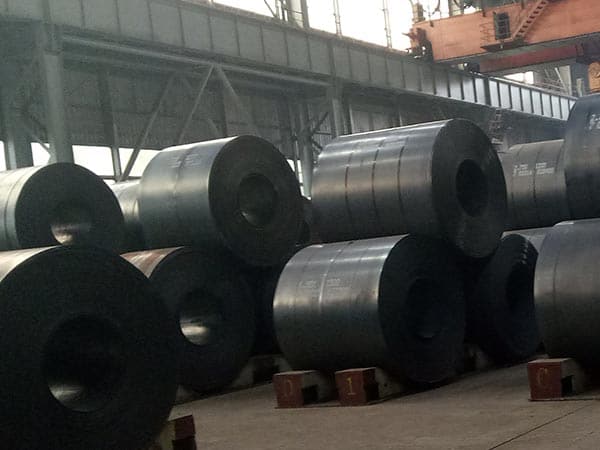
The Technical Logic Behind S355MC Pricing
Understanding the cost structure of S355MC engineering car steel coil requires a deep dive into its metallurgical pedigree. Unlike standard structural steels, S355MC is a high-strength low-alloy (HSLA) steel produced through Thermomechanical Controlled Processing (TMCP). This specific manufacturing route is significantly more complex than traditional hot rolling. The premium price reflects the advanced technology, precise chemical control, and the superior performance it delivers to the automotive and heavy machinery sectors.
S355MC is governed by the EN 10149-2 standard, which specifies steels with high yield strength for cold forming. The 'MC' suffix denotes that the material is thermomechanically rolled (M) and possesses high ductility suitable for cold forming (C). When compared to generic s355jr carbon steel, the S355MC variant offers a refined grain structure that allows for thinner gauges without sacrificing structural integrity. This weight-saving potential is a primary driver for its adoption in modern engineering, despite the higher initial cost per ton.
Micro-Alloying: The Secret to High Performance
The chemical composition of S355MC is a masterclass in precision. While standard steels rely heavily on carbon for strength, S355MC keeps carbon levels extremely low—typically below 0.12%. This low carbon content is essential for weldability and toughness. To achieve the required 355 MPa yield strength, manufacturers introduce micro-alloying elements such as Niobium (Nb), Vanadium (V), and Titanium (Ti).
| Element | Maximum Content (%) | Function in S355MC |
|---|---|---|
| Carbon (C) | 0.12 | Ensures weldability and prevents brittleness. |
| Manganese (Mn) | 1.50 | Provides solid solution strengthening. |
| Silicon (Si) | 0.50 | Deoxidizer and improves strength. |
| Niobium (Nb) | 0.09 | Grain refinement and precipitation hardening. |
| Titanium (Ti) | 0.15 | Stabilizes the structure at high temperatures. |
These micro-alloying elements are expensive. Niobium and Vanadium are rare earth metals with volatile market pricing. Their addition facilitates grain refinement, creating a microstructure so fine that it resists crack propagation far better than traditional steels. The cost of these additives, combined with the stringent smelting requirements to keep impurities like Phosphorus and Sulfur at near-zero levels, contributes significantly to the final price of the coil.
The TMCP Process: Engineering Strength at the Atomic Level
The Thermomechanical Controlled Processing (TMCP) used to produce S355MC is a sophisticated operation that integrates rolling and cooling. Unlike conventional hot rolling where the steel is rolled at high temperatures and allowed to cool naturally, TMCP involves precise temperature control during the deformation stages and accelerated cooling afterwards.
This process requires high-end rolling mills equipped with advanced automation and cooling systems. The rolling occurs at temperatures where recrystallization is inhibited, forcing the grains to flatten and create a high density of nucleation sites for new grains. The result is a ferrite-pearlite microstructure with extremely small grain sizes. This grain refinement is the only strengthening mechanism that simultaneously improves both strength and toughness. The capital investment in TMCP-capable mills and the energy consumption required for high-pressure cooling are factored into the market price of S355MC.
Superior Mechanical Properties and Processing Efficiency
Engineers choose S355MC because it performs where cheaper steels fail. Its mechanical properties are optimized for complex shaping and high-stress environments. The high yield strength allows for the design of lighter components, which is critical for reducing fuel consumption in commercial vehicles and increasing the payload of trailers.
| Property | Value (Thickness ≤ 16mm) | Benefit to Manufacturer |
|---|---|---|
| Yield Strength (ReH) | Min 355 MPa | Higher load-bearing capacity with less material. |
| Tensile Strength (Rm) | 430 - 550 MPa | Resists deformation under extreme tension. |
| Elongation (A5) | Min 19% - 23% | Excellent cold forming and deep drawing. |
| Bending Radius (180°) | 0.5t to 1.5t | Allows for tight bends without surface cracking. |
The cold forming capability of S355MC is a major cost-saver during the manufacturing phase. Because the steel can be bent to tight radii without cracking, manufacturers can eliminate expensive heat treatments or multi-stage forming processes. Furthermore, its excellent laser cutting performance and weldability (due to low carbon equivalent) mean faster production cycles and lower labor costs. When looking at the total cost of ownership, the higher price of the raw material is often offset by the reduction in processing steps and scrap rates.
Environmental Adaptability and Fatigue Resistance
S355MC is frequently used in the chassis and structural frames of trucks, cranes, and earth-moving equipment. These components are subjected to dynamic loads and harsh environmental conditions. The fine-grained structure of S355MC provides exceptional fatigue resistance, ensuring that the vehicle frame can withstand millions of vibration cycles without developing stress cracks.
Moreover, the low-temperature toughness of S355MC is superior to standard S355JR. In cold climates, ordinary steel becomes brittle and prone to sudden fracture. S355MC maintains its ductility at sub-zero temperatures, providing a safety margin that is non-negotiable for engineering vehicles operating in northern latitudes or high-altitude mining sites. This reliability in extreme conditions justifies the price premium for safety-critical applications.
Market Dynamics and Quality Assurance
The production of S355MC is concentrated among top-tier steel mills that can guarantee the consistency of mechanical properties across the entire length of a coil. Achieving uniform thickness tolerances and surface quality requires rigorous quality control systems. Automotive-grade steel undergoes stricter inspection protocols than general construction steel, including ultrasonic testing and precise flatness checks.
The demand for S355MC is also driven by global sustainability goals. As industries move toward "lightweighting" to reduce carbon footprints, the demand for high-strength steels increases. The supply chain for these specialized grades is more specialized, and the lead times are often longer than for commodity grades. The combination of high-cost raw materials, advanced technology, and high market demand keeps the price of S355MC at a premium level.
Economic Value Beyond the Invoice Price
While the invoice price of S355MC might be higher than that of S235 or S355JR, the economic value it provides is undeniable. By using S355MC, a trailer manufacturer can reduce the weight of a chassis by up to 20-30%. This weight reduction translates directly into increased cargo capacity or improved fuel efficiency for the end-user. Over the lifespan of a commercial vehicle, the fuel savings alone can far exceed the initial price difference of the steel coils.
Furthermore, the durability of S355MC reduces maintenance costs and extends the service life of the equipment. In the competitive world of engineering and logistics, the ability to build a product that is lighter, stronger, and more durable provides a significant market advantage. Choosing S355MC is not just a material purchase; it is a strategic investment in product performance and brand reputation.
Leave a message