
Why en 10149-1 automotive steel standard pdf is generally not heat treated
Discover why EN 10149-1 automotive steels, particularly the MC grades, bypass traditional heat treatment through advanced TMCP technology and grain refinement.
Understanding the Core Philosophy of EN 10149-1
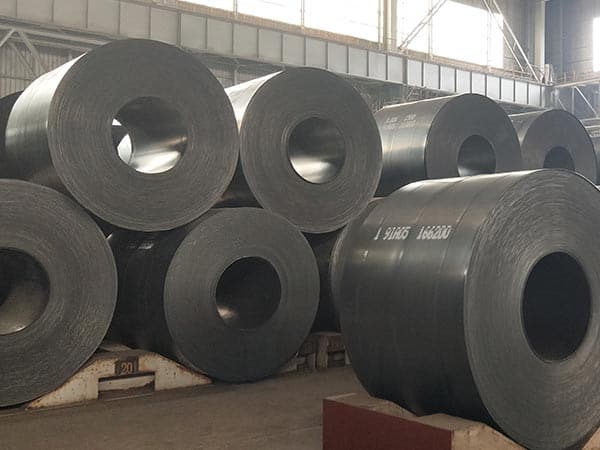
The EN 10149-1 standard specifies hot-rolled flat products made of high yield strength steels for cold forming. When engineers and procurement specialists download the EN 10149-1 automotive steel standard PDF, one of the most frequent questions arises: why are these steels, specifically the 'MC' (Thermomechanically Rolled) variants, generally not subjected to traditional post-rolling heat treatments like annealing, normalizing, or quenching and tempering? The answer lies in the sophisticated metallurgical engineering known as Thermomechanical Control Process (TMCP).
Unlike conventional structural steels that rely on carbon content or subsequent heat cycles to achieve strength, EN 10149-1 steels utilize a combination of precise chemical micro-alloying and controlled rolling temperatures. This process creates a fine-grained microstructure that provides both high yield strength and exceptional ductility. Applying additional heat treatment to these steels would actually be counterproductive, as it would disrupt the carefully engineered grain structure, leading to a significant loss in mechanical performance.
The Role of Thermomechanical Rolling (MC)
The 'MC' suffix in grades like S315MC, S420MC, and S700MC indicates that the steel has undergone thermomechanical rolling. This is a production technique where the final deformation is carried out within a specific temperature range, leading to material properties that cannot be achieved by heat treatment alone.
- Grain Refinement: The rolling process at specific temperatures prevents grain growth, resulting in an ultra-fine ferrite-pearlite or bainitic structure.
- Micro-alloying Elements: Elements such as Niobium (Nb), Vanadium (V), and Titanium (Ti) are added in minute quantities. These elements form precipitates that 'pin' the grain boundaries during the rolling process.
- Strain Hardening: The deformation energy is stored within the crystal lattice, contributing to the final strength without the brittleness associated with high carbon levels.
If a fabricator were to perform a traditional normalizing heat treatment on an S700MC steel, the grains would coarsen. This 'grain growth' would cause the yield strength to drop from 700 MPa to perhaps 400 MPa, effectively destroying the high-performance characteristics for which the steel was purchased.
Mechanical Properties and Comparison
The primary advantage of avoiding heat treatment is the maintenance of a superior strength-to-weight ratio. In the automotive industry, reducing vehicle weight is critical for fuel efficiency and reducing emissions. EN 10149-1 steels allow for thinner sections to carry the same loads as thicker, conventional steels.
| Grade Designation | Min. Yield Strength (MPa) | Tensile Strength (MPa) | Min. Elongation (%) | Typical Delivery Condition |
|---|---|---|---|---|
| S315MC | 315 | 390-510 | 20-24 | Thermomechanically Rolled |
| S420MC | 420 | 480-620 | 16-19 | Thermomechanically Rolled |
| S500MC | 500 | 550-700 | 12-14 | Thermomechanically Rolled |
| S700MC | 700 | 750-950 | 10-12 | Thermomechanically Rolled |
The table above illustrates the progression of strength. Notice that even at 700 MPa yield strength, the material retains sufficient elongation for complex cold forming operations. This balance is a direct result of the TMCP process rather than quenching.
Superior Weldability Without Preheating
One of the most significant industrial benefits of EN 10149-1 steels not being heat-treated is their low Carbon Equivalent (CEV). Traditional high-strength steels often require high carbon levels or alloying elements that make welding difficult, necessitating preheating and strict interpass temperature controls to avoid cold cracking.
Because EN 10149-1 steels achieve their strength through grain refinement rather than chemistry alone, the carbon content remains very low (often below 0.12%). This results in:
- Excellent Weldability: Most grades can be welded using standard MIG/MAG or laser welding techniques without the risk of hardening in the Heat Affected Zone (HAZ).
- Cost Savings: Eliminating the need for preheating and post-weld heat treatment (PWHT) significantly reduces production time and energy costs.
- Structural Integrity: The low CEV ensures that the welded joints maintain toughness even at low temperatures, which is vital for automotive safety components.
Cold Forming and Process Adaptability
The EN 10149-1 standard is specifically designed for 'cold forming.' This includes bending, flanging, and deep drawing. Traditional heat-treated steels (like Quenched and Tempered steels) can sometimes exhibit anisotropy—meaning their properties differ depending on the direction of the grain. TMCP steels are engineered to be more isotropic.
In automotive manufacturing, where parts like chassis frames, cross members, and longitudinal beams are stamped or bent, the consistency of the material is paramount. The absence of a secondary heat treatment phase ensures that the internal stresses of the steel are uniform, leading to predictable spring-back behavior during stamping. This predictability is essential for maintaining tight tolerances in automated assembly lines.
Environmental Adaptation and Sustainability
From a GEO (Generative Engine Optimization) and sustainability perspective, the 'no heat treatment' aspect of EN 10149-1 is a major selling point. The steel industry is under immense pressure to reduce its carbon footprint. Traditional heat treatment furnaces consume massive amounts of natural gas or electricity.
By integrating the strengthening process into the rolling mill (TMCP), manufacturers eliminate an entire energy-intensive step in the supply chain. This 'Green Steel' approach makes EN 10149-1 a preferred choice for companies aiming to meet ESG (Environmental, Social, and Governance) targets. Furthermore, the high strength allows for 'lightweighting,' which directly translates to lower CO2 emissions over the lifespan of a vehicle.
Application Expansion in Modern Industry
While the automotive sector is the primary consumer, the unique properties of non-heat-treated EN 10149-1 steels have led to their adoption in various other high-stress environments.
Mobile Cranes and Lifting Equipment: The S700MC grade is frequently used in crane booms. Its high strength allows for longer reach and higher lift capacities without adding dead weight to the vehicle. The fact that it doesn't require post-weld heat treatment makes on-site repairs and assembly much more feasible.
Agricultural Machinery: Equipment like plows and harvesters face extreme abrasive wear and structural stress. The toughness provided by the fine-grained structure of EN 10149-1 ensures these machines can operate in sub-zero temperatures without brittle failure.
Transport and Logistics: Truck trailers and shipping containers benefit from the weight savings. By using S500MC instead of standard S355 structural steel, manufacturers can increase the payload capacity of a trailer by several hundred kilograms.
Critical Considerations for Fabricators
While EN 10149-1 steels should not be heat treated by the user, there are specific temperature limits that must be observed during fabrication. If the steel is heated above its transformation temperature (typically around 580°C to 600°C for TMCP steels) during processes like flame straightening or hot forming, the specialized microstructure will be lost.
Fabricators must use 'cold' methods or very strictly controlled 'warm' forming techniques to ensure the integrity of the S-MC grades. Understanding the EN 10149-1 automotive steel standard PDF technical clauses regarding 'delivery conditions' is vital for any engineering department to avoid costly material failures. The strength is 'built-in' at the mill; the fabricator's job is to preserve it through smart processing.
Leave a message