
What is the S315MC large excavator steel plate flame cutting
Explore the technical nuances of S315MC steel plate flame cutting for large excavators. This guide covers mechanical properties, thermal processing parameters, and industrial applications for heavy machinery.
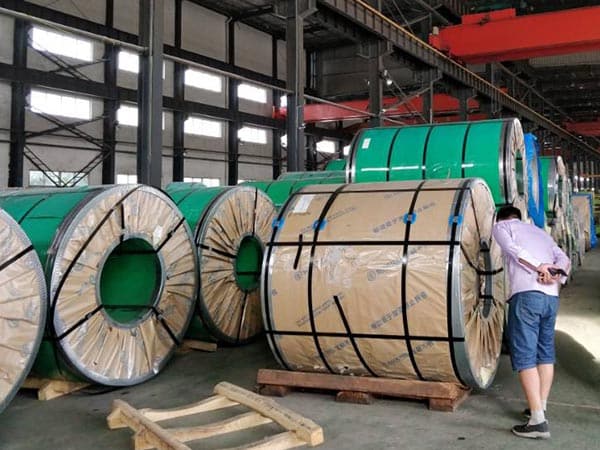
The Role of S315MC in Modern Excavator Engineering
The manufacturing of heavy-duty machinery, particularly large excavators, necessitates materials that provide a delicate balance between weight reduction and structural integrity. S315MC, a high-yield strength steel for cold forming, governed by the EN 10149-2 standard, has emerged as a cornerstone material. This steel is produced through thermomechanical rolling, a process that refines the grain structure to enhance both strength and toughness. When we discuss S315MC large excavator steel plate flame cutting, we are looking at how this specialized alloy reacts to high-temperature thermal separation and how its metallurgical properties influence the final quality of critical components like booms, arms, and chassis frames.
Metallurgical Composition and Its Impact on Thermal Processing
The performance of S315MC during flame cutting is primarily dictated by its chemical composition. Unlike traditional hot-rolled structural steels, S315MC utilizes a low-carbon design supplemented with micro-alloying elements such as niobium (Nb), vanadium (V), and titanium (Ti). These elements form stable carbides and nitrides that prevent grain coarsening during the heating phases of flame cutting.
| Element | Carbon (C) | Manganese (Mn) | Silicon (Si) | Phosphorus (P) | Sulfur (S) | Aluminium (Al) |
|---|---|---|---|---|---|---|
| Max % | 0.12 | 1.30 | 0.50 | 0.025 | 0.020 | 0.015 |
The low carbon equivalent (Cev) of S315MC is a significant advantage. In flame cutting, steels with higher carbon content are prone to hardening at the cut edge, leading to brittle martensitic structures. S315MC’s lean chemistry ensures that the Heat Affected Zone (HAZ) remains relatively soft and ductile, reducing the risk of cold cracking without the mandatory requirement for extensive preheating, even when processing thicker sections for excavator swing platforms.
The Physics of Flame Cutting S315MC Steel
Flame cutting, or oxy-fuel cutting, is a thermo-chemical process where the steel is heated to its ignition temperature (approximately 900°C for S315MC) and then reacted with a high-purity oxygen stream. For large excavator components, which often range from 6mm to 20mm in S315MC applications, precision is paramount. The exothermic reaction between the iron and oxygen produces iron oxide (slag), which is then blown away by the kinetic energy of the oxygen jet.
When cutting S315MC, the thermomechanical rolling history of the plate plays a role. Because the steel has already undergone controlled deformation and cooling, it possesses internal stresses that are more uniform than standard hot-rolled plates. However, the localized heat input from the flame can trigger stress redistribution. Professional fabricators must utilize specific cutting sequences to prevent warping, especially when cutting long, slender sections like the side plates of an excavator boom.
Technical Parameters for Optimal Edge Quality
Achieving a high-quality cut on S315MC requires meticulous control over several variables. The goal is to produce a smooth, square edge with minimal dross and a narrow HAZ. Gas selection is the first consideration; while acetylene provides a high flame temperature for fast piercing, propane or natural gas is often preferred for thicker S315MC plates due to their more distributed heat pattern, which can result in a cleaner cut surface.
- Cutting Speed: For a 12mm S315MC plate, a speed of approximately 450-550 mm/min is typical. Too slow, and the heat input causes excessive melting of the top edge; too fast, and the oxygen stream cannot penetrate fully, leading to a large "drag" angle.
- Oxygen Pressure: High-purity oxygen (99.5% or higher) is essential. Pressure must be regulated to ensure a laminar flow through the nozzle, preventing turbulence that causes gouging.
- Nozzle Distance: Maintaining a consistent standoff distance (usually 3mm to 5mm) is vital for S315MC to ensure the primary flame cone does not touch the plate surface, which would cause local overheating.
Mechanical Properties Post-Cutting
The primary concern for engineers is whether the flame cutting process degrades the mechanical properties of S315MC. The yield strength of 315 MPa and the tensile strength of 390-510 MPa are generally maintained throughout the bulk of the plate. However, the immediate cut edge may see a slight increase in hardness.
| Property | Yield Strength (ReH MPa) | Tensile Strength (Rm MPa) | Elongation (A50 %) | Min. Bend Radius (90°) |
|---|---|---|---|---|
| S315MC Value | min. 315 | 390 - 510 | min. 20 | 0.9t (t=thickness) |
Because S315MC is designed for cold forming, the edge quality after flame cutting is critical. If the edge is too hard or contains micro-cracks from an improper cutting speed, the plate may crack during subsequent bending operations in the press brake. For large excavator parts that require tight radii, it is often recommended to grind the flame-cut edge to remove the hardened layer and any striations that could act as stress concentrators.
Environmental Adaptation and Fatigue Resistance
Large excavators operate in punishing environments, from sub-zero arctic mines to humid tropical construction sites. S315MC’s fine-grained structure provides excellent low-temperature toughness. When flame cutting is performed correctly, the HAZ is optimized to resist fatigue. In the cyclic loading conditions of an excavator's digging cycle, the transition between the base metal and the weldment (often placed near a cut edge) is where failures typically initiate. The compatibility of S315MC with modern welding processes (like MAG/MIG) following a flame cut is exceptional, as the low carbon content prevents the formation of brittle structures in the fusion zone.
Industrial Applications Beyond the Excavator Boom
While the boom and arm are the most visible applications, S315MC flame-cut parts are utilized throughout the excavator's architecture. The undercarriage frames, where weight is less of a concern than rigidity, still benefit from the high yield strength of S315MC, allowing for thinner sections that increase fuel efficiency without sacrificing load-bearing capacity. Additionally, in the production of heavy-duty trucks and cranes, S315MC is the preferred choice for cross-members and chassis rails. The ability to flame cut complex geometries with high repeatability makes S315MC an economically viable option for mass-produced industrial machinery.
Optimizing the Fabrication Workflow
To maximize the utility of S315MC in large-scale production, the integration of CNC flame cutting with automated nesting software is standard practice. This reduces material waste—a critical factor given the rising costs of high-strength alloys. Furthermore, the use of multi-torch systems allows for the simultaneous cutting of mirrored parts for excavator structures, ensuring thermal symmetry and reducing distortion. By understanding the specific thermal response of S315MC, manufacturers can bypass expensive post-cut heat treatments, moving parts directly from the cutting table to the welding station, thereby streamlining the entire manufacturing pipeline for heavy earthmoving equipment.
Leave a message