
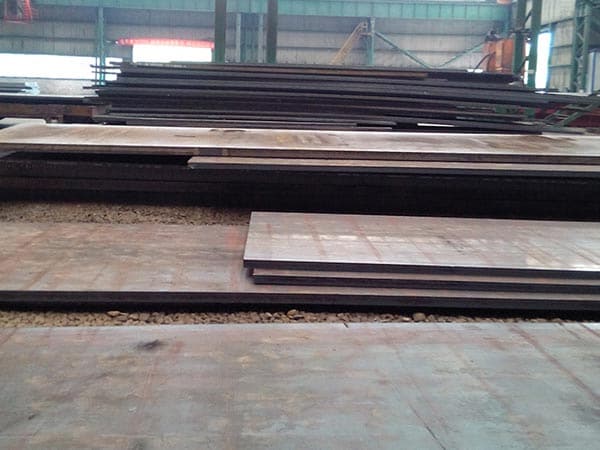
Alloy steel S700MC hot rolled pickled steel for high pressure service
A comprehensive technical analysis of S700MC alloy steel. Learn about its mechanical properties, thermomechanical rolling process, pickling benefits, and performance in high-pressure industrial applications.
The Evolution of High-Strength Structural Steel: Understanding S700MC
In the modern industrial landscape, the demand for materials that combine extreme strength with lightweight properties has led to the prominence of S700MC. As a high-strength low-alloy (HSLA) steel, S700MC is governed by the EN 10149-2 standard, which specifies hot-rolled products made of high yield strength steels for cold forming. The 'S' denotes structural steel, '700' represents the minimum yield strength of 700 MPa, and 'MC' indicates that the steel is thermomechanically rolled (M) and suitable for cold forming (C).
The transition toward S700MC in high-pressure service and heavy-duty structural engineering is driven by the need for efficiency. By utilizing a material with nearly double the yield strength of traditional S355 steel, engineers can significantly reduce wall thickness without compromising safety. This reduction in mass directly translates to lower fuel consumption in transport sectors and reduced material costs in large-scale infrastructure projects.
Chemical Composition and the Science of Micro-Alloying
The exceptional performance of S700MC is not accidental; it is the result of precise chemical engineering. Unlike traditional carbon steels that rely on high carbon content for strength—which often leads to brittleness and poor weldability—S700MC utilizes a low-carbon design supplemented by micro-alloying elements such as Niobium (Nb), Vanadium (V), and Titanium (Ti).
These elements work through a mechanism known as grain refinement. During the rolling process, these micro-alloys prevent grain growth, resulting in an ultra-fine crystalline structure. This fine grain size is the primary reason S700MC achieves high yield strength while maintaining excellent impact toughness and ductility. The low carbon equivalent (CEV) ensures that the steel remains highly weldable, a critical factor for high-pressure components that require robust joined sections.
| Element | Max Content (%) | Function |
|---|---|---|
| Carbon (C) | 0.12 | Ensures weldability and prevents brittleness. |
| Manganese (Mn) | 2.10 | Increases hardness and tensile strength. |
| Silicon (Si) | 0.60 | Acts as a deoxidizer and strengthens the ferrite. |
| Niobium (Nb) | 0.09 | Refines grain structure and increases yield strength. |
| Titanium (Ti) | 0.22 | Prevents grain growth at high temperatures. |
Mechanical Superiority in High-Pressure Environments
For high-pressure service, the material must withstand not only static loads but also dynamic stress and internal pressure fluctuations. S700MC excels in these conditions due to its high yield-to-tensile ratio. While the minimum yield strength is 700 MPa, the tensile strength typically ranges between 750 and 950 MPa. This narrow gap indicates a material that is highly resistant to plastic deformation.
Furthermore, the elongation properties (typically 10-12% depending on thickness) ensure that the material can absorb energy and deform slightly before failure, providing a critical safety margin. In high-pressure piping or hydraulic systems, this ductility prevents catastrophic explosive failures, allowing for leak-before-break scenarios in extreme overpressure conditions.
The Pickling Process: Enhancing Surface Integrity
S700MC is frequently supplied in a hot-rolled pickled and oiled (HRPO) condition. Pickling is a chemical treatment where the steel is passed through an acid bath (usually hydrochloric acid) to remove the black oxide scale formed during hot rolling. This process is vital for several reasons:
- Surface Inspection: Removing the scale reveals the true surface of the steel, allowing for the detection of microscopic cracks or pits that could compromise a high-pressure vessel.
- Coating Adhesion: A pickled surface provides an ideal substrate for painting, galvanizing, or specialized anti-corrosion coatings.
- Tool Longevity: For manufacturers, pickled steel is less abrasive on cutting tools and forming dies, reducing maintenance costs.
- Fatigue Resistance: Surface irregularities can act as stress concentrators. A smooth, pickled surface improves the fatigue life of components subjected to cyclic pressure loads.
Advanced Processing: Bending, Cutting, and Welding
One of the standout features of S700MC is its processing versatility. Despite its high strength, it is designed specifically for cold forming. Engineers can achieve tight bending radii (typically 1.5 to 2 times the thickness) without cracking, provided the bending is done correctly relative to the rolling direction.
In terms of cutting, S700MC is highly compatible with laser, plasma, and waterjet technologies. The low impurity content and fine grain structure ensure clean edges with minimal heat-affected zones (HAZ). When it comes to welding, the low carbon equivalent allows for standard methods such as MAG (Metal Active Gas) welding. However, it is crucial to control heat input; excessive heat can cause grain growth in the HAZ, locally reducing the strength to levels closer to S355. Precision welding parameters are essential to maintain the integrity of high-pressure joints.
Strategic Applications in High-Pressure and Heavy Industry
The unique properties of S700MC make it indispensable in sectors where weight and pressure intersect. In the hydraulic industry, it is used for the construction of telescopic crane booms and high-pressure cylinders where the material must resist buckling under immense internal and external forces.
In the transportation sector, S700MC is the gold standard for truck chassis, trailers, and specialized heavy-load transporters. By using S700MC, manufacturers can create lighter frames that carry higher payloads, directly impacting the carbon footprint and operational efficiency of logistics fleets. Additionally, in the energy sector, S700MC finds use in support structures for high-pressure piping and wind turbine components where environmental resilience and structural integrity are non-negotiable.
Environmental Adaptability and Longevity
Materials used in high-pressure service often face harsh environments, from sub-zero temperatures in arctic pipelines to corrosive maritime atmospheres. S700MC is designed to maintain its toughness even at low temperatures (often tested at -20°C or -40°C). This low-temperature impact strength is vital for preventing brittle fracture in cold climates.
While S700MC is not a stainless steel, its dense grain structure and the quality of the pickled surface provide a better baseline for corrosion protection systems. When properly coated, S700MC components exhibit excellent longevity, resisting the pitting and surface degradation that can lead to pressure leaks over time. The material's stability under thermal cycling also ensures that high-pressure seals and joints remain tight throughout the equipment's lifecycle.
Technical Comparison: S700MC vs. Conventional Steels
To appreciate the value proposition of S700MC, one must compare it to conventional structural steels like S355. A component designed with S355 might require a thickness of 20mm to withstand a specific pressure. By switching to S700MC, that thickness could potentially be reduced to 10mm or 12mm while maintaining the same safety factor. This 40-50% weight reduction has a cascading effect on the entire design, requiring smaller bearings, less powerful motors, and lower shipping costs.
| Property | s355jr | S700MC | Benefit of S700MC |
|---|---|---|---|
| Min. Yield Strength | 355 MPa | 700 MPa | Double the load-bearing capacity. |
| Weight Efficiency | Baseline | High (+40%) | Significant weight reduction. |
| Cold Forming | Good | Excellent | Allows for complex geometries. |
| Surface Finish | Mill Scale | Pickled & Oiled | Superior coating and inspection. |
Future Trends in High-Strength Alloy Utilization
The trajectory of material science is moving toward even higher strengths, but S700MC currently sits at the "sweet spot" of performance, processability, and cost-effectiveness. As industries move toward greener operations, the role of high-strength pickled steel will only grow. The ability to build "stronger yet lighter" is the cornerstone of sustainable engineering. For high-pressure service, S700MC represents a reliable, tested, and high-performance solution that meets the rigorous demands of 21st-century industrial applications.
Leave a message