
What is minimum yield strength of en 10149-2 s700mc equivalent?
Explore the technical specifications of EN 10149-2 S700MC steel, focusing on its 700 MPa minimum yield strength, mechanical properties, global equivalent grades, and industrial processing advantages.
Understanding the 700 MPa Benchmark: S700MC Mechanical Integrity
When discussing high-strength low-alloy (HSLA) steels, EN 10149-2 S700MC stands as a pinnacle of thermomechanical rolling technology. The 'S' denotes structural steel, '700' represents the minimum yield strength in Megapascals (MPa), and 'MC' indicates that the material is thermomechanically rolled (M) for cold forming (C). This specific grade is engineered to provide an exceptional strength-to-weight ratio, allowing engineers to reduce material thickness without compromising structural safety.
The minimum yield strength of S700MC is exactly 700 MPa for thicknesses up to 16mm. As the thickness increases, this value remains remarkably stable compared to traditional normalized steels, though specific manufacturer tolerances may apply. Its tensile strength typically ranges between 750 and 950 MPa, ensuring a robust safety margin between yielding and ultimate failure. Unlike conventional structural steels, S700MC maintains high elongation values (typically 10-12% minimum depending on direction), which is critical for components subjected to dynamic loads.
| Property | Value (Thickness ≤ 16mm) |
|---|---|
| Minimum Yield Strength (ReH) | 700 MPa |
| Tensile Strength (Rm) | 750 - 950 MPa |
| Minimum Elongation (A80mm) | 10% |
| Minimum Elongation (A5.65) | 12% |
Global Equivalents and Cross-Standard Comparisons
Identifying the S700MC equivalent requires looking at standards that prioritize thermomechanical processing. While exact matches can be rare due to differing chemical constraints, several international grades offer similar mechanical performance. In the Chinese standard GB/T 1591, the closest equivalent is Q700D or Q700E. These grades share the 700 MPa yield requirement and are often used interchangeably in heavy machinery and automotive frames.
In the North American market, ASTM A1011/A1011M Grade 100 (HSLAS-F) or ASTM A1018 Grade 100 are the nearest counterparts. However, users must be cautious: ASTM standards often have different requirements for impact energy and chemical composition, particularly regarding carbon equivalent (CEV) values. S700MC is specifically optimized for low CEV to enhance weldability, a feature that might not always be mirrored in older ASTM specifications. Other regional equivalents include JIS G3134 SPFH 780, though the yield-to-tensile ratio in Japanese standards can vary slightly from the European EN 10149-2 framework.
Thermomechanical Rolling: The Secret to Performance
The superior properties of S700MC are not merely a result of chemistry but of the Thermomechanical Control Process (TMCP). By controlling the temperature and the reduction ratio during the rolling process, the grain structure of the steel is refined to a microscopic level. This fine-grained ferrite-bainite structure is what allows the steel to achieve a 700 MPa yield strength while maintaining excellent toughness and ductility. This process also keeps the alloy content low, which is the primary reason why S700MC exhibits such high environmental adaptability and weldability compared to quenched and tempered steels of similar strength.
Superior Cold Forming and Fabrication Capabilities
One of the standout features of EN 10149-2 S700MC is its cold forming performance. Despite its high strength, it can be bent to tight radii. For thicknesses (t) less than 3mm, the recommended minimum internal bending radius is often as low as 1.0t, and for thicknesses between 3mm and 6mm, it remains around 1.5t. This allows for the design of complex, lightweight profiles that would be impossible with standard S355 or S235 grades.
- Weldability: Due to its low carbon equivalent, S700MC can be welded using all standard methods (MIG/MAG, Laser, TIG) without the need for extensive preheating, provided the heat input is controlled to prevent grain coarsening in the Heat Affected Zone (HAZ).
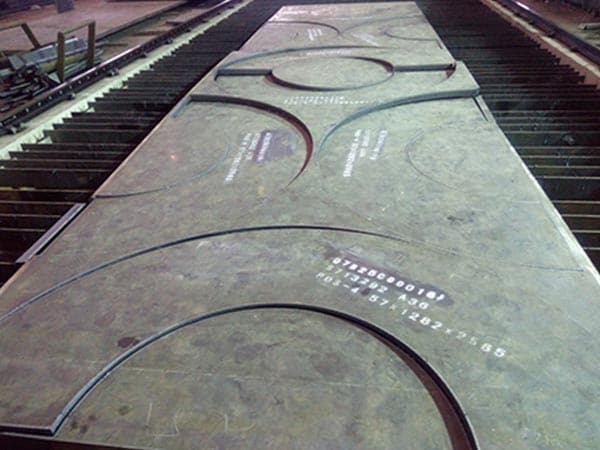
- Cutting: The material is highly suitable for laser, plasma, and waterjet cutting. Its clean surface and consistent microstructure ensure minimal distortion during thermal cutting processes.
- Surface Quality: Being a 'C' (Cold forming) grade, it typically possesses a surface finish that is conducive to painting and galvanizing, though specific pickling may be required for certain applications.
Expanding Industry Applications
The adoption of S700MC is driven by the global push for sustainability and energy efficiency. By using a 700 MPa steel instead of a 355 MPa steel, manufacturers can often reduce the weight of a structural component by 30% to 50%. This weight reduction directly translates to higher payloads for transport vehicles and lower fuel consumption.
Common applications include:
- Mobile Cranes and Lifting Equipment: Where reducing the boom weight allows for greater reach and lifting capacity.
- Automotive and Trucking: Chassis frames, cross members, and cold-pressed parts where durability and weight are critical.
- Agricultural Machinery: Heavy-duty plows and harvesters that require high wear resistance and structural integrity under stress.
- Renewable Energy: Structural supports for solar arrays and wind turbine components where high strength helps resist wind loads.
Environmental Resilience and Longevity
S700MC is designed to perform in harsh environments. While the standard EN 10149-2 primarily focuses on strength and forming, many S700MC variants are tested for impact toughness at low temperatures (e.g., -20°C or -40°C). This ensures that the material does not undergo brittle fracture in arctic or high-altitude conditions. Furthermore, its fine-grained structure provides a natural resistance to certain types of stress corrosion, making it a reliable choice for long-term infrastructure projects where maintenance access is limited.
Leave a message