
What are the production technical requirements of en 10149 pdf
This comprehensive guide explores the technical production requirements of EN 10149, detailing chemical composition, TMCP processing, mechanical performance, and industrial applications for high-yield strength steels.
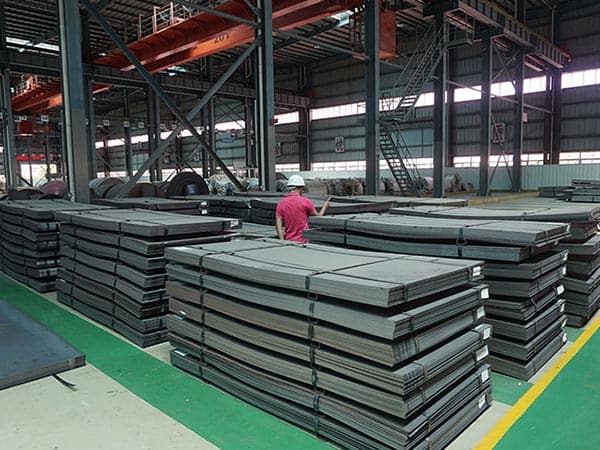
Understanding the Core Framework of EN 10149 Standards
The EN 10149 standard represents a pinnacle in European metallurgy for hot-rolled flat products. Specifically designed for steels with high yield strength intended for cold forming, this standard is divided into several parts, with Part 2 (thermomechanically rolled steels) and Part 3 (normalized or normalized rolled steels) being the most commercially significant. The primary objective of these technical requirements is to provide a material that combines exceptional strength with superior formability, allowing manufacturers to reduce weight without compromising structural integrity.
To meet the rigorous demands of modern engineering, EN 10149 specifies not just the final properties, but the very method of production. The 'MC' designation (e.g., S700MC) indicates that the steel is thermomechanically rolled, a process that meticulously controls the temperature and deformation during the rolling process to refine the grain structure. This refinement is the secret behind the steel's ability to remain ductile even at yield strengths exceeding 700 MPa.
Chemical Composition: The Science of Micro-Alloying
The production of EN 10149 steels relies on a sophisticated chemical balance. Unlike traditional carbon steels that rely on high carbon content for strength, these steels utilize micro-alloying elements. Low carbon levels (typically below 0.12%) are maintained to ensure excellent weldability and toughness. The strength is instead derived from the addition of elements such as Niobium (Nb), Titanium (Ti), and Vanadium (V).
Niobium and Titanium: These elements act as grain refiners. During the thermomechanical rolling process, they form fine precipitates that pin grain boundaries, preventing grain growth. This results in a fine-grained ferrite-pearlite or bainitic microstructure. Manganese: Usually kept around 1.5% to 2.0%, it enhances strength and promotes the formation of desirable microstructures. Sulfur and Phosphorus: Strict limits are placed on these impurities (often S ≤ 0.015% and P ≤ 0.025%) to prevent brittle failure and ensure the material can withstand severe bending operations without cracking.
| Grade | C (max %) | Mn (max %) | Si (max %) | P (max %) | S (max %) | Al (min %) |
|---|---|---|---|---|---|---|
| S315MC | 0.12 | 1.30 | 0.50 | 0.025 | 0.020 | 0.015 |
| S420MC | 0.12 | 1.60 | 0.50 | 0.025 | 0.015 | 0.015 |
| S500MC | 0.12 | 1.70 | 0.50 | 0.025 | 0.015 | 0.015 |
| S700MC | 0.12 | 2.10 | 0.60 | 0.025 | 0.015 | 0.015 |
The Thermomechanical Controlled Process (TMCP)
The technical requirements of EN 10149-2 hinge on the Thermomechanical Controlled Process (TMCP). This is not merely a heat treatment but a integrated rolling strategy. The steel is rolled at specific temperatures where recrystallization is retarded. This leads to the accumulation of strain in the austenite, which, upon cooling, transforms into an extremely fine-grained ferrite structure.
This production requirement is critical because it allows the steel to achieve high yield strength without the need for high alloy content or post-rolling quenching and tempering. The result is a material with a lower carbon equivalent (CEV), significantly improving its behavior during welding. Manufacturers must strictly monitor the 'finish rolling temperature' and the 'cooling rate' to ensure consistency across the entire length of the coil or plate.
Mechanical Performance and Ductility
The hallmark of EN 10149 is its mechanical reliability. The standard defines minimum yield strength, tensile strength, and elongation. For instance, S700MC must exhibit a minimum yield strength of 700 MPa. However, strength alone is insufficient; the steel must also demonstrate high elongation values to facilitate complex cold-forming shapes.
- Yield Strength (ReH): The stress level at which the steel begins to plastically deform.
- Tensile Strength (Rm): The maximum stress the material can withstand before necking.
- Elongation (A): A measure of the material's ability to stretch before breaking, crucial for deep drawing and bending.
- Impact Toughness: Although not always mandatory for all grades, many EN 10149 products are tested for V-notch impact energy at -20°C or -40°C to ensure performance in cold climates.
Technical Requirements for Cold Forming and Bending
Since these steels are primarily used for cold-formed components, the standard specifies strict requirements for the minimum bending radius. This ensures that the steel can be folded into chassis rails or structural brackets without surface cracking or internal delamination. The bending radius is typically expressed as a multiple of the nominal thickness (t).
For a grade like S700MC, the minimum recommended bending radius for a 90-degree bend might be 2.0t to 2.5t depending on the orientation (transverse vs. longitudinal). Adhering to these production technical requirements ensures that the internal stresses generated during forming do not exceed the material's localized ductility limits. High-quality EN 10149 steel must also exhibit low 'springback,' which allows for high precision in automated robotic folding processes.
Weldability and Fabrication Excellence
One of the primary advantages of EN 10149 steels over traditional high-strength steels is their exceptional weldability. Because the strength is achieved through grain refinement rather than high carbon or alloy content, the Heat Affected Zone (HAZ) remains relatively tough. The low carbon equivalent reduces the risk of cold cracking, allowing for welding with minimal or no preheating in many applications.
However, the technical requirements emphasize that excessive heat input during welding can lead to grain growth in the HAZ, which may locally soften the material. Therefore, precise control of welding parameters (current, voltage, and travel speed) is recommended to maintain the integrity of the thermomechanically processed structure. All standard welding methods, including MAG, TIG, and Laser welding, are applicable to these grades.
Environmental Adaptation and Surface Quality
EN 10149 steels are frequently used in exposed environments, making surface quality and corrosion resistance important factors. The standard requires the surface to be free from defects that would interfere with the intended application, such as slivers, heavy scale, or deep pitting. For applications requiring painting or coating, the steel can be supplied in a pickled and oiled condition.
Furthermore, the weight-saving potential of these high-strength steels contributes significantly to environmental sustainability. By using S700MC instead of S355, a manufacturer can often reduce the thickness of a structural component by 30-40%, leading to lighter vehicles, lower fuel consumption, and reduced CO2 emissions during the product's lifecycle.
Critical Applications in Modern Industry
The unique properties of EN 10149 steels make them indispensable in several high-performance sectors. In the heavy transport industry, they are used for truck chassis, trailers, and side-protection beams where high strength and low weight are paramount. The construction machinery sector utilizes these grades for crane booms, telescopic arms, and excavator buckets, where the material must withstand extreme dynamic loads.
In the automotive sector, EN 10149 steels are used for seat frames, bumpers, and structural reinforcements. The ability to cold-form these parts into complex geometries while maintaining high energy-absorption capacity makes them ideal for crash-safety components. Additionally, the agricultural industry employs these steels for plow frames and harvester components, benefiting from their resistance to wear and structural fatigue.
Compliance and Quality Assurance
To ensure that the production technical requirements of EN 10149 are met, manufacturers must provide inspection documents in accordance with EN 10204. These documents (typically Type 3.1 or 3.2 certificates) verify the chemical analysis, mechanical test results, and dimensional tolerances. Dimensional tolerances themselves are usually governed by EN 10051, which specifies the allowable variations in thickness, width, and flatness for continuously hot-rolled products.
Strict adherence to these standards ensures that every batch of steel performs predictably in the workshop. For engineers, this reliability is the foundation of safe and efficient design. As manufacturing technologies evolve, the requirements of EN 10149 continue to serve as the benchmark for high-performance steel production, driving innovation in material science and structural engineering alike.
Leave a message