
What is the s700mc hardness price export to India
Discover comprehensive insights into S700MC steel hardness, mechanical properties, and the latest export price trends to India. This guide covers technical specifications and market dynamics for HSLA steel.
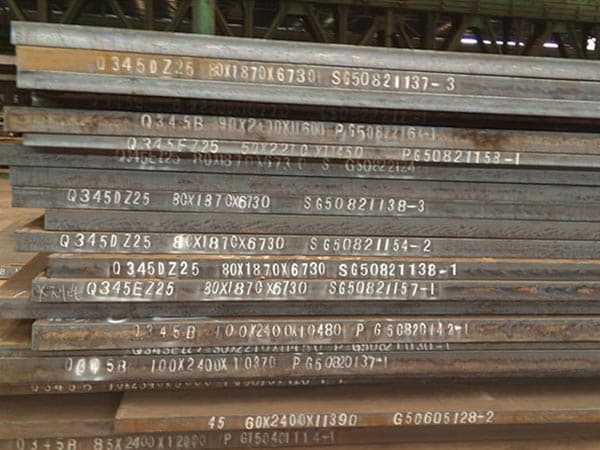
Decoding S700MC: Beyond Just Hardness and Strength
S700MC is a high-strength low-alloy (HSLA) steel produced through thermomechanical rolling, specifically designed for cold forming. When engineers and procurement managers in India ask about the S700MC hardness, they are often looking for a balance between structural durability and the ability to process the material without cracking. Unlike wear-resistant steels where hardness is the primary metric, S700MC is defined by its yield strength, yet its hardness remains a critical indicator of its wear resistance and machinability.
The typical hardness of S700MC steel ranges between 230 and 280 HBW (Brinell Hardness). While this is significantly higher than standard structural steels like S355, it is intentionally kept within a range that allows for excellent weldability and cold bending. This unique hardness profile ensures that components can withstand high stress while remaining lightweight, a factor that is driving massive demand in the Indian automotive and heavy machinery sectors.
Mechanical Performance and Chemical Synergy
The performance of S700MC is a result of precise micro-alloying. By adding small amounts of Niobium (Nb), Vanadium (V), and Titanium (Ti), manufacturers achieve a fine-grained microstructure that enhances both strength and toughness. For the Indian market, where infrastructure projects often face extreme temperature fluctuations, the impact strength of S700MC at low temperatures (down to -20°C or -40°C) is a vital consideration.
| Property | Value (Typical) | Unit |
|---|---|---|
| Yield Strength (Reh) | 700 (min) | MPa |
| Tensile Strength (Rm) | 750 - 950 | MPa |
| Elongation (A80mm) | 10 - 12 (min) | % |
| Hardness | 230 - 280 | HBW |
| Impact Energy (-20°C) | 40 (min) | Joules |
The tensile strength of 750-950 MPa allows for significant weight reduction in vehicle chassis and crane booms. By using S700MC instead of traditional S355, manufacturers can reduce the weight of structural components by up to 30-40%, leading to better fuel efficiency and higher payload capacities for Indian logistics companies.
Processing Performance: Welding and Cold Forming
One of the primary reasons S700MC is preferred for export to India is its exceptional processing versatility. Despite its high hardness compared to mild steel, it behaves predictably during fabrication. Cold forming is the most common processing method. For a plate thickness (t), the minimum recommended bending radius is usually 2.0t to 2.5t, depending on the orientation relative to the rolling direction.
- Weldability: Due to its low carbon equivalent (CEV), S700MC can be welded using standard methods like MAG, TIG, and laser welding without the need for extensive preheating. This reduces labor costs and increases throughput in Indian manufacturing plants.
- Laser Cutting: The fine-grained structure and clean surface finish of S700MC make it ideal for high-precision laser cutting, ensuring minimal heat-affected zones (HAZ).
- Surface Quality: Typically supplied in a pickled and oiled condition, it provides an excellent substrate for painting and coating, essential for preventing corrosion in humid Indian climates.
Environmental Adaptability and Longevity
India's diverse climate, ranging from coastal humidity to the dry heat of the plains, requires materials that can resist atmospheric corrosion and fatigue. S700MC's refined grain structure provides better resistance to fatigue crack propagation compared to traditional hot-rolled steels. This longevity is crucial for the construction of mobile cranes, trailers, and agricultural equipment that operate under cyclic loading conditions.
Furthermore, the high yield-to-tensile ratio ensures that the material can absorb significant energy before failure, providing a safety margin in structural applications. This environmental resilience makes S700MC a cost-effective choice over the long term, despite its higher initial price point compared to lower-grade steels.
Market Dynamics: Exporting S700MC to India
The S700MC price for export to India is influenced by several global and local factors. As of the current market, prices generally fluctuate based on raw material costs (iron ore and coking coal), shipping freights, and trade policies. India’s BIS (Bureau of Indian Standards) certification is a mandatory requirement for steel imports, and only mills with valid BIS licenses can successfully clear customs in ports like Mumbai, Chennai, or Mundra.
Export prices typically range from $850 to $1,100 per metric ton (CFR India), depending on the thickness, width, and order volume. Thinner gauges (3mm to 6mm) often command a premium due to the complexity of the thermomechanical rolling process. Additionally, the Indian government’s focus on the "Make in India" initiative has increased the demand for high-performance materials that can compete with international standards.
Logistics and Compliance for Indian Importers
When importing S700MC to India, buyers must pay close attention to the Mill Test Certificate (MTC). A valid MTC should confirm compliance with EN 10149-2 standards and clearly state the chemical composition and mechanical test results. Shipping logistics also play a role; containerized shipments are common for smaller volumes to prevent sea-water corrosion, while bulk shipments are utilized for large-scale infrastructure projects.
- Anti-Dumping Duties: Importers should check the latest notifications from the Directorate General of Trade Remedies (DGTR) regarding any anti-dumping duties on steel originating from specific countries.
- Customs Valuation: Proper documentation of the S700MC hardness and grade is essential to ensure correct HSN code classification (usually under 7208) and avoid delays.
- Lead Times: Exporting from European or East Asian mills to India typically involves a lead time of 45 to 75 days, including production and transit.
The demand for S700MC in India is set to grow as the country upgrades its transportation infrastructure. From the manufacturing of lightweight truck bodies to the assembly of high-capacity telehandlers, the combination of high hardness, superior strength, and reliable processing makes S700MC an indispensable material for modern engineering. Understanding the technical nuances and market variables ensures that Indian enterprises can leverage this steel to achieve a competitive edge in both local and global markets.
Leave a message