
What are the main applicable ranges of s700mc steel density
A comprehensive guide to S700MC steel, exploring its density, mechanical properties, and industrial applications. Learn how this high-strength steel optimizes weight and performance in heavy machinery and automotive sectors.
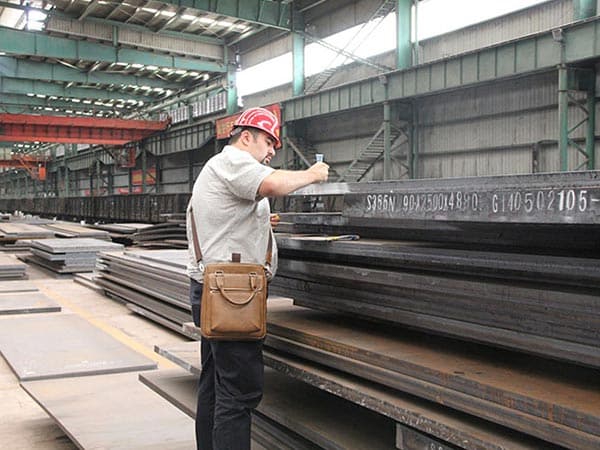
The Physical Profile: S700MC Steel Density and Material Fundamentals
S700MC is a high-strength low-alloy (HSLA) structural steel that has redefined the parameters of modern engineering, particularly where the balance between weight and strength is critical. While the density of S700MC steel remains consistent with standard carbon steels at approximately 7.85 g/cm³ (7850 kg/m³), its true value lies in how this density is leveraged through advanced thermomechanical rolling processes. Unlike traditional structural steels, S700MC offers a significantly higher yield strength-to-weight ratio, allowing engineers to use thinner sections without compromising structural integrity.
The density itself is a result of the iron-based crystalline structure, but the 'applicable range' of this density refers to the efficiency of material utilization. By utilizing a steel with a yield strength of 700 MPa, designers can reduce the volume of material required for a component. This volume reduction, when multiplied by the constant density of 7.85 g/cm³, results in a substantial decrease in the final mass of the structure. This principle is the cornerstone of lightweighting strategies in the transport and construction industries.
Mechanical Excellence: Beyond the 700 MPa Yield Strength
The designation 'S700MC' indicates a minimum yield strength of 700 MPa. This is achieved through a combination of precise chemical composition and thermomechanically controlled processing (TMCP). TMCP involves strict control over the heating and rolling temperatures, which results in an extremely fine-grained microstructure. This fine grain size is the primary reason S700MC maintains excellent toughness even at low temperatures.
The mechanical properties of S700MC are governed by the EN 10149-2 standard. Below is a detailed look at the typical mechanical profile:
| Property | Value Range |
|---|---|
| Yield Strength (ReH) | Min. 700 MPa |
| Tensile Strength (Rm) | 750 - 950 MPa |
| Elongation (A80mm) | Min. 10% - 12% (depending on thickness) |
| Impact Energy (Charpy-V) | 40J at -20°C (often higher in premium brands) |
These properties ensure that S700MC is not just strong but also resilient. The high tensile strength allows for significant energy absorption, which is a critical factor in the automotive industry for crashworthiness. The elongation properties, though lower than those of mild steel, are still sufficient for complex cold-forming operations.
Processing and Fabricating S700MC: Precision and Technique
The applicable range of S700MC is greatly expanded by its superior processing characteristics. Despite its high strength, it is designed specifically for cold forming. This means it can be bent, folded, and pressed into intricate shapes that would be impossible with traditional high-strength steels of the past.
- Cold Bending: S700MC can be bent to tight radii. For thicknesses under 3mm, a bending radius of 1.0 times the thickness (1.0t) is often achievable, provided the correct tooling and orientation (relative to the rolling direction) are used.
- Weldability: Due to its low carbon equivalent (CEV), S700MC exhibits excellent weldability. It can be joined using standard methods such as MAG, TIG, and Laser welding. The low alloy content minimizes the risk of cold cracking in the heat-affected zone (HAZ).
- Laser Cutting: The clean surface and fine-grained structure of S700MC make it an ideal candidate for high-speed laser cutting, resulting in precise edges and minimal thermal distortion.
When welding S700MC, it is vital to control the heat input. Excessive heat can lead to grain growth in the HAZ, which locally reduces the yield strength. Professionals typically aim for a t8/5 cooling time that preserves the thermomechanical properties of the base metal.
Weight Reduction and Economic Impact
The primary driver for choosing S700MC is the economic benefit derived from its density-to-strength efficiency. In the transport sector, reducing the tare weight of a trailer or truck body directly increases the payload capacity. This creates a dual advantage: lower fuel consumption when the vehicle is empty and higher revenue-generating potential when it is full.
Consider a structural beam originally designed using S355 steel. By switching to S700MC, the thickness of the beam can often be reduced by 30% to 40% while maintaining the same load-bearing capacity. Because the density of both steels is identical, this thickness reduction translates directly into a 30-40% weight saving. Over the lifespan of a heavy-duty vehicle, these savings can amount to thousands of liters of fuel and a significant reduction in CO2 emissions.
Environmental Adaptability and Longevity
S700MC is engineered to perform in demanding environments. While it is not a 'weathering steel' like Corten, its chemical purity and fine grain structure provide a consistent substrate for protective coatings. Whether it is hot-dip galvanizing, powder coating, or specialized painting, S700MC accepts surface treatments readily, ensuring long-term corrosion resistance in infrastructure projects.
Furthermore, the material's performance at low temperatures makes it suitable for use in arctic or high-altitude environments. Many grades of S700MC are tested for impact toughness at -40°C, ensuring that the steel remains ductile and does not suffer from brittle fracture under sudden loads in extreme cold.
Deep Dive into Industry Applications
The applicable ranges for S700MC are vast, spanning across sectors that require high performance under stress. Here are the most prominent areas where S700MC density and strength are utilized:
- Automotive Industry: Used for chassis members, cross-beams, and safety components. The ability to form complex shapes while maintaining 700 MPa yield strength allows for lighter, safer vehicles.
- Lifting and Handling: Telescopic crane booms, loader arms, and forest machinery rely on S700MC to reach higher and lift more. The weight saved in the boom structure allows for a longer reach without increasing the counterweight requirement.
- Heavy Transport: Trailer frames, side guards, and tipper bodies. S700MC is the standard for modern lightweight trailer manufacturing.
- Agricultural Equipment: Soil preparation tools and harvesters benefit from the high wear resistance and structural strength, allowing for wider implements that can be pulled by smaller tractors.
The versatility of S700MC ensures that it remains a staple in the transition toward more sustainable and efficient engineering. By understanding the relationship between its constant density and its exceptional mechanical limits, designers can continue to push the boundaries of what is possible in structural steel construction.
Chemical Composition and Its Role in Performance
The secret to the performance of S700MC lies in its micro-alloying elements. While carbon is kept low to ensure weldability, elements like Niobium (Nb), Vanadium (V), and Titanium (Ti) are added in small, precise amounts. These elements facilitate the grain refinement during the rolling process.
| Element | Maximum Content (%) |
|---|---|
| Carbon (C) | 0.12 |
| Manganese (Mn) | 2.10 |
| Silicon (Si) | 0.60 |
| Phosphorus (P) | 0.025 |
| Sulfur (S) | 0.015 |
| Al+Nb+V+Ti | Trace amounts for grain refinement |
This lean alloy design ensures that the steel is not only strong but also cost-effective compared to quenched and tempered grades. The thermomechanical process replaces the need for expensive post-rolling heat treatments, making S700MC a more environmentally friendly option due to the lower energy consumption during its production phase.
The strategic application of S700MC density and strength is a hallmark of high-tier engineering. By focusing on the material's ability to reduce mass without sacrificing safety, industries can achieve higher efficiency, lower costs, and a smaller environmental footprint. The continued evolution of TMCP technology suggests that the applicable ranges of these steels will only continue to expand, reaching into new sectors like renewable energy and advanced urban infrastructure.
Leave a message