
What is the BBNSteel S700MC high strength car beam steel application
Explore the extensive applications and technical advantages of BBNSteel S700MC high-strength steel. This guide covers its mechanical properties, cold forming capabilities, and role in vehicle lightweighting.
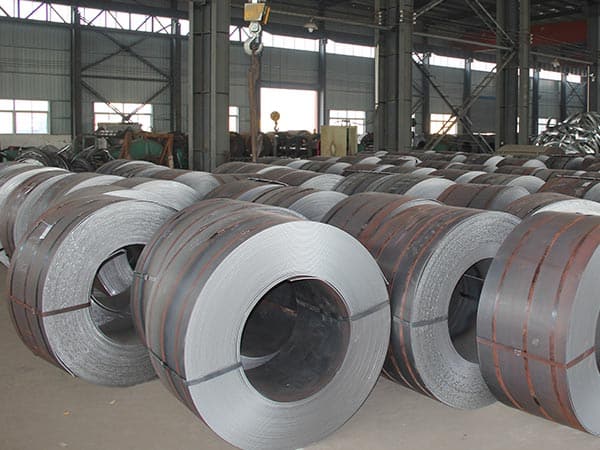
Decoding S700MC: The Engineering Foundation of Modern Vehicle Frames
As the global transportation industry shifts toward higher efficiency and stricter emission standards, the demand for advanced materials has never been more critical. S700MC, a thermomechanically rolled high-strength low-alloy (HSLA) steel, stands at the forefront of this evolution. Standardized under EN 10149-2, S700MC is engineered to provide an exceptional strength-to-weight ratio, making it the preferred choice for structural components that require both high load-bearing capacity and significant weight reduction.
BBNSteel S700MC is specifically designed for cold-formed components. The "S" denotes structural steel, "700" represents the minimum yield strength of 700 MPa, and "MC" indicates that the material is thermomechanically rolled (M) and possesses high cold-formability (C). This unique combination allows engineers to design thinner parts without compromising the structural integrity of the vehicle, directly contributing to fuel economy and payload capacity.
Technical Specifications and Material Composition
The performance of S700MC is rooted in its precise chemical balance and advanced manufacturing process. By utilizing micro-alloying elements such as Niobium (Nb), Titanium (Ti), and Vanadium (V), BBNSteel ensures a fine-grained microstructure that enhances both strength and toughness. Unlike traditional hot-rolled steels, the thermomechanical rolling process controls the grain size at a microscopic level, preventing the formation of coarse structures that lead to brittleness.
| Chemical Element | C (max) | Mn (max) | Si (max) | P (max) | S (max) | Al (min) | Nb+Ti+V (max) |
|---|---|---|---|---|---|---|---|
| Content (%) | 0.12 | 2.10 | 0.60 | 0.025 | 0.015 | 0.015 | 0.22 |
The low carbon content (max 0.12%) is particularly significant. It ensures that the steel remains highly weldable and ductile, despite its high strength levels. This chemical purity reduces the risk of cold cracking during fabrication, a common issue with higher-carbon structural steels.
Mechanical Prowess: Strength Meets Ductility
The primary appeal of BBNSteel S700MC lies in its mechanical profile. It bridges the gap between traditional structural steels and ultra-high-strength martensitic steels, offering a sweet spot for automotive and heavy machinery applications.
| Property | Value (Metric) |
|---|---|
| Yield Strength (ReH) | ≥ 700 MPa |
| Tensile Strength (Rm) | 750 - 950 MPa |
| Elongation (A80mm) | ≥ 10% (for t < 3mm) |
| Elongation (A5) | ≥ 12% (for t ≥ 3mm) |
These properties allow for a substantial reduction in material thickness. For instance, replacing S355MC with S700MC can result in a weight saving of up to 30-40% in structural beams, provided the design is optimized for the higher strength. This is a game-changer for commercial vehicle manufacturers aiming to maximize haulage capacity while staying within gross vehicle weight limits.
Exceptional Processing Performance
Fabrication efficiency is a core requirement for automotive assembly lines. BBNSteel S700MC excels in several key processing areas:
- Cold Forming and Bending: Despite its high yield strength, S700MC exhibits excellent cold-bending properties. It can be bent to tight radii without surface cracking or springback issues, provided the correct tooling and pressure are applied. For a thickness (t) of less than 3mm, the recommended minimum bending radius is 1.0t for 90-degree bends.
- Superior Weldability: Due to its low carbon equivalent (CEV), S700MC can be welded using all standard methods, including MAG (Metal Active Gas), laser welding, and resistance welding. The heat-affected zone (HAZ) remains stable, maintaining the structural integrity of the joint.
- Precision Cutting: The material is highly compatible with laser, plasma, and waterjet cutting. Its consistent flatness and surface quality ensure high-speed processing with minimal dross or edge deformation.
Primary Application: The Backbone of Automotive Engineering
The most prominent application of S700MC is in the production of car beams and chassis components. Within the commercial vehicle sector, it is used for longitudinal beams, cross members, and reinforcement plates. These components must withstand extreme dynamic loads and torsional stress during operation.
By using S700MC, manufacturers can create complex geometries that are lighter and more rigid. This rigidity improves the vehicle's handling and safety by providing a stable platform for the suspension and powertrain. Furthermore, in the event of a collision, the high energy absorption capacity of S700MC helps protect the cabin and critical components.
Expanding Horizons: Beyond the Automotive Sector
While "car beam steel" is its most famous label, the utility of BBNSteel S700MC extends far into other heavy industries where weight and strength are critical factors:
- Crane and Lifting Equipment: Telescopic booms and support structures for mobile cranes utilize S700MC to reach higher altitudes and lift heavier loads without increasing the base weight of the machine.
- Agricultural Machinery: Modern harvesters and spreaders require frames that can handle rugged terrain and heavy attachments. S700MC provides the necessary durability while keeping the equipment nimble enough for soft soil.
- Trailer Construction: The chassis of long-haul trailers benefit immensely from S700MC, allowing for thinner main rails that translate directly into increased payload for logistics companies.
- Cold-Pressed Profiles: Various industrial racking systems and structural profiles used in solar panel mounts leverage the strength of S700MC to reduce the volume of steel required for large-scale installations.
Environmental Adaptability and Longevity
BBNSteel S700MC is not only strong but also resilient. Its fine-grained structure provides better resistance to fatigue compared to conventional hot-rolled steels. In environments subject to vibration—such as truck frames on uneven roads—this fatigue resistance ensures a longer service life and fewer maintenance intervals.
Furthermore, the material performs well in low-temperature environments. While standard steels might become brittle in sub-zero conditions, S700MC maintains sufficient impact toughness, making it suitable for vehicles and machinery operating in arctic or high-altitude regions. This environmental versatility ensures that BBNSteel S700MC is a global solution for diverse geographical challenges.
Strategic Advantages of Choosing BBNSteel
Selecting the right supplier for S700MC is as important as the material itself. BBNSteel provides a comprehensive quality assurance framework that includes ultrasonic testing, precise thickness tolerances, and surface finish inspections. We understand that in automotive manufacturing, consistency is paramount. Every batch of S700MC is tested to ensure it meets the strict requirements of EN 10149-2, providing our partners with the confidence to push the limits of their designs.
The integration of S700MC into a production line represents a strategic investment in the future of transport. By reducing the carbon footprint through lighter vehicles and increasing the operational efficiency of machinery, S700MC is more than just a steel grade—it is a catalyst for industrial innovation.
Leave a message