
At what humidity does S500MC hot rolled steel for car shell rust?
Detailed technical analysis of S500MC hot rolled steel corrosion behavior, exploring the critical humidity thresholds, metallurgical factors, and environmental impacts on automotive structural shells.
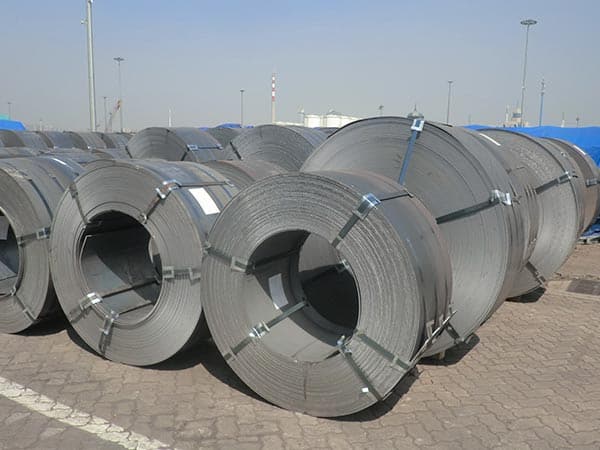
The Metallurgical Identity of S500MC and Its Corrosion Sensitivity
S500MC is a high-yield-strength, hot-rolled steel specifically designed for cold forming, governed by the EN 10149-2 standard. Its widespread use in automotive structural components, such as truck chassis, cross members, and car shell reinforcements, stems from its exceptional strength-to-weight ratio. However, as a thermomechanically rolled steel, its surface chemistry and microstructure play a pivotal role in how it interacts with environmental moisture. Unlike stainless steel, S500MC is a carbon-manganese steel with micro-alloying elements like Niobium (Nb), Vanadium (V), and Titanium (Ti). These elements refine the grain structure to achieve a minimum yield strength of 500 MPa but do not provide the passivity found in high-chromium alloys. Therefore, understanding the exact humidity levels that trigger oxidation is critical for automotive longevity and structural integrity.
The Critical Humidity Threshold: The 60% Rule
Corrosion of S500MC is an electrochemical process that requires an electrolyte—typically a thin film of water on the steel surface. Scientific research into atmospheric corrosion indicates that there is a critical relative humidity (CRH) below which the rate of rusting is negligible. For S500MC hot-rolled steel, this threshold is generally identified at 60% relative humidity (RH). Below 40% RH, the adsorption of water molecules is insufficient to form a continuous electrolyte layer. Between 40% and 60%, a multi-molecular layer of water begins to form, but the ionic conductivity remains low. Once the humidity exceeds 60%, the water film becomes thick enough to facilitate the movement of ions, allowing the anodic reaction (iron dissolution) and cathodic reaction (oxygen reduction) to proceed rapidly.
In automotive environments, this threshold is often reached during nighttime cooling or in coastal and humid climates. When the temperature drops, the relative humidity near the metal surface rises, often reaching the dew point. For S500MC car shells, even if the ambient humidity is 50%, local micro-climates within the vehicle's structural cavities can exceed 70%, initiating the formation of iron hydroxides, commonly known as red rust.
Surface Condition: Mill Scale vs. Pickled Surfaces
The state of the S500MC surface significantly influences its rust resistance. Hot-rolled steel typically arrives with a layer of mill scale (magnetite, hematite, and wustite). While this scale provides a temporary physical barrier, it is inherently brittle and porous.
- Galvanic Coupling: Mill scale is cathodic relative to the underlying steel base. If the scale cracks—which it inevitably does during the cold forming of car shells—moisture penetrates the cracks, creating a small anode (the steel) and a large cathode (the scale). This accelerates localized pitting corrosion.
- Pickled and Oiled (P&O): Most automotive manufacturers use S500MC in a pickled and oiled state. Removing the scale eliminates the galvanic risk, but it leaves the bare steel highly reactive. Without a protective oil film or subsequent coating, P&O S500MC will begin to flash rust at humidity levels as low as 50% due to the high surface energy of the clean metal.
Chemical Composition and Its Impact on Oxidation
The chemical composition of S500MC is optimized for mechanical performance, but certain elements indirectly affect its corrosion profile. The low carbon content (typically ≤ 0.12%) improves weldability but does little to hinder rust. The presence of Manganese (≤ 1.60%) and Silicon (≤ 0.50%) is standard for deoxidation and solid solution strengthening.
| Element | Maximum Content (%) | Influence on Corrosion |
|---|---|---|
| Carbon (C) | 0.12 | Low content reduces carbide precipitation, slightly aiding uniform corrosion resistance. |
| Manganese (Mn) | 1.60 | Forms MnS inclusions; if elongated, these can act as initiation sites for pitting. |
| Silicon (Si) | 0.50 | Can influence the adherence of the oxide scale during hot rolling. |
| Niobium (Nb) / Titanium (Ti) | 0.22 (Total) | Refines grain size, which can slightly improve the uniformity of the rust layer. |
Mechanical Properties and Structural Vulnerability
The high strength of S500MC is achieved through thermomechanical rolling, which creates a very fine-grained ferrite-pearlite microstructure. While this grain refinement is excellent for absorbing energy during a collision, it increases the number of grain boundaries. Grain boundaries are high-energy regions that are more chemically active than the grain interiors. Consequently, in high-humidity environments (above 75% RH), S500MC may exhibit a slightly faster initial oxidation rate compared to traditional low-strength hot-rolled steels.
| Property | Value (Transverse) | Significance in Humid Environments |
|---|---|---|
| Yield Strength (ReH) | Min 500 MPa | High residual stresses from forming can promote stress corrosion cracking. |
| Tensile Strength (Rm) | 550 - 700 MPa | Structural integrity must be maintained despite surface oxidation. |
| Elongation (A80) | Min 12-14% | Micro-cracks during stretching can trap moisture and salts. |
Environmental Synergies: Humidity, Salts, and Pollutants
The 60% humidity threshold is not a static number; it is heavily influenced by atmospheric contaminants. Within industrial or coastal regions, the presence of chlorides (Cl-) and sulfur dioxide (SO2) drastically lowers the critical humidity. Chlorides are hygroscopic, meaning they can pull moisture out of the air even when the ambient humidity is as low as 40%. For an S500MC car shell exposed to road de-icing salts, rusting can occur at significantly lower humidity levels because the salt maintains a liquid brine on the metal surface.
Furthermore, the Pilling-Bedworth Ratio for iron is approximately 2.1. This means the rust occupies more than twice the volume of the original metal. In the confined spaces of a car shell—such as door pillars or chassis joints—this expansion can trap more moisture and accelerate the "crevice corrosion" cycle, even if the exterior of the vehicle is kept dry.
Processing Impacts: Welding and Bending
Automotive manufacturing involves intensive processing of S500MC. Cold bending creates regions of high dislocation density, which are more susceptible to corrosive attack. Welding, however, poses the greatest risk. The Heat Affected Zone (HAZ) in S500MC undergoes microstructural changes where the fine grains may coarsen or precipitates may redistribute. These local variations create galvanic cells where the weld bead or the HAZ becomes anodic to the rest of the shell. In humid conditions, these processed areas are the first to show signs of red rust, often necessitating specialized zinc-rich primers or E-coating (electrophoretic deposition) to bridge the electrochemical gap.
Strategic Protection for S500MC Components
To mitigate the effects of humidity on S500MC, the automotive industry employs a multi-layered defense strategy. Since S500MC is often used for its strength in hidden structural parts, it is frequently subjected to Hot-Dip Galvanizing (HDG) or Zinc-Nickel plating. The zinc layer acts as a sacrificial anode, protecting the S500MC even if the humidity reaches 100%. For parts that cannot be galvanized due to hydrogen embrittlement concerns or dimensional tolerances, high-performance organic coatings are applied. These coatings work by increasing the electrical resistance of the circuit and preventing the moisture from reaching the 60% RH threshold at the metal interface.
Proper storage of S500MC coils and blanks is equally vital. Warehouses must maintain a controlled environment with RH below 50% and avoid rapid temperature fluctuations that lead to condensation. The use of Vapor Corrosion Inhibitors (VCI) in packaging provides an additional molecular layer of protection, effectively raising the "safe" humidity limit during transport and storage before the final assembly of the car shell.
Technical Assessment of Material Longevity
The durability of S500MC in automotive applications is highly predictable when humidity variables are controlled. While the material is robust and offers superior mechanical performance, its transition from a passive state to an active corroding state at 60% RH requires engineering diligence. By integrating advanced coating technologies and considering the micro-climatic conditions of the vehicle's structural design, manufacturers can leverage the high-strength benefits of S500MC without compromising on corrosion resistance. The focus remains on preventing the formation of a stable electrolyte, thereby ensuring that the structural shell maintains its 500 MPa yield strength throughout the vehicle's intended service life.
Leave a message