
Which steel is better S315MC steel properties or A36?
A professional comparison between S315MC and A36 steel. Explore mechanical properties, chemical composition, and industrial applications to determine which steel fits your project requirements.
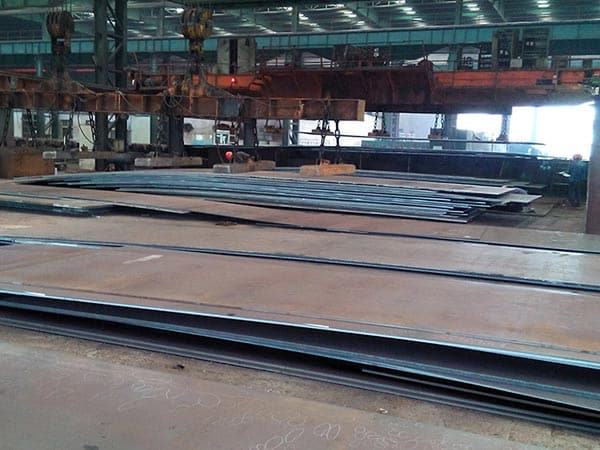
The Fundamental Distinction Between S315MC and A36
When selecting structural materials for engineering projects, the choice often narrows down to standards defined by different international bodies. S315MC is a high-yield-strength steel for cold forming, governed by the European standard EN 10149-2. In contrast, ASTM A36 is the most common carbon structural steel used in North America, following the ASTM A36/A36M specification. Determining which is better requires a deep dive into their metallurgical DNA and how they respond to fabrication stresses.
S315MC belongs to the category of thermomechanically rolled (TMCP) steels. This process allows the material to achieve high strength while maintaining a low carbon equivalent, which is crucial for weldability and ductility. A36 is a hot-rolled carbon steel that relies primarily on carbon and manganese for its strength. While A36 is the 'jack-of-all-trades' in construction, S315MC is a specialized performer designed for weight reduction and precision forming.
Chemical Composition and Metallurgical Integrity
The performance of these steels starts at the atomic level. S315MC is a micro-alloyed steel, meaning it contains trace amounts of elements like Niobium (Nb), Vanadium (V), or Titanium (Ti). These elements refine the grain structure during the rolling process, resulting in a much tougher and more consistent material.
| Element (Max %) | S315MC (EN 10149-2) | ASTM A36 (Plates) |
|---|---|---|
| Carbon (C) | 0.12 | 0.25 - 0.29 |
| Manganese (Mn) | 1.30 | 0.80 - 1.20 |
| Silicon (Si) | 0.50 | 0.40 |
| Phosphorus (P) | 0.025 | 0.04 |
| Sulfur (S) | 0.020 | 0.05 |
| Aluminium (Al) | 0.015 (Min) | - |
As shown in the table, S315MC has a significantly lower carbon content than A36. This lower carbon level is the primary reason S315MC exhibits superior weldability and cold-forming characteristics. The inclusion of Aluminium and micro-alloys in S315MC ensures a fine-grained structure, which prevents crack propagation better than the relatively coarse-grained A36.
Mechanical Properties: Strength vs. Ductility
Strength is the most common metric for comparison. S315MC is named after its minimum yield strength of 315 MPa. ASTM A36 is named after its yield strength of 36 ksi, which converts to approximately 250 MPa. This means S315MC is roughly 25% stronger than A36 in terms of resisting permanent deformation.
- Yield Strength: S315MC offers ≥ 315 MPa, whereas A36 offers ≥ 250 MPa.
- Tensile Strength: S315MC ranges from 390 to 510 MPa; A36 ranges from 400 to 550 MPa.
- Elongation: S315MC provides excellent ductility with elongation values often exceeding 20-24% (depending on thickness), while A36 typically offers 20-23%.
The higher yield-to-tensile ratio of S315MC makes it ideal for components that must withstand high loads without adding excessive weight. Engineers can use thinner gauges of S315MC to achieve the same structural integrity as thicker A36 plates, leading to significant weight savings in mobile machinery and automotive frames.
Processing Performance: Bending and Welding
Fabrication efficiency often dictates the total cost of a project. S315MC is specifically engineered for cold forming. It can be bent to tight radii without cracking, which is a common issue with standard carbon steels like A36 when they are pushed to their limits. If your design involves complex geometries, pressed parts, or cold-rolled profiles, S315MC is the superior choice.
Welding A36 is straightforward due to its simple chemistry, but its higher carbon content can occasionally lead to heat-affected zone (HAZ) hardening if not managed. S315MC, with its extremely low carbon content, is exceptionally easy to weld using all standard methods (MIG, TIG, MMA). The TMCP process used to create S315MC ensures that the properties of the steel remain stable even after welding, provided that the heat input is controlled to avoid excessive grain growth.
Environmental Adaptability and Surface Quality
In terms of environmental resistance, neither S315MC nor A36 are corrosion-resistant like stainless steel. However, S315MC is often supplied in a pickled and oiled condition, providing a cleaner surface for subsequent coating or painting. A36 is typically supplied with a heavy mill scale, which requires abrasive blasting (sandblasting) before painting to ensure proper adhesion.
For low-temperature applications, S315MC generally performs better. The grain refinement from micro-alloying improves the Charpy V-notch impact toughness at sub-zero temperatures. A36 does not have a mandatory impact test requirement unless specified (as A36 Charpy), making it less predictable in arctic or cryogenic environments.
Industry-Specific Applications
The choice between these two grades often depends on the industry standards and the specific structural requirements of the end product.
- Automotive and Transportation: S315MC is widely used for truck chassis, side members, and cross members where weight reduction is critical for fuel efficiency.
- General Construction: A36 remains the dominant choice for buildings, bridges, and oil rigs due to its global availability and the familiarity of structural engineers with its properties.
- Agricultural Equipment: S315MC is preferred for complex brackets, frames, and components that require high strength combined with intricate cold-formed shapes.
- Heavy Machinery: A36 is often used for thick base plates and static supports where mass and stiffness are more important than weight-to-strength ratios.
Comparative Analysis for Decision Making
Choosing the 'better' steel depends on your specific priorities. If the goal is cost-effectiveness in a massive, static structure where weight is not a concern, ASTM A36 is hard to beat. Its availability in a wide range of shapes (I-beams, channels, angles) makes it the backbone of the construction industry.
However, if the project demands high performance, weight optimization, and superior formability, S315MC is clearly the more advanced material. It allows for more sophisticated engineering designs and reduces the carbon footprint of the final product by requiring less material to support the same loads. In the modern era of 'lightweighting' and high-efficiency manufacturing, S315MC represents the evolution of structural steel beyond the traditional limits of A36.
Leave a message