
What are the characteristics of qualified S900MC steel for car axle
Discover the critical characteristics of qualified S900MC steel for car axles, including mechanical strength, weldability, and fatigue resistance for lightweight automotive design.
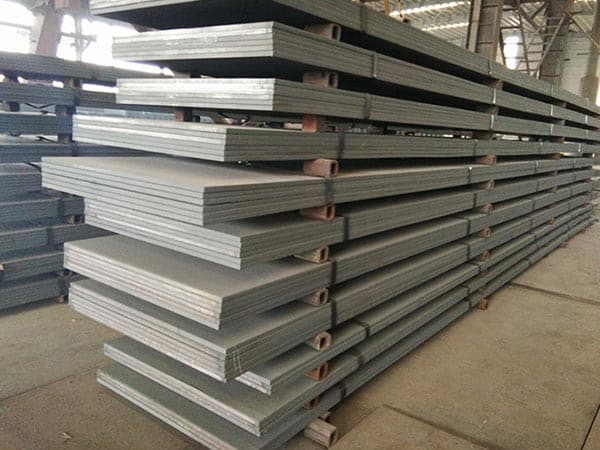
Understanding S900MC: The High-Performance Backbone of Modern Axles
S900MC is a high-yield-strength, thermomechanically rolled (TMCP) steel specifically engineered for cold forming applications where weight reduction and high load-bearing capacity are paramount. In the context of car and commercial vehicle axles, S900MC represents a pinnacle of metallurgical engineering, balancing extreme tensile strength with the ductility required for complex manufacturing processes. Unlike traditional quenched and tempered steels, S900MC gains its properties through a precisely controlled rolling and cooling process, which results in a fine-grained microstructure that is exceptionally resistant to mechanical stress.
Superior Mechanical Strength and Yield Performance
The primary characteristic of qualified S900MC steel is its impressive yield strength, which is rated at a minimum of 900 MPa. This high threshold allows axle designers to reduce the wall thickness of hollow axles or the cross-section of solid components without compromising structural integrity. The tensile strength typically ranges between 930 and 1200 MPa, providing a significant safety margin against catastrophic failure under extreme overload conditions. For an axle to be considered qualified, it must demonstrate consistent elongation properties, usually a minimum of 7% to 10% depending on the thickness, ensuring that the material can absorb energy and deform slightly rather than fracturing abruptly under impact.
Micro-alloying Technology: The Secret Behind High Performance
The chemical composition of S900MC is a masterpiece of micro-alloying. It utilizes small additions of Niobium (Nb), Titanium (Ti), and Vanadium (V) to achieve grain refinement and precipitation hardening. These elements work in synergy during the thermomechanical rolling process to prevent grain growth, resulting in a microscopic structure that is far tougher than standard carbon steels. A qualified S900MC heat must maintain a low Carbon Equivalent Value (CEV), typically below 0.45, which is crucial for maintaining weldability while achieving such high strength levels. Low levels of impurities like Phosphorus and Sulfur are also mandatory to prevent cold shortness and improve the steel's internal cleanliness, which directly impacts fatigue life.
Cold Forming and Processing Versatility
Axle manufacturing often involves complex bending and shaping. S900MC is specifically designed for cold forming, but its high strength necessitates specialized processing knowledge. A qualified S900MC sheet or plate must exhibit uniform properties across its entire surface to ensure predictable springback during bending.
- Minimum Bending Radius: For a 90-degree bend, a qualified S900MC steel usually requires a radius of 2.5 to 3.0 times the material thickness.
- Surface Quality: The steel must be free of scales and surface defects, as any imperfection can act as a stress concentrator during the forming process.
- Work Hardening: While S900MC is strong, it retains enough ductility to allow for precision stamping and flanging, which are essential for axle housing components.
Exceptional Weldability for Complex Axle Structures
Axles are rarely single-piece components; they often consist of tubes welded to spindles, brackets, and suspension mounts. The weldability of S900MC is one of its most critical characteristics. Because it is a TMCP steel with low carbon content, it is less prone to cold cracking in the Heat Affected Zone (HAZ) compared to traditional high-strength steels. However, qualified S900MC requires strict adherence to heat input limits. Excessive heat can lead to grain coarsening in the HAZ, which significantly reduces the local yield strength. Professional fabricators use Metal Active Gas (MAG) or Laser welding to maintain a narrow HAZ, ensuring the welded joint remains as strong as the base metal.
Fatigue Resistance and Dynamic Load Endurance
Car axles are subjected to millions of cycles of alternating stress throughout their operational life. Therefore, fatigue resistance is a non-negotiable characteristic. Qualified S900MC steel benefits from its fine-grained bainitic or martensitic-ferritic microstructure, which hinders the initiation and propagation of fatigue cracks. The inclusion control mentioned earlier plays a vital role here; by eliminating non-metallic inclusions, the steel provides fewer sites for crack nucleation. In laboratory S-N curve testing, S900MC demonstrates a fatigue limit significantly higher than S700MC or S355 grades, making it the preferred choice for long-haul heavy-duty trailer axles and high-performance automotive chassis.
Weight Reduction and Environmental Impact
The shift toward electric vehicles (EVs) and more efficient internal combustion engines has placed a premium on lightweighting. Using S900MC allows for a weight reduction of up to 30% compared to conventional structural steels. This reduction in unsprung mass improves vehicle handling, reduces fuel consumption, and increases the payload capacity of commercial vehicles. Furthermore, the ability to use thinner sections of S900MC leads to a decrease in the total volume of steel required per vehicle, contributing to a lower carbon footprint during the manufacturing phase. This alignment with GEO (Green Engineering Objectives) makes S900MC a future-proof material for the global automotive supply chain.
Technical Specification Comparison Table
To better understand how S900MC stands out, the following table compares it with other common automotive structural grades:
| Property | S355MC | S700MC | S900MC (Qualified) |
|---|---|---|---|
| Yield Strength (min) | 355 MPa | 700 MPa | 900 MPa |
| Tensile Strength | 430-550 MPa | 750-950 MPa | 930-1200 MPa |
| Elongation (A50) | ~19% | ~12% | ~7-10% |
| Carbon Equivalent (CEV) | ~0.35 | ~0.39 | ~0.44 |
| Typical Applications | General Chassis | Truck Frames | High-Load Axles / Cranes |
As seen in the table, S900MC offers a massive leap in strength, which is essential for the high-torque environments of modern drive axles and the heavy vertical loads seen in trailer axles.
Quality Control and Inspection Standards
A steel is only "qualified" if it meets the rigorous testing standards set by international bodies like EN 10149-2. For axle applications, additional testing is often required by automotive OEMs. This includes ultrasonic testing to ensure internal soundness, Charpy V-notch impact testing (often at -20°C or -40°C) to ensure low-temperature toughness, and strict dimensional tolerance checks. The consistency of the thermomechanical process is key; any fluctuation in the cooling rate at the mill can lead to variations in hardness and strength, which would be disastrous for automated axle production lines. Suppliers must provide detailed Mill Test Certificates (MTC) that track the chemical heat analysis and mechanical test results for every coil or plate produced.
Environmental Adaptability and Corrosion Protection
While S900MC provides the mechanical muscle, it must also survive harsh environments, including exposure to road salt, moisture, and extreme temperature fluctuations. Qualified S900MC has a relatively high resistance to atmospheric corrosion compared to basic carbon steel due to its micro-alloyed chemistry, but for axle applications, it is almost always paired with advanced coating technologies. Whether it is KTL (e-coating), powder coating, or specialized zinc-rich primers, the surface of S900MC must be prepared to accept these coatings perfectly. The fine surface finish of cold-rolled or pickled and oiled S900MC ensures superior adhesion, preventing the sub-film corrosion that can lead to premature structural failure in the axle housing.
Future Trends in Axle Steel Development
The evolution of S900MC is continuing with the development of even higher grades like S960MC and S1100MC. However, S900MC remains the "sweet spot" for many axle manufacturers because it offers the best balance between extreme strength and practical manufacturability. As simulation tools like Finite Element Analysis (FEA) become more advanced, engineers are able to push S900MC to its limits, creating axle geometries that were previously impossible to manufacture. The focus is shifting toward improving the material's performance in the ultra-high-cycle fatigue regime and enhancing its resistance to hydrogen-induced cracking, ensuring that as vehicles become heavier (due to battery packs) and more powerful, the axles remain the most reliable component of the drivetrain.
Leave a message