
Who is the professioal S960MC with EN10204-3.1 certificate supplier
Find the professional S960MC steel supplier offering EN10204-3.1 certification. Explore technical specs, mechanical properties, and processing capabilities of S960MC high-strength steel.
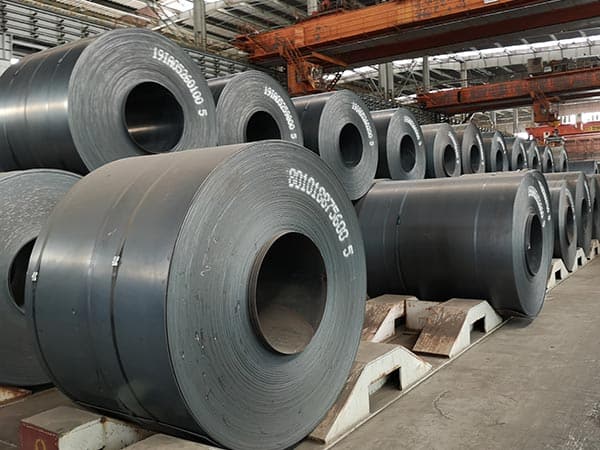
Understanding the Technical Superiority of S960MC High-Strength Steel
S960MC is a high-strength, thermomechanically rolled steel specifically designed for cold forming. As an advanced structural material, it adheres to the EN 10149-2 standard. The 'S' denotes structural steel, '960' represents the minimum yield strength of 960 MPa, 'M' indicates the thermomechanical rolling process, and 'C' signifies its suitability for cold forming. This grade is a cornerstone for engineering projects where weight reduction and high load-bearing capacity are non-negotiable.
Identifying a professional supplier for S960MC requires more than just looking at a price list. It involves verifying their ability to provide authentic EN10204-3.1 certification, which guarantees that the material has been tested according to the specific requirements of the order and the results are validated by an authorized inspection representative independent of the manufacturing department. This level of traceability is critical for safety-sensitive applications like mobile cranes, heavy-duty transport, and mining equipment.
The Critical Role of EN10204-3.1 Certification in Quality Assurance
In the global steel trade, the EN10204-3.1 certificate is the gold standard for material verification. Unlike the 2.1 or 2.2 certificates, which are based on non-specific inspections, the 3.1 certificate provides specific test results for the actual batch of steel being delivered. This includes chemical analysis, tensile testing, and impact energy values.
Professional suppliers maintain a rigorous documentation system. When you source S960MC, the 3.1 certificate acts as your insurance policy. It ensures that the steel meets the strict chemical composition limits and mechanical property thresholds required by European standards. For engineers, this data is essential for calculating safety factors and ensuring the structural integrity of complex designs. Without this certificate, the risk of material failure under extreme stress increases significantly, potentially leading to catastrophic equipment failure.
Mechanical Properties: The Backbone of High-Performance Engineering
S960MC is celebrated for its exceptional strength-to-weight ratio. By utilizing this material, engineers can reduce the thickness of structural components without compromising strength, leading to lighter vehicles and structures. This reduction in weight directly translates to higher payloads and lower fuel consumption in the transport sector.
| Property | Value (Thickness ≤ 3mm) | Value (Thickness > 3mm) |
|---|---|---|
| Yield Strength (MPa) min | 960 | 960 |
| Tensile Strength (MPa) | 980 - 1150 | 980 - 1150 |
| Elongation A80 (%) min | 7 | - |
| Elongation A5 (%) min | - | 7 |
The yield strength of 960 MPa is nearly four times that of standard S235 structural steel. This allows for a drastic reduction in material volume. However, high strength often comes at the cost of ductility. S960MC overcomes this through precision alloying and controlled cooling during the rolling process, maintaining sufficient elongation for complex forming operations.
Chemical Composition and Its Impact on Weldability
The weldability of S960MC is a primary concern for fabricators. Because it is a low-alloy steel, its Carbon Equivalent Value (CEV) is kept remarkably low despite its high strength. This is achieved by using micro-alloying elements such as Niobium (Nb), Vanadium (V), and Titanium (Ti), which refine the grain structure and provide precipitation hardening.
| Element | Max % Content |
|---|---|
| Carbon (C) | 0.20 |
| Manganese (Mn) | 2.20 |
| Silicon (Si) | 0.60 |
| Phosphorus (P) | 0.025 |
| Sulfur (S) | 0.010 |
| Aluminium (Al) total | 0.015 |
Low carbon content ensures that the Heat Affected Zone (HAZ) does not become excessively brittle during welding. However, professional suppliers will advise that S960MC requires specific welding parameters. Excessive heat input can soften the material, leading to a loss of strength in the joint. Therefore, using low-heat input techniques like MIG/MAG welding with high-quality filler metals is recommended to maintain the 960 MPa yield strength across the entire structure.
Cold Forming and Processing Performance
One of the standout features of S960MC is its ability to be cold-formed. Despite its extreme hardness, it can be bent to tight radii if the correct procedures are followed. This is vital for manufacturing boom sections for cranes or chassis frames for trucks. The minimum recommended bending radius for S960MC is typically 4.0 times the plate thickness for a 90-degree bend.
When processing S960MC, cutting methods also play a role. Laser cutting is often preferred for its precision and minimal heat impact. Plasma cutting is also viable, but the edges may require post-cut grinding if the heat-affected zone is too deep. A professional supplier will offer value-added services such as precision cutting and pre-bending, ensuring the material arrives ready for assembly, which reduces lead times and manufacturing errors for the end-user.
Environmental Adaptability and Low-Temperature Toughness
S960MC is frequently used in environments where it is subjected to dynamic loads and extreme temperatures. Whether it is a crane operating in sub-zero Arctic conditions or a mining truck in a desert, the steel must remain resilient. While S960MC is primarily optimized for strength, its fine-grained structure provides decent impact toughness.
For applications requiring guaranteed impact energy at low temperatures (e.g., -40°C), it is crucial to consult with the supplier. Some batches of S960MC can be produced with enhanced toughness properties, often designated as S960QL in the quenched and tempered condition, though S960MC offers a more cost-effective solution for many structural applications where thermomechanical processing suffices. The ability of a supplier to match the specific environmental requirements of a project with the right sub-grade is a hallmark of professional expertise.
Identifying the Right Supplier for S960MC
A professional S960MC supplier is characterized by several key factors beyond having the EN10204-3.1 certificate. First is inventory depth. S960MC is a specialized grade; a supplier who stocks a wide range of thicknesses (from 3mm to 15mm or more) demonstrates a commitment to the market. Second is technical support. Can the supplier provide welding data sheets? Can they advise on the springback effect during bending?
- Traceability: Every plate should be hard-stamped or clearly marked with the heat number, matching the 3.1 certificate.
- Logistics Expertise: High-strength steel plates must be handled carefully to avoid surface damage or deformation during transport.
- Processing Capabilities: Suppliers offering in-house laser cutting, decoiling, and flattening provide significant cost advantages.
- Global Standards Compliance: The supplier should be familiar with equivalent standards like ASTM or JIS to assist international clients.
Working with a supplier who understands the nuances of thermomechanically rolled steels ensures that you don't just get a piece of metal, but a solution that enhances the performance and safety of your final product. The integration of high-quality material with expert technical guidance is what separates a mere distributor from a professional partner.
Optimizing Structural Design with S960MC
Utilizing S960MC allows for innovative design shifts. In the crane industry, for instance, the use of S960MC in telescopic booms allows for longer reach and higher lifting capacities without increasing the overall weight of the vehicle. In the trailer industry, switching from S355 to S960MC can reduce the chassis weight by up to 30%, significantly increasing the payload capacity over the vehicle's lifespan.
This material transition requires a deep understanding of the steel's behavior. Professional suppliers often collaborate with engineering firms to optimize plate nesting and minimize scrap rates, which is particularly important given the higher cost per ton of S960MC compared to standard grades. By focusing on the total cost of ownership rather than just the initial material price, businesses can realize massive long-term savings and competitive advantages in their respective markets.
Leave a message