
B750L thermomechanically processed chemical and mechanical property
Explore the comprehensive technical profile of B750L thermomechanically processed steel. This guide details its chemical composition, mechanical strength, processing advantages, and industrial applications for high-performance engineering.
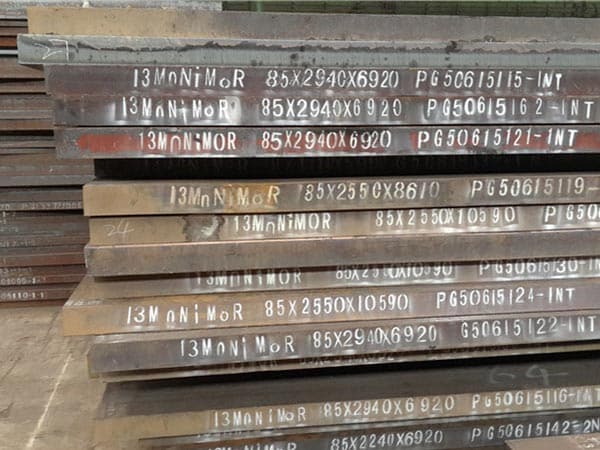
The Engineering Significance of B750L Thermomechanically Processed Steel
Modern industrial design increasingly demands materials that offer a superior strength-to-weight ratio without compromising on processability. B750L, a high-strength low-alloy (HSLA) steel, stands at the forefront of this requirement. Specifically engineered through Thermomechanically Controlled Processing (TMCP), B750L provides a unique combination of high yield strength and excellent cold-forming capabilities. Unlike traditional normalized steels, B750L leverages precise temperature control and deformation rates during rolling to achieve a refined microstructure that enhances both toughness and weldability.
The '750' in its designation refers to its minimum yield strength of 750 MPa, making it a critical component in weight-reduction strategies for heavy-duty vehicles, mobile machinery, and structural engineering. By utilizing B750L, engineers can reduce section thickness while maintaining structural integrity, leading to improved fuel efficiency and increased payload capacity in transport sectors.
Chemical Composition: The Science of Micro-Alloying
The exceptional performance of B750L is rooted in its sophisticated chemical balance. Rather than relying on high carbon content, which can impair weldability and toughness, B750L utilizes a low-carbon design supplemented by micro-alloying elements like Niobium (Nb), Vanadium (V), and Titanium (Ti).
| Element | Mass Fraction (%) Max | Role in the Alloy |
|---|---|---|
| Carbon (C) | 0.12 | Ensures strength while maintaining excellent weldability and ductility. |
| Silicon (Si) | 0.50 | Provides solid solution strengthening and deoxidation. |
| Manganese (Mn) | 2.10 | Increases hardenability and strength through solid solution. |
| Phosphorus (P) | 0.025 | Controlled to prevent cold shortness and improve toughness. |
| Sulfur (S) | 0.015 | Minimized to reduce non-metallic inclusions and improve lamellar tearing resistance. |
| Aluminum (Al) | 0.015 (Min) | Acts as a deoxidizer and aids in grain refinement. |
| Nb + V + Ti | 0.22 | Micro-alloying elements for grain refinement and precipitation hardening. |
The integration of Nb, V, and Ti is crucial. During the thermomechanical rolling process, these elements form fine carbides and nitrides that pin grain boundaries, preventing grain growth even at high temperatures. This results in an ultra-fine ferrite-pearlite or bainitic microstructure, which is the primary driver behind the material's high yield strength and low-temperature impact energy absorption.
Mechanical Properties and Structural Reliability
The mechanical profile of B750L is characterized by its high yield-to-tensile ratio and impressive elongation properties. These attributes are vital for components subjected to high static and dynamic loads.
- Yield Strength (ReL): Minimum 750 MPa. This high threshold allows for significant down-gauging in structural designs.
- Tensile Strength (Rm): Typically ranges between 800 and 950 MPa, ensuring a robust safety margin against ultimate failure.
- Elongation (A50mm): Minimum 12% (varies by thickness). Despite its high strength, the material retains sufficient ductility for complex forming operations.
- Impact Toughness: Often tested at -20°C or -40°C, demonstrating excellent resistance to brittle fracture in cold environments.
One of the standout features of B750L is its isotropic behavior. Due to the controlled rolling and cooling rates, the difference in mechanical properties between the longitudinal and transverse rolling directions is minimized. This consistency is essential for manufacturing processes involving multi-directional bending or complex stamping.
Thermomechanical Processing (TMCP) Explained
The superiority of B750L over conventional grades lies in the TMCP route. Unlike traditional heat treatments that occur after rolling, TMCP integrates thermal control directly into the rolling mill. The process involves:
- Controlled Reheating: Slabs are heated to a specific temperature to ensure micro-alloying elements are in solid solution.
- Recrystallization Rolling: Initial rolling stages reduce the thickness while the austenite is still recrystallizing.
- Non-Recrystallization Rolling: The final rolling passes occur below the recrystallization temperature, flattening the austenite grains and creating a high density of nucleation sites for the subsequent phase transformation.
- Accelerated Cooling: Rapid cooling transforms the deformed austenite into a fine-grained ferrite or bainite structure, locking in the high-strength properties without the need for expensive alloying additions.
This process results in a material that is not only strong but also exceptionally clean, with a fine distribution of secondary phases that resist crack initiation and propagation.
Processing Performance: Bending, Welding, and Cutting
For manufacturers, the utility of a steel grade is defined by how easily it can be integrated into production lines. B750L excels in several key processing areas:
Cold Forming and Bending: B750L is designed for cold forming. Its high purity and fine grain structure allow for tight bend radii without surface cracking. It is frequently used in the production of U-beams, C-channels, and complex chassis components. Designers should account for the high yield strength by ensuring tooling is robust enough to handle the increased forming forces and potential springback.
Weldability: With a low Carbon Equivalent (Ceq), B750L offers excellent weldability. It can be joined using standard methods such as MAG, MIG, and Laser welding. The low alloy content reduces the risk of cold cracking in the Heat Affected Zone (HAZ), often eliminating the need for pre-heating in thinner sections. This streamlines production and reduces energy costs.
Laser Cutting: The consistency of the surface finish and the internal stress state of B750L make it ideal for high-precision laser cutting. The minimal slag and clean edges produced during cutting reduce the need for secondary finishing operations.
Diverse Industrial Applications
The adoption of B750L is widespread across industries where weight reduction and structural durability are paramount. Its application goes far beyond simple structural frames.
- Automotive Industry: Used extensively for truck chassis, cross members, and reinforcement beams. It allows for lighter vehicles that can carry heavier loads while meeting stringent crash safety standards.
- Lifting and Transportation: Mobile cranes, telescopic booms, and trailer frames benefit from the high strength of B750L, allowing for longer reach and higher lifting capacities.
- Agricultural Machinery: Parts for harvesters and plows that require resistance to both high stress and abrasive wear.
- Energy Sector: Support structures for solar arrays and wind turbine components where environmental resilience and strength are required.
Environmental Adaptability and Sustainability
In the context of global sustainability goals, B750L plays a vital role. By enabling the construction of lighter vehicles, it directly contributes to lower CO2 emissions during the vehicle's operational life. Furthermore, the TMCP process itself is more energy-efficient than traditional quenching and tempering cycles, as it utilizes the heat from the rolling process to achieve the desired properties.
The atmospheric corrosion resistance of B750L, while not as high as specialized weathering steels, is superior to standard carbon steels due to its dense microstructure and specific alloying. When combined with modern coating technologies, B750L structures exhibit exceptional longevity even in harsh industrial or coastal environments.
Technical Selection Considerations
When specifying B750L, engineers must consider the specific requirements of the end application. While the minimum yield strength is guaranteed, factors such as the Hole Expansion Ratio (HER) may be critical for parts with punched holes that undergo subsequent flanging. B750L typically exhibits high HER values, indicating its resistance to edge cracking during stretching.
Furthermore, the fatigue life of B750L is a key consideration for dynamic structures. The fine-grained structure provided by the thermomechanical process significantly improves fatigue limit compared to coarser-grained steels of similar strength, making it the preferred choice for components subject to cyclic loading.
Strategic material selection involving B750L ensures that modern engineering challenges—ranging from lightweighting to structural safety—are met with a high-performance, cost-effective, and process-friendly solution. Its balanced chemical composition and advanced manufacturing route make it an indispensable asset in the current metallurgical landscape.
Leave a message