
What is the S420MC chemical composition electric stove
Comprehensive analysis of S420MC steel chemical composition produced via electric stove (EAF), exploring its mechanical properties, micro-alloying, and industrial applications.
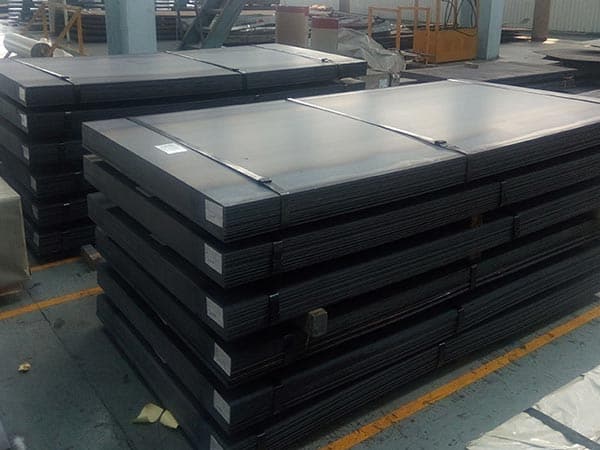
The Fundamentals of S420MC and Electric Stove Production
S420MC is a high-strength, thermomechanically rolled steel specifically engineered for cold forming. According to the EN 10149-2 standard, the 'S' denotes structural steel, '420' represents the minimum yield strength in Megapascals (MPa), and 'MC' indicates its thermomechanically rolled condition. When discussing the 'electric stove' in the context of S420MC, we are primarily referring to the Electric Arc Furnace (EAF) steelmaking process. This method has become increasingly vital for producing high-performance HSLA (High-Strength Low-Alloy) steels due to its ability to precisely control chemical purity and its lower environmental footprint compared to traditional blast furnace routes.
The electric stove process allows for the recycling of high-quality steel scrap, which is melted using high-power electric arcs. For a grade like S420MC, this process is critical because it enables the manufacturer to achieve extremely low levels of impurities such as sulfur and phosphorus. This purity is the foundation for the material's exceptional ductility and toughness, which are mandatory for complex cold-forming operations in the automotive and heavy machinery sectors.
S420MC Chemical Composition: A Precise Balance
The chemical composition of S420MC is a masterpiece of metallurgical engineering. It relies on a low carbon content combined with micro-alloying elements to achieve high strength without sacrificing weldability or formability. Below is the typical chemical breakdown based on the EN 10149-2 standard.
| Element | Maximum Percentage (%) | Role in S420MC |
|---|---|---|
| Carbon (C) | 0.12 | Ensures excellent weldability and prevents brittleness. |
| Manganese (Mn) | 1.60 | Increases strength and hardness through solid solution strengthening. |
| Silicon (Si) | 0.50 | Acts as a deoxidizer and contributes to tensile strength. |
| Phosphorus (P) | 0.025 | Kept low to maintain toughness and prevent cold shortness. |
| Sulfur (S) | 0.015 | Minimized to improve lamellar tearing resistance and ductility. |
| Aluminum (Al) | 0.015 (min) | Grain refinement and nitrogen binding. |
| Niobium (Nb) | 0.09 | Primary micro-alloy for grain refinement and precipitation hardening. |
| Vanadium (V) | 0.20 | Enhances strength through the formation of carbonitrides. |
| Titanium (Ti) | 0.15 | Stabilizes the microstructure at high temperatures. |
The total sum of Niobium, Vanadium, and Titanium usually does not exceed 0.22%. This delicate balance is what allows S420MC to maintain a fine-grained structure even after the intense heat of welding or the stress of bending.
The Influence of Micro-Alloying on Performance
The secret to S420MC’s performance lies in its micro-alloying strategy. By adding trace amounts of Niobium (Nb), Vanadium (V), and Titanium (Ti), steelmakers can control the grain size during the thermomechanical rolling process. Fine grains are the only metallurgical feature that simultaneously increases both strength and toughness. This is particularly important for components produced in an electric stove, where the rapid heating and cooling cycles require a stable chemical matrix to prevent grain growth.
- Niobium (Nb): It raises the recrystallization temperature, ensuring that the grains remain small during rolling.
- Titanium (Ti): It forms stable nitrides that prevent grain coarsening in the heat-affected zone (HAZ) during welding.
- Manganese (Mn): While not a micro-alloy, its presence is crucial for balancing the effects of sulfur and improving the overall hardenability of the thin-gauge sheets.
Mechanical Properties and Industrial Utility
S420MC is prized for its high yield strength-to-weight ratio. This allows engineers to design lighter components without compromising structural integrity, a concept known as 'lightweighting.' In the automotive industry, this translates directly to better fuel efficiency and lower emissions.
| Property | Value Range |
|---|---|
| Yield Strength (Reh) | Min. 420 MPa |
| Tensile Strength (Rm) | 480 - 620 MPa |
| Elongation (A80mm) | Min. 16% - 19% (depending on thickness) |
| Bending Radius (90°) | 0.5t to 1.5t (t = thickness) |
The high elongation values indicate that despite its strength, S420MC can undergo significant deformation before failure. This makes it ideal for complex pressed parts like longitudinal beams, cross members, and chassis components in trucks and trailers.
Processing Characteristics: Welding and Forming
One of the primary reasons S420MC is preferred over traditional carbon steels is its superior processing behavior. Because the carbon equivalent (CEV) is kept very low through the electric stove refining process, the steel is not prone to cold cracking during welding. It can be welded using all standard methods, including MIG/MAG, TIG, and laser welding.
In terms of cold forming, the fine-grained structure ensures that the material flows uniformly. This reduces the risk of 'orange peel' effects or localized thinning during deep drawing. Furthermore, S420MC exhibits excellent laser cutting properties. The consistency of the chemical composition ensures that the laser beam interacts uniformly with the surface, resulting in clean, burr-free edges that require minimal post-processing.
Environmental Adaptability and Sustainability
Steel produced in an electric stove (EAF) is inherently more sustainable. By utilizing electricity—which can be sourced from renewable energy—and recycling scrap, the carbon footprint of S420MC is significantly reduced compared to blast furnace production. Additionally, the material's high strength allows for the use of thinner sections, reducing the total mass of steel required for a project, which further contributes to resource conservation.
From an environmental resistance standpoint, while S420MC is not a weathering steel, its dense and uniform microstructure provides a good base for protective coatings. Whether it is hot-dip galvanizing, E-coating, or powder coating, the low silicon and phosphorus content ensures excellent adhesion and a high-quality finish, protecting the structure from atmospheric corrosion in diverse climates.
Broadening the Scope: Beyond Automotive
While the automotive sector is the largest consumer of S420MC, its utility extends into various other demanding industries. In the crane and lifting equipment sector, it is used for telescopic booms where weight reduction is critical for increasing lifting capacity. In the agricultural sector, it is used for plow frames and harvester components that must withstand high stress and abrasive environments.
The structural engineering sector also utilizes S420MC for cold-formed sections and profiles used in solar mounting systems and warehouse racking. The ability to produce these components through continuous roll forming without cracking makes S420MC a cost-effective and reliable choice for modern infrastructure projects.
Leave a message