
What is the cheapest S500MC tensile strength?
Explore the technical specifications, tensile strength, and cost-effectiveness of S500MC high-strength steel. Learn how this thermomechanically rolled steel optimizes industrial manufacturing.
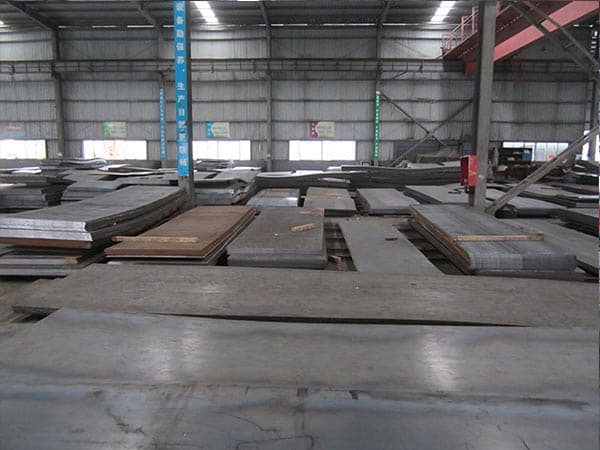
Defining the Core of S500MC: Tensile Strength and Yield Parameters
S500MC is a high-yield strength steel specifically designed for cold forming, governed by the European standard EN 10149-2. When discussing the "cheapest" tensile strength, it is essential to clarify that the cost-effectiveness of S500MC lies not just in its price per ton, but in its ability to reduce overall material consumption through superior mechanical properties. The tensile strength of S500MC typically ranges between 550 and 700 MPa. This range ensures that the material can withstand significant stress before failure, making it a primary choice for structural components where weight reduction is critical.
The "500" in its designation refers to its minimum yield strength of 500 MPa. This high yield-to-tensile ratio allows engineers to design thinner sections that perform as well as, or better than, thicker sections of standard structural steels like S235 or S355. By utilizing S500MC, manufacturers often see a reduction in total project costs because less steel is required to achieve the same structural integrity, which also lowers shipping and handling expenses.
Mechanical Properties and Material Standards
The performance of S500MC is rooted in its thermomechanical rolling process. This process refines the grain structure, providing a unique combination of high strength and excellent ductility. Unlike traditional hot-rolled steels, S500MC maintains its properties even when subjected to complex cold-forming operations.
| Property | Value (Metric) |
|---|---|
| Yield Strength (ReH) | Min. 500 MPa |
| Tensile Strength (Rm) | 550 - 700 MPa |
| Elongation (A80mm) | Min. 12% (Thickness < 3mm) |
| Elongation (A5) | Min. 14% (Thickness ≥ 3mm) |
These values demonstrate that while S500MC is significantly stronger than mild steel, it retains enough elongation to prevent cracking during bending or pressing. This balance is what makes it a "value-engineered" material for high-volume production lines.
Chemical Composition and Its Economic Impact
The cost-efficiency of S500MC is also influenced by its chemical makeup. It is a low-carbon, micro-alloyed steel. By using small amounts of Niobium (Nb), Vanadium (V), or Titanium (Ti), the steel achieves its strength without the need for expensive alloying elements like high nickel or chromium. This keeps the raw material price competitive while providing high-end performance.
- Carbon (C): Max 0.12% - Ensures excellent weldability.
- Manganese (Mn): Max 1.60% - Increases strength and hardness.
- Silicon (Si): Max 0.50% - Acts as a deoxidizer.
- Micro-alloys (Nb, V, Ti): Refines grain size for toughness.
Low carbon content is particularly vital for reducing fabrication costs. It eliminates the need for pre-heating during welding, which speeds up production cycles and reduces energy consumption on the factory floor.
Cold Forming and Processing Versatility
One of the primary reasons S500MC is considered a cost-effective solution is its exceptional cold-forming capability. Manufacturers can create complex shapes through bending, flanging, and cold pressing without the material losing its structural integrity. This versatility reduces the need for secondary machining or heat treatments.
When calculating the "cheapest" way to use S500MC, one must consider the minimum bending radius. For a sheet thickness (t), S500MC typically allows for a bending radius of 0.5t to 1.5t depending on the orientation (transverse or longitudinal). Using these tight radii allows for more compact and efficient designs in automotive chassis and heavy machinery frames.
Industry Applications: Where S500MC Delivers Maximum Value
The automotive industry is the largest consumer of S500MC. In the quest for lightweighting, S500MC allows for the production of truck frames, cross members, and suspension parts that are lighter than those made from traditional steel. This weight reduction directly translates to higher fuel efficiency and increased payload capacity for the end-user.
Beyond automotive, S500MC is widely used in the manufacturing of:
- Crane Booms: Where high strength-to-weight ratios are critical for lifting capacity.
- Agricultural Equipment: Such as plows and trailers that require durability against impact.
- Storage Racking: High-density racking systems benefit from the material's ability to support heavy loads with minimal profile thickness.
- Cold-Pressed Profiles: Used in construction for lightweight structural framing.
Environmental Adaptability and Longevity
While S500MC is not a "weathering steel" in the same vein as Corten, its fine-grained structure provides a consistent surface that is highly receptive to protective coatings. Whether it is hot-dip galvanizing, powder coating, or specialized painting, the material bonds well with anti-corrosion treatments. This ensures that components made from S500MC have a long service life even in harsh environments, reducing maintenance and replacement costs over the product's lifecycle.
Furthermore, the recyclability of S500MC adds to its long-term economic and environmental value. As a steel product, it is 100% recyclable without loss of quality, aligning with modern circular economy requirements and reducing the carbon footprint of the final product.
Strategic Procurement: Finding the Best Price
To obtain the best value for S500MC, buyers should focus on thickness tolerances and surface finishes. Standardizing on common thicknesses (such as 3mm, 4mm, or 6mm) can often lead to lower prices due to higher market availability. Additionally, sourcing from mills that utilize advanced thermomechanical control processes (TMCP) ensures consistency in tensile strength, which reduces waste during high-speed automated manufacturing.
Understanding the difference between S500MC and its counterparts like S500L (which has specified impact properties at lower temperatures) is also crucial. If your application does not require extreme low-temperature toughness, choosing S500MC over S500L is the "cheapest" path to achieving the required 550-700 MPa tensile strength without paying for unnecessary specifications.
Technical Comparison with Standard Structural Steels
To illustrate the cost-to-performance ratio, comparing S500MC with s355jr reveals significant advantages. While S355 is cheaper per kilogram, the yield strength of S500MC is nearly 40% higher. This allows for a theoretical weight saving of up to 30% in many structural designs. When the costs of welding, transport, and assembly are factored in, the "expensive" high-strength steel often results in a lower total cost of ownership for the finished assembly.
The ability to down-gauge (use thinner material) is the most powerful tool for cost optimization. For example, replacing an 8mm S355 plate with a 6mm S500MC plate maintains the load-bearing capacity while significantly reducing the mass of the component. This is the true definition of the cheapest tensile strength: achieving the highest performance with the least amount of material.
Leave a message