
What kind of steel is S460MC sheet chemistry?
A comprehensive technical guide to S460MC steel chemistry, mechanical properties, and industrial applications under the EN 10149-2 standard.
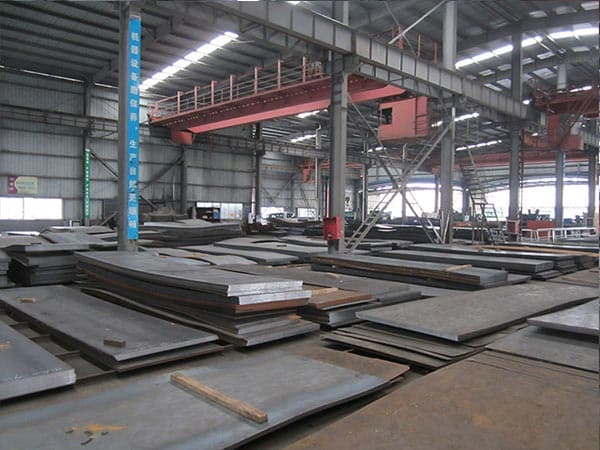
Understanding the Metallurgical Profile of S460MC
S460MC represents a pinnacle of high-strength low-alloy (HSLA) steel engineering, specifically designed for cold forming applications where weight reduction and structural integrity are paramount. Defined by the European standard EN 10149-2, this grade is produced through a sophisticated process known as thermomechanical control rolling (TMCP). Unlike traditional hot-rolled steels that rely on high carbon content or expensive alloying elements for strength, S460MC achieves its superior mechanical properties through a combination of precise chemical balancing and controlled cooling rates during the rolling process.
The Chemistry of S460MC: A Precise Elemental Balance
The chemical composition of S460MC is the foundation of its performance. The goal of the chemistry is to provide a high yield strength of at least 460 MPa while maintaining excellent weldability and ductility. This is achieved by keeping the carbon content extremely low, which minimizes the formation of brittle phases during welding and cooling. The addition of micro-alloying elements such as Niobium (Nb), Vanadium (V), and Titanium (Ti) is the secret to its refined grain structure.
| Element | Maximum Percentage (%) |
|---|---|
| Carbon (C) | 0.12 |
| Manganese (Mn) | 1.60 |
| Silicon (Si) | 0.50 |
| Phosphorus (P) | 0.025 |
| Sulfur (S) | 0.015 |
| Aluminum (Al) | 0.015 (min) |
| Niobium (Nb) | 0.09 |
| Vanadium (V) | 0.20 |
| Titanium (Ti) | 0.15 |
Carbon (C): Restricted to a maximum of 0.12%, carbon is kept low to ensure the steel remains ductile and easy to weld. Higher carbon levels would increase hardness but at the cost of toughness and formability.
Manganese (Mn): At a maximum of 1.60%, manganese acts as a solid solution strengthener and improves the hardenability of the steel. It also helps in tying up sulfur to prevent hot shortness.
Micro-alloying Elements (Nb, V, Ti): These elements are the most critical components of S460MC chemistry. Niobium and Titanium form stable carbides and nitrides that pin grain boundaries during the rolling process, preventing grain growth. This results in an exceptionally fine-grained ferrite structure, which is the primary reason for the high yield strength and excellent low-temperature toughness.
Mechanical Properties and Performance Metrics
The "460" in S460MC signifies the minimum yield strength of 460 MPa for thicknesses up to 16mm. This high strength-to-weight ratio allows engineers to use thinner sheets without compromising the structural safety of the component, leading to significant weight savings in vehicle chassis and heavy machinery.
- Yield Strength (ReH): Minimum 460 MPa.
- Tensile Strength (Rm): 520 to 670 MPa.
- Elongation (A80mm): Typically 14% for thicknesses less than 3mm, and higher for thicker sections.
- Impact Strength: While EN 10149-2 does not always mandate impact testing unless specified, the fine-grained nature of S460MC naturally provides good resistance to brittle fracture.
The TMCP Process: Thermomechanical Rolling
The "M" in S460MC stands for thermomechanically rolled. This process involves strict control over the temperature and deformation during the rolling stages. Unlike normalized steel, where the grain structure is refined by a separate heat treatment, TMCP steel achieves its properties directly on the rolling mill. By rolling at temperatures where recrystallization is inhibited, the grains are flattened and elongated, creating more sites for ferrite nucleation upon cooling. This results in a grain size much smaller than what can be achieved through traditional hot rolling or normalizing, enhancing both strength and toughness simultaneously.
Cold Forming and Fabrication Versatility
The "C" in the designation indicates that the steel is suitable for cold forming. S460MC is engineered to be bent, folded, and pressed into complex shapes without cracking. This is a critical requirement for the automotive and transport industries. The low sulfur content and inclusion shape control (often through calcium treatment) ensure that the steel has isotropic properties, meaning it performs consistently whether it is bent longitudinal or transverse to the rolling direction.
When designing for cold forming, it is essential to consider the minimum bending radius. For S460MC, the recommended internal bending radius is typically 1.0 to 1.5 times the material thickness, depending on the specific application and orientation. This tight bending capability allows for compact designs and efficient material usage.
Superior Weldability for Structural Integrity
One of the primary advantages of S460MC's low-carbon chemistry is its exceptional weldability. The Carbon Equivalent Value (CEV) is significantly lower than that of traditional structural steels like s355jr. This means that S460MC can be welded using standard methods such as MAG (Metal Active Gas), submerged arc welding, or laser welding without the need for preheating in most thickness ranges. The heat-affected zone (HAZ) remains tough and resistant to cold cracking, ensuring that the welded joint is as reliable as the base metal itself.
Industry-Specific Applications
The unique combination of high strength and excellent formability makes S460MC a preferred choice across several demanding sectors. Heavy transport manufacturers utilize this grade for truck chassis, trailers, and sub-frames. By switching from S355 to S460MC, a manufacturer can reduce the weight of a trailer frame by up to 20%, which translates directly into higher payloads and improved fuel efficiency.
In the crane and lifting equipment industry, S460MC is used for telescopic booms and support structures. The high yield strength allows for longer reaches and higher lifting capacities without adding excessive weight to the machine. Similarly, in agricultural machinery, the steel's resistance to fatigue and impact makes it ideal for plow frames, spreaders, and harvesting equipment that must operate in harsh environments.
Environmental Adaptability and Sustainability
S460MC contributes significantly to environmental sustainability through the principle of "lightweighting." By using less steel to achieve the same structural performance, the total energy consumption during the manufacturing and transport phases is reduced. Furthermore, the low alloy content makes S460MC highly recyclable, fitting perfectly into a circular economy model. Its resistance to atmospheric conditions can be further enhanced through galvanizing or high-quality coating systems, ensuring a long service life even in corrosive environments.
Comparative Analysis: S460MC vs. Traditional Grades
When compared to S355MC, S460MC offers a roughly 30% increase in yield strength. This allows for a direct thickness reduction of approximately 15-20% in many tension-loaded applications. Compared to high-strength quenched and tempered steels, S460MC is more cost-effective and easier to process, as it does not require the complex heat treatments associated with grades like S690QL. It occupies a "sweet spot" in the material selection matrix, providing high performance at a manageable cost point.
Technical Considerations for Procurement
When sourcing S460MC, it is vital to ensure that the material is accompanied by a 3.1 mill test certificate according to EN 10204. This document verifies the chemical heat analysis and the mechanical test results. Buyers should also pay attention to surface finish requirements; as a hot-rolled product, S460MC typically has a thin layer of mill scale, which may need to be removed via pickling and oiling (S460MC+P) if the material is to be laser cut or painted immediately.
Advanced Processing: Laser Cutting and Surface Treatment
The consistent chemistry and flat profile of S460MC make it an excellent candidate for automated laser cutting. The low silicon and phosphorus levels contribute to a stable cutting process and a clean edge finish. For components requiring high aesthetic standards or superior corrosion resistance, S460MC responds well to modern powder coating and cataphoretic painting (KTL) processes. The fine grain structure provides a uniform substrate that ensures excellent adhesion of protective layers.
The strategic selection of S460MC chemistry and processing parameters allows for the creation of structures that are not only stronger and lighter but also more durable and easier to manufacture. As engineering demands continue to push the limits of material performance, S460MC remains a foundational grade for modern industrial innovation.
Leave a message