
What is S900MC mechanical properties structural steel?
Explore the comprehensive guide on S900MC high-strength structural steel. Learn about its mechanical properties, chemical composition, processing techniques, and industrial applications.
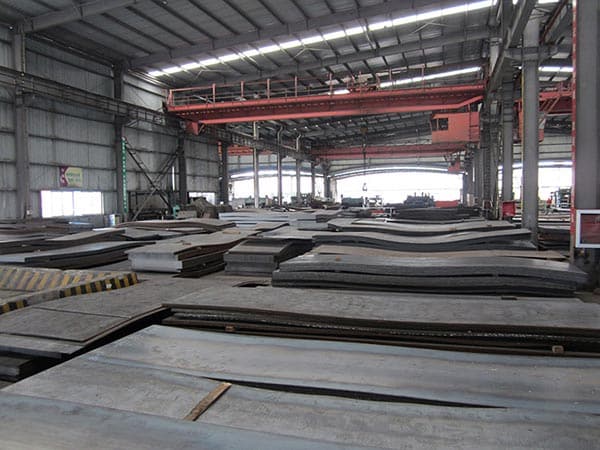
The Essence of S900MC: High-Strength Engineering Solutions
S900MC represents the pinnacle of thermomechanically rolled, high-yield strength steels. Governed by the European standard EN 10149-2, this grade is engineered for cold-forming applications where weight reduction is critical without compromising structural integrity. The 'S' denotes structural steel, '900' indicates a minimum yield strength of 900 MPa, and 'MC' signifies its thermomechanically rolled condition (M) with high cold-forming capability (C).
In the modern industrial landscape, the drive toward 'lightweighting' has pushed traditional S355 or even S700MC grades to their limits. S900MC steps in as a sophisticated alternative, offering a remarkable strength-to-weight ratio. By utilizing S900MC, engineers can design thinner sections that carry the same loads as thicker, heavier conventional steels. This shift not only reduces raw material consumption but also significantly lowers transportation costs and carbon emissions throughout the product's lifecycle.
Decoding the Mechanical Performance: Yield, Tensile, and Toughness
The defining characteristic of S900MC is its extraordinary mechanical profile. Unlike standard carbon steels, its strength is derived from a combination of precise chemical alloying and controlled rolling processes rather than high carbon content. This ensures that the material remains ductile and weldable despite its extreme hardness.
The following table outlines the core mechanical requirements for S900MC as per EN 10149-2:
| Property | Value (Metric) |
|---|---|
| Minimum Yield Strength (Reh) | 900 MPa |
| Tensile Strength (Rm) | 930 - 1200 MPa |
| Minimum Elongation (A80mm) | 8% (for thickness < 3mm) |
| Minimum Elongation (A5) | 10% (for thickness ≥ 3mm) |
| Typical Impact Energy (V-notch) | 27J at -20°C (Optional/Specified) |
While the yield strength is the headline figure, the elongation properties are equally vital. Achieving 10% elongation at a 900 MPa yield level is a metallurgical feat. This ductility allows the steel to absorb energy and undergo significant deformation before fracture, which is a critical safety factor in mobile machinery and transport equipment.
Metallurgical Mastery: Thermomechanical Rolling and Micro-alloying
The production of S900MC relies on Thermomechanically Controlled Processing (TMCP). This process involves precise temperature control during the rolling stages, followed by accelerated cooling. Unlike traditional normalized steel, the grain structure of S900MC is exceptionally fine. This fine-grain structure is the primary reason for the material's high strength and excellent low-temperature toughness.
Micro-alloying elements play a supporting role in this process. Small additions of Niobium (Nb), Vanadium (V), and Titanium (Ti) are used to refine the grain size and provide precipitation hardening. The carbon content is kept intentionally low (typically below 0.20%) to ensure superior weldability and prevent the formation of brittle phases in the heat-affected zone (HAZ) during fabrication.
- Niobium (Nb): Increases the recrystallization temperature, allowing for effective grain refinement during rolling.
- Titanium (Ti): Forms stable nitrides that prevent grain growth during high-temperature processing.
- Vanadium (V): Contributes to strength through the formation of fine carbides.
Fabrication Guidelines: Cold Forming and Bending
S900MC is specifically designed for cold forming. However, due to its high yield strength, the force required for bending is significantly higher than that for standard steels. Fabricators must account for 'springback'—the tendency of the metal to return to its original shape after the bending force is removed. Higher strength steels exhibit more springback, requiring precise over-bending calculations.
To prevent cracking during the bending process, minimum internal bend radii must be strictly followed. For S900MC, the recommended minimum bend radius is typically 4.0 to 5.0 times the material thickness (t), depending on the bending angle and the orientation relative to the rolling direction. Bending transverse to the rolling direction is generally safer than longitudinal bending, as the material's ductility is optimized in that orientation.
Welding S900MC: Precision and Integrity
Welding S900MC requires a nuanced approach compared to mild steel. Because the strength of the steel is derived from its TMCP history, excessive heat input can 'soften' the material, leading to a loss of strength in the heat-affected zone. Maintaining a low heat input is the golden rule when welding S900MC.
The Carbon Equivalent (CEV) of S900MC is relatively low, which minimizes the risk of cold cracking. Preheating is often unnecessary for thinner sections, but for thicker plates or highly constrained joints, a modest preheat (around 75°C to 100°C) may be beneficial to remove moisture and slow the cooling rate slightly. Matching or slightly under-matching filler metals are often chosen depending on the specific design requirements of the joint.
Commonly used welding processes include:
- GMAW (Gas Metal Arc Welding): Preferred for its control over heat input and high productivity.
- FCAW (Flux-Cored Arc Welding): Useful for heavy structural components.
- Laser Welding: Increasingly popular for its extremely narrow HAZ and minimal distortion.
Industrial Impact: From Mobile Cranes to Heavy Transport
The application of S900MC is most prevalent in industries where weight is the enemy of efficiency. In the lifting and mobile crane industry, S900MC is used for telescopic booms. By using thinner, higher-strength plates, manufacturers can extend the reach of the crane and increase its lifting capacity without increasing the overall weight of the vehicle.
In the heavy transport sector, S900MC is the material of choice for truck chassis, trailers, and specialized transport frames. A lighter chassis allows for a higher payload, directly translating to increased profitability for logistics operators. Furthermore, the durability of S900MC ensures that these structures can withstand the dynamic loads and vibrations encountered during long-haul transport across varied terrains.
Other notable applications include:
- Agricultural Machinery: Large harvesters and soil preparation equipment where soil compaction must be minimized.
- Waste Management: Refuse collection vehicle bodies and ejector plates.
- Telecommunication Towers: Lightweight structural members for high-altitude installations.
Comparative Analysis: S900MC vs. S700MC and S960QL
It is helpful to distinguish S900MC from other high-strength options. S700MC is a common 'step-up' grade, but S900MC provides nearly 30% more yield strength, allowing for even more aggressive weight savings. On the other hand, S960QL is a quenched and tempered (Q+T) steel. While S960QL offers slightly higher strength, it is generally produced in thicker plates and may have different processing requirements compared to the thermomechanically rolled S900MC.
S900MC bridges the gap between traditional high-strength steels and ultra-high-strength quenched grades. It offers a unique balance of extreme strength, excellent surface quality (due to the rolling process), and superior cold-forming characteristics that are often difficult to achieve with Q+T steels in thinner gauges.
Environmental Adaptation and Sustainability
Beyond mechanical prowess, S900MC contributes significantly to environmental sustainability. The reduction in steel volume required for a project leads to a direct reduction in the energy consumed during smelting and rolling. In the operational phase of a vehicle or machine, the reduced deadweight results in lower fuel consumption and a smaller carbon footprint. This aligns with global 'Green Steel' initiatives and the transition toward a circular economy where resource efficiency is paramount.
The corrosion resistance of S900MC is comparable to other carbon steels, meaning it requires standard protective coatings (painting, galvanizing) for outdoor exposure. However, its fine-grained structure can sometimes offer a more uniform surface for coating adhesion, ensuring long-term structural integrity even in harsh environments.
Leave a message